Feeds:
Posts
Comments

Archive for February, 2011

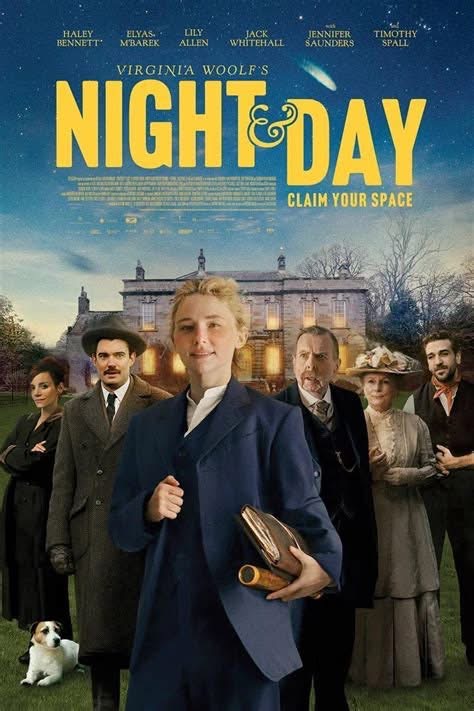
While tackling Intermodernism and the works of Virginia Woolf during graduate school, one of the questions I pondered often was the existence of a distinctive political art in 1930s Great Britain and the role of class and gender privilege throughout.

 Two forms of narrative art seem to emerge from the time period.  The first can be identified as “the propaganda of privilege.”  Middle to upper class writers like F. R. Leavis and George Orwell offer insight into the lives of the British from a position of gender and class status. It is true that both Orwell and Leavis sincerely want to improve the lives of their fellow citizens.  What becomes problematic for both writers is that same common person’s own voice being denied, translated via a privileged writer, or subjugated to a small whisper. 

The other style of narrative art which comes out of 1930s Great Britain is what I have referred to as “the Intermodernist Other.”  A careful examination of the Intermodernist period allowed a refreshing amount of writers from outside the privileged, elitist, circles that Leavis and Orwell come from to be brought into the foreground.  Writers like Virginia Woolf, and others like Storm Jameson and Mulk Raj Anand, for example, are writing from an underprivileged status due to ethnicity or gender.  These writers offer keen insight into the lives of the underprivileged, such as the women of Great Britain in the war against fascism for Woolf to make their case. (more…)

Read Full Post »

You may be way ahead of me—I know I’m not the first on my block to read Helen Simonson’s Major Pettigrew’s Last Stand, newly released in paperback and in the top ratings on IndieBound.org and the New York Times Book Review.

A bit of a book snob, I suppose, I tend to shy away from the bestsellers, but a novel about a Sussex village—how could I resist? I put it on reserve at the public library some months ago and forgot about it until last week when I was notified that it was being held for me at my local branch.

I read it in a couple of sittings, charmed from beginning to end. Delightful and well written, it’s a contemporary novel of manners, an adult romance founded on a love of literature, a morality tale against racism and greed, all set in the East Sussex countryside, Virginia Woolf’s beloved landscape.

And of course, as I read it I couldn’t help thinking about Woolf and her life in Rodmell, about my own times there, brief tastes of village life, walks on the downs and to the coast, lunches at charming country pubs.

Like Woolf, Major Pettigrew is a walker who observes the colors and the smells around him, even on frequently traveled terrain. He loves the stroll down the hill from his house to the village center of Edgecombe St. Mary: “Behind him, the hills swelled upward into the rabbit-cropped grass of the chalk downs. Below him the Weald of Sussex cradled fields full of late rye and the acid yellow of mustard.”

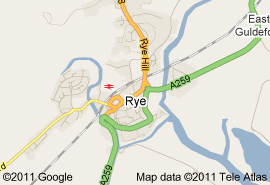
While Edgecombe St. Mary and its neighboring villages are fictional, a reference to the Romney Marsh was a clue that it was set in the area around Rye (known as Tilling to all of us Mapp and Lucia fans). Simonson indeed grew up in that region, which she describes, on her website, as “literary country.” She credits the heritage of Henry James at Lamb House in Rye, Kipling’s Bateman’s at Burwash, and Virginia Woolf at Monk’s House in Rodmell as a great inspiration.

Woolf doesn’t make an appearance in the novel by name, but she’s there in spirit. While the Major and Mrs. Ali bond over Kipling, I can imagine them reading and exchanging impressions about To the Lighthouse.

Read Full Post »

« Newer Posts