Editor’s Note: As an introduction to the upcoming 34th Annual International Conference on Virginia Woolf: “Woolf and Dissidence,” set for July 4-8 at King’s College London and the University of Sussex, England, we offer the first in a series of four posts in which Leanne Oden and Serena Wong reflect on their encounters with Virginia Woolf and with Woolf scholars — dubbed Woolfians — that they met at the 33rd Annual International Conference on Virginia Woolf: Woolf, Modernity, Technology, held June 6-9, 2024, at Fresno State University.
“Arrange whatever pieces come your way”—Virginia Woolf, A Writer’s Diary
This first piece of our four-part reflection series on the 2024 Woolf conference introduces the ways in which we each found our paths to Woolf, and subsequently the approaches we respectively took going into the conference.

Leanne Oden, Serena Wong, and Jessica Kim, all first-time Woolf Conference attendees. Photo courtesy of Benjamin Hagen.
Though our interests may differ, there are common grounds in our experiences – Mrs. Dalloway has served as the starting text to our research as Woolfians, and we were both contemplating on notions of illness when first arriving at Fresno.
When we met on the first day of the Woolf conference, therefore, we found our interests enhanced by the nuances of each other’s research perspectives. The dynamic that emerged from our conversations, which led to a fast friendship, mirrors the vibrant cohesion that marks the Woolf community at large.
This collaborative series is a tribute to the generations of multifaceted Woolf exchanges that we hope our contribution will continue to add to and encourage.
For of course there is not one reflection but an almost infinite number” –Virginia Woolf, “The Mark on the Wall” (1917)
Leanne on encountering Woolf: illness vs. health
By Leanne Oden, Ph.D. Student, University of Rhode Island

Leanne Oden
As inspired by Sonita Sarker’s keynote presentation “Teks, Technê, Technology: Woolf as Modernist Icon,” I open this contribution with a reflection on who I need Woolf to be and the experiences I carry with me into my reading and research on her work.
Coming to Woolf
I came to Woolf in 2012 in the throes of an illness. In my sophomore year of undergraduate studies, reading Mrs. Dalloway — an assigned text for a course on “Fiction: Narrating Society and Self” — breathed new life into me and profoundly shaped my aspirations as a scholar. Her words captured what I felt, yet could not express.
When I think back to that first reading, an experience I wish I could have again, it is the feeling of recognition, of survival, of the courage to face seemingly insurmountable challenges, that calls me to Woolf and holds me there.
I recovered from the illness that gripped me in those earliest encounters with Woolf. However, illness would remain a driving force in my life and my reading of Woolf.
Taking a risk
In 2018, after the birth of my second child, illness would return to my life in the form of postpartum complications. The way I came to understand myself was permanently altered with the diagnosis that I received — a diagnosis that requires me to take medication for the rest of my life.
It took years for me to live a life reminiscent of the one I had previously enjoyed. In 2022, I took what I consider to be the risk of my life and applied to grad school years after determining that I now had to live out the rest of my life with a broken brain. In her 1926 essay “On Being Ill,” Woolf writes so brilliantly into existence:
It becomes strange indeed that illness has not taken its place with love, battle, and jealousy among the prime themes of literature.
While my doctoral work is just beginning as a first-year Ph.D. candidate, having just completed my master’s program in May, I am eager to bring my own encounters with illness into an investigation of the closure narrative of the illness versus health binary through Woolf’s writing, among other experimental modernist writers.
Woolf’s fiction and nonfiction alike have become my own survival narratives, and this is the lens through which I come to understand Virginia Woolf.
Serena on encountering Woolf: illness and an orientalist aesthetic
By Serena Wong, Ph.D. Candidate, University of Glasgow

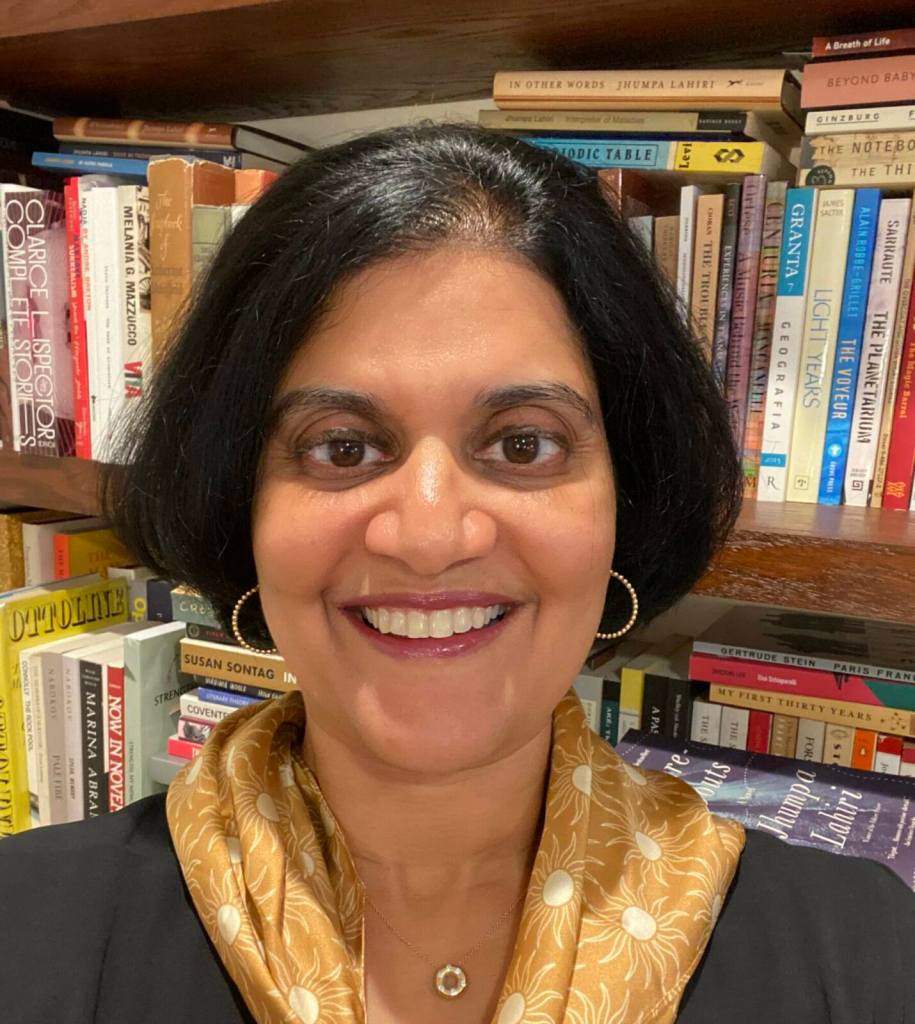
Serena Wong
I came across Virginia Woolf in my undergraduate studies but was first truly enthralled by her work when doing my master’s in 2019, during which I joined a course titled “Woolf Writes Modernity” that covers all the novels in her oeuvre.
Woolf’s celebrated reputation in the modernist studies canon gave me high expectations of her texts that do not disappoint. Like many other new readers of Woolf, I found myself soon admiring the poetic flow of her writing and the feminism that abounds in her narratives.
Struggling with discomfort
Yet I also found myself struggling with some descriptions that the majority of my peers seemed not to notice. As one of the two Asian students in an overwhelmingly Caucasian cohort, Woolf’s aesthetic employment of “Chinese eyes” in Mrs. Dalloway and subsequently in To the Lighthouse was, and still is, a point of discomfort that I actively raise in the classroom. This observation led to my master’s dissertation, which went on to become my Ph.D. project.
My early encounter with Woolf and with modernist literature at large is then also intertwined with contemplations on illness. My illness, according to orientalist literature, is one that pertains to culture and race.
In 2023, within the Woolf panel of my first American conference at the Modern Language Association Convention, I gave a paper centered in “On Being Ill” that discussed an overlapping merge of illness with racialized, orientalist aesthetics in the works of Woolf and Thomas De Quincey.
As I compare my research interests with Leanne then — at the Woolf conference — and now — at the time of our collaborative writing — I am fascinated by how our respective positions drive us to see things uniquely, albeit in the context of the same texts and theme.
I am grateful for Leanne’s open-mindedness to my research project, and I hope I have been just as supportive of hers. Our exchanges – which, by happy coincidence or fate, began when we initially met in the first panel of the first day of the 33rd Woolf conference – reaffirmed for both of us the necessity of flexible and sympathetic communications in academic practices.
Keen to collaborate
As scholars in the early stages of our studies and careers, we are keen to collaborate on this entry as a testament to our inheritance of the shared efforts that have come before us, and as an example to those who will come after. Besides, Leanne is one of the many lovely people with whom I’ve engaged in broad and stimulating conversations at last year’s Woolf conference.
Here I must thank the members of the International Virginia Woolf Society and all others involved who have sustained the Woolf community as such a vibrant and forgiving space of exchange. It is no surprise, perhaps, that the Woolf community is working hard to encourage inclusive practices within its scholarship.
Woolf’s writing, though problematic, has always been radical in political thought and creative experimentation by the standards of its time. Though I am criticizing in parts her orientalism, I am by no means trying to extend harsh commentaries to the ensemble of her work. We are all products of our own time, and the generations that follow will continue to reorient the faults in our discourses.
In the meanwhile, however, the success of this intellectual legacy is dependent on a process that communicates from a multiplicity of perspectives and a diversity of forms.
Future posts in the four-part series
Our future posts for Blogging Woolf will record snippets of the panels, workshops, and keynotes at the 2024 Woolf conference that in their multifariousness together celebrate the accomplishments of this culture.
About the authors
Leanne Oden is a first-year Ph.D. student and an Instructor of Record in the English Department at the University of Rhode Island. In her forthcoming research, Leanne is interested in questioning the closure narrative of the illness versus health binary as challenged through Woolf’s writing among other modernists. In her role as an educator for the University of Rhode Island, she regularly teaches ENG 110: Introduction to Literature and WRT 106: Introduction to Research Writing.
Serena Wong is a Ph.D. Candidate in English Literature at the University of Glasgow. Her doctoral study situates itself at the crossroads of British modernisms and Chinese modernity, with a focus on the orientalism in Virginia Woolf’s stylistic and formal representations of China. Her research also looks at theoretical and creative studies of ornamentation, which she positions as an important dimension of orientalist thought.
Discover more from Blogging Woolf
Subscribe to get the latest posts sent to your email.




[…] « Many Paths of Crossing: Newcomers share their Woolf encounters at conference #33 […]
So interesting ! Congrats !
Thanks for reading and commenting!