Feeds:
Posts
Comments

Archive for the ‘Blogging Woolf’ Category

Helen Southworth, assistant professor of literature of the Clark Honors College at the University of Oregon, has issued a call for papers for a collection of essays on the Hogarth Press that she is compiling.

The collection is tentatively titled Forthcoming from the Hogarth Press: How Leonard and Virginia Woolf Shaped Twentieth Century Publishing.

Southworth says the edited volume will appear in advance of the centenary of the founding of the Press in 2017.  The editor is looking for essays that highlight the innovative quality of the Hogarth Press.

Southworth says the edited volume will appear in advance of the centenary of the founding of the Press in 2017.  The editor is looking for essays that highlight the innovative quality of the Hogarth Press with a look at the following:

  • stories of some of the lesser known artists and their cover art,
  • stories of some of the press workers,
  • stories of some of the lesser known authors, and
  • essays on overlooked titles by well known authors who published with the Hogarth Press.

Southworth says the goal of the collection is to move beyond and complement J.H.Willis’s 1992 history, Leonard and Virginia Woolf as Publishers : The Hogarth Press, 1917-41, the only book-length study to date.

She expects the collection to assess the impact the Hogarth Press had on the careers of those connected with it who are usually overlooked. It will also deal with the broader issue of how the Hogarth Press shaped book production over the course of the 20th century.

Essays focused on individual authors or groups of authors/artists/texts, etc. are encouraged.  Of particular interest is work that highlights archival sources, work which makes use of the now established Hogarth Press archives at Reading University and at Washington State University, for example, as well as author/artist/publisher specific collections. 

Also welcome are essays which engage with recent critical work on literary/artistic modernism and publishing and the marketplace, bibliographical environment, networks, celebrity, censorship, and archive studies.

The call for papers asks that themes address (but are not limited to):

  • risks that the Woolfs took in terms of possibilities of censorship
  • innovations in cover art and other aspects of printing and book marketing
  • the Woolfs’ relationships with English provincial writers and with writers from the colonies
  • the Woolfs’ engagement with new ideas in the sciences, popular culture, peace studies, fashion, cinema, etc.
  • the Woolfs’ collaboration with press workers and with patrons
  • the translations the Woolfs themselves engaged in and those they published at the press
  • the Hogarth Press in the archives
  • the portrayal of the Hogarth Press in contemporary fiction
  • the Hogarth Press’ role in a specific author’s, artist’s, press worker’s careers
  • the relationship of the Hogarth Press to other presses of the period

Completed essays of 20-25 pages, double spaced, (MLA style preferred), along with queries and suggestions, should be sent to Helen Southworth, Clark Honors College, University of Oregon, Eugene, OR 97403-1293.

Deadline for paper submissions is Feb. 15, 2008.

Read Full Post »

Did you know that our beloved Virginia has her very own page on MySpace? I bet not. I just discovered it today.

I came about my discovery rather circuitously after reading the column “Searching for Heroes” by Tom Robotham, editor-in-chief of Portfolio Weekly. In it, he mentions that many of his friends list literary figures as their heroes on their MySpace pages. Those heroes include Dante, Tom Joad, Atticus Finch…and Virginia Woolf

Virginia Woolf. The name drew me up short. I never would have guessed she would show up as a hero on a notable number of MySpace pages. So I decided to take a look for myself.

I visited MySpace and searched for Virginia. That’s when I discovered that she is more than just a hero to MySpace users. Virginia is actually a MySpace user herself. Yes, Virginia Woolf has a MySpace page of her own.

“Virginia Woolf is back from the lethargy,” the page announces mysteriously. Then it goes on to share her personal details — including the fact that despite being shy, she would like to meet Marlene Dietrich.

Woolf’s 4,185 friends are listed, which seems a paltry number for someone of her stature. Among her buds are Chanel, Emily Dickinson, Shakespeare, and a 22-year-old from Marion, Ind., named Nicole. Her alter ego perhaps?

Woolf also shares a needy love note from Vita Sackville-West on her MySpace page, a move that seems glaringly out of character.

Woolfians everywhere will be happy to know we can now easily contact our beloved author via e-mail or instant message. Links to those methods of communication are on her MySpace page.

I have to admit, I didn’t try. Doing so would have necessitated that I set up a MySpace account and log in, so I demurred.

Sadly, though, Virginia has not posted any blog entries. You’ll have to come here for a blog of Woolf’s own.

Meanwhile, the shock of finding Virginia’s MySpace page distracted me from my original topic: Woolf as MySpace hero. That will be a post for a later date.

Sept. 21, 2007 update: Read the Guardian’s post on this topic.

Read Full Post »

When Victoria Glendinning‘s Leonard Woolf: A Biography hit the bookshelves last September, opinions about the book formed quickly. And comments — both negative and positive — flew.

Anonymous reviewers posted brief but critical comments on the Amazon UK Web site. Glendinning’s husband, Kevin O’Sullivan, responded with his own glowing defense and signed the review with his own name. That generated more furor.

Comments on the Amazon U.S.A. Web site were overwhelmingly favorable. And other sites, such as Simon & Schuster’s, posted complimentary blurbs from reviews at large. John Gross wrote his own positive assessment for Commentary Magazine entitled “Mr. Virginia Woolf.”

At this year’s 17th Annual International Conference on Virginia Woolf at Miami University in Oxford, Ohio, I heard one or two negative remarks about the book, but Glendinning’s biography of Leonard wasn’t a topic of any of the conversations in which I was involved. I did wonder, though, what people found problematic.

Yesterday, Anne Fernald mentioned on her blog, Fernham, that she is reviewing the book for the Virginia Woolf Miscellany. She said she “found a lot to like” in Glendinning’s biography. I agree. I found sections helpful when I was looking for information about Leonard’s and Virginia’s wartime experiences.  

The Whitbread-prize-winning biographer of Vita Sackville-West seems to have taken the furor in stride. At least that’s how it sounds in an interview conducted by Susan Johnson of the Sydney Morning Herald.

“`The whole thing was extraordinary but I suppose if you put your head above the parapet at all, there are some people who will decide they don’t like you, even if they don’t know anything about you,'” she says in the article published today.

She went on to explain that, “`Virginia Woolf has become so much more than she really was, you know, she’s become iconic and devotees almost worship her and impose upon her all sorts of attributes. They kind of feel they own her.

“`I’m the first to respect her work and I’m not trying to down Virginia but there’s this sort of cult … I gave a talk at a Virginia Woolf society in Birmingham before the book was published and at questions afterwards somebody asked if Woolf said something or thought something or other and I, in all innocence, asked, ‘Which Woolf are you talking about?’

“`There was this hoarse voice from the audience: ‘There is only one Woolf.’ And she did not mean Leonard,'” Glendinning told Johnson.

Glendinning has produced an impressive body of work. She is the award-winning author of Vita: The Life of Vita Sackville-West and Trollope, as well as Elizabeth Bowen, Edith Sitwell, Rebecca West, and Jonathan Swift. She has also written three novels: Flight, The Grown-Ups, and Electricity.

Read Full Post »

The passing of noted scholar Julia Briggs

Julia Briggs, noted Virginia Woolf critic and biographer, died at about 6:30 a.m. Aug. 16 in the Royal Marsden Hospital in London, England. She had been in a coma for a week.

She was the author of Virginia Woolf: An Inner Life, the groundbreaking 2005 biography of Woolf that focused on her writing life. Read a BBC interview with Ms. Briggs in which she discusses An Inner Life. She also wrote a volume of criticism called Reading Virginia Woolf, which was published in 2006.

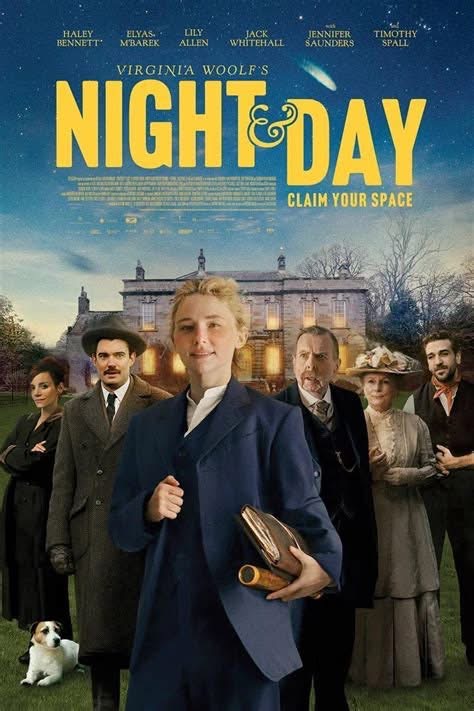
Ms. Briggs was the general editor of the highly successful Penguin Virginia Woolf, which included Three Guineas and A Room of One’s Own. She edited Night and Day for the series. 

Ms. Briggs also wrote Night Visitors: The Rise and Fall of the English Ghost Story, A Woman of Passion: The Life of E. Nesbit, 1858–1924, and This Stage-Play World, about the Elizabethan theatre. She was an expert on children’s literature and co-edited Children and Their books : a Celebration of the Work of Iona and Peter Opie.

She was a contributor to Cambridge Collections Online as well.

Ms. Briggs was a professor of English literature and women’s studies at De Montfort University in Leicester, England.  She served as chair of the faculty higher degrees committee and taught courses on Shakespeare, Virginia Woolf, twentieth-century and post-colonial literature.  Her research interests included Shakespeare and contemporary dramatists, women’s writing in early modern England and late-nineteenth and twentieth century literature.

Read obituaries in The Guardian and  The Independent, a story updated Sept. 21 in the Telegraph, and a thoughtful tribute by Anne Fernald on her blog Fernham.

6 February 2009 Update: Read more about Woolf Online, a Web resource conceived of and organized by Ms. Briggs before her death and launched this year.

Read Full Post »

For many, it’s just a statistic: In 1921 England there were one and three-quarter million more women than men. For Virginia Nicholson, Vanessa Bell’s granddaughter, that statistic is the start of a compelling story.

In Singled Out: How Two Million Women Survived Without Men After the First World War, Nicholson traces the fate of a generation of women left to blaze a new path for themselves after the slaughter of World War I. Known as ‘the Surplus Women’, the women of this generation met fates different from their Victorian forebears. Some accomplished great things as they took up traditionally male pursuits. Others felt trapped, lonely, and desperate.

In Singled Out, Nicholson draws on her extensive knowledge of the period, skillfully weaving the life stories of a sampling of women into a compelling tale of the interwar years for English women. Read more about the book, which will be out in the UK later this month.

Nicholson is also the author of Among the Bohemians and is the co-author of Charleston: A Bloomsbury House and Gardens. Speaking of Charleston Farmhouse in Sussex, she will be there to talk about her new book on Sept. 13 at 7 p.m. Tickets are £14 and include Nicholson’s talk and a glass of wine.

Wish I could join her. But I do plan to read Singled Out as soon as I can get my hands on a copy.

Read Full Post »

« Newer Posts - Older Posts »