Despite the fact that her essay is cleverly titled “A Space for Us” — an obvious play on Woolf’s words — Kennedy’s essay does not include Woolf in her mini-list of MySpace authors masquerading as famous writers. But she does include William Shakespeare and Oscar Wilde.
I guess it’s up to Woolf’s own circle to keep her at the center.
If Virginia Woolf were alive today, would she surf?
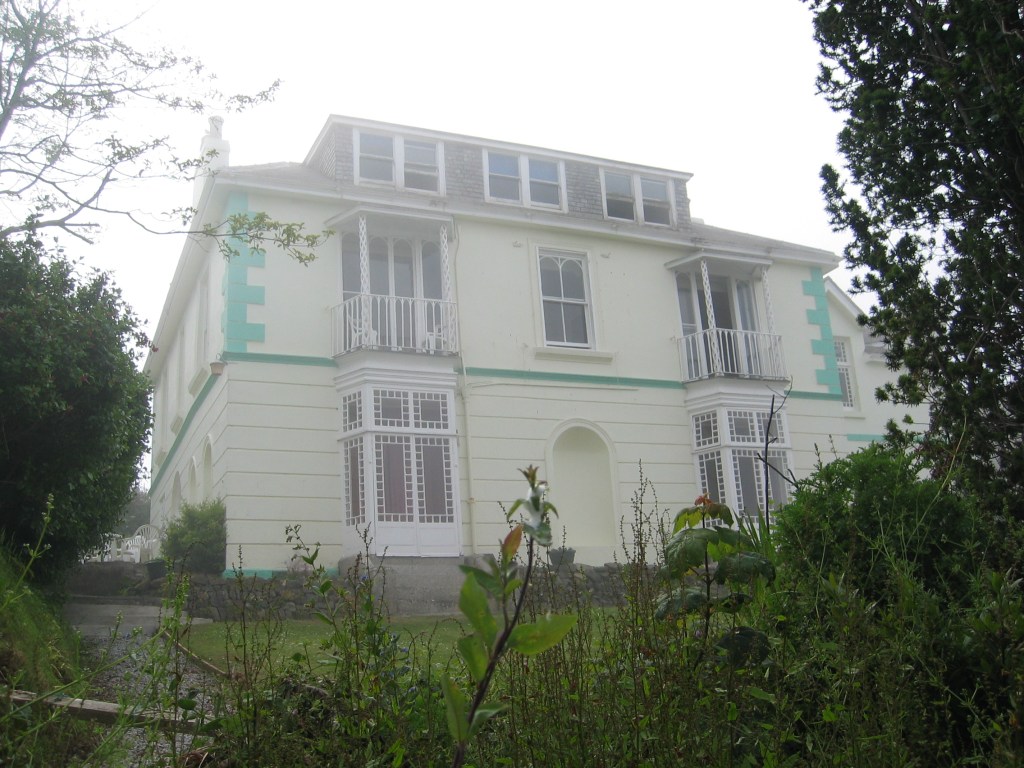
If it seems preposterous to connect Woolf with catching a wave, think again. Surfing has become big business in Cornwall — and this is the best time of year for the sport at St. Ives, the location of Woolf’s childhood summer home, Talland House.
Woolf herself is even mentioned in a story about the popularity of the sport at St. Ives. It appeared in yesterday’s edition of The Telegraph. Catch the story here. And while you’re at it, take a look at the waves. Pun intended.
Proposals for critical papers on any topic concerning Woolf’s work are invited. A particular theme may be chosen depending upon the proposals received, organizers say.
How to submit your paper proposal via e-mail: Send a cover page with name, e-mail address, mailing address, phone number, professional affiliation, and title of paper, along with a second anonymous page containing a 250-word proposal, to Kristin Czarnecki, kczarnecki@fuse.net, by Tuesday, Sept. 4, 2007.
Anyone who ever consulted a Virginia Woolf bibliography would be likely to recognize the name B. J. Kirkpatrick. News of her May death came late to the Virginia Woolf Listserv. It arrived today.
Kirkpatrick, Royal Anthropological Institute librarian and bibliographer of Virginia Woolf, died May 24, 2007, at Broadstairs, Kent, England.
The news was sent by Stuart Clarke, who collaborated with her on her third edition of A Bibliography of Virginia Woolf. Published in 1997, the bibliography was praised in reviews by Woolf scholars, including the late Julia Briggs.
Brownlee Jean Kirkpatrick was born in Grahamstown, South Africa, on January, 27, 1919. Read the obituary in The Independent.
The collection is tentatively titled Forthcoming from the Hogarth Press: How Leonard and Virginia Woolf Shaped Twentieth Century Publishing.
Southworth says the edited volume will appear in advance of the centenary of the founding of the Press in 2017. The editor is looking for essays that highlight the innovative quality of the Hogarth Press.
Southworth says the edited volume will appear in advance of the centenary of the founding of the Press in 2017. The editor is looking for essays that highlight the innovative quality of the Hogarth Press with a look at the following:
stories of some of the lesser known artists and their cover art,
stories of some of the press workers,
stories of some of the lesser known authors, and
essays on overlooked titles by well known authors who published with the Hogarth Press.
She expects the collection to assess the impact the Hogarth Press had on the careers of those connected with it who are usually overlooked. It will also deal with the broader issue of how the Hogarth Press shaped book production over the course of the 20th century.
Essays focused on individual authors or groups of authors/artists/texts, etc. are encouraged. Of particular interest is work that highlights archival sources, work which makes use of the now established Hogarth Press archives at Reading University and at Washington State University, for example, as well as author/artist/publisher specific collections.
Also welcome are essays which engage with recent critical work on literary/artistic modernism and publishing and the marketplace, bibliographical environment, networks, celebrity, censorship, and archive studies.
The call for papers asks that themes address (but are not limited to):
risks that the Woolfs took in terms of possibilities of censorship
innovations in cover art and other aspects of printing and book marketing
the Woolfs’ relationships with English provincial writers and with writers from the colonies
the Woolfs’ engagement with new ideas in the sciences, popular culture, peace studies, fashion, cinema, etc.
the Woolfs’ collaboration with press workers and with patrons
the translations the Woolfs themselves engaged in and those they published at the press
the Hogarth Press in the archives
the portrayal of the Hogarth Press in contemporary fiction
the Hogarth Press’ role in a specific author’s, artist’s, press worker’s careers
the relationship of the Hogarth Press to other presses of the period
Completed essays of 20-25 pages, double spaced, (MLA style preferred), along with queries and suggestions, should be sent to Helen Southworth, Clark Honors College, University of Oregon, Eugene, OR 97403-1293.