Feeds:
Posts
Comments

Last night I spent several hours in a writing workshop. It was wonderful. How could it be anything else? The instructor was Virginia Woolf.

I found Woolf’s lessons on writing inside the covers of the charming book by Danell Jones called The Virginia Woolf Writers’ Workshop: Seven Lessons to Inspire Great Writing.

Jones combed Woolf’s diaries, letters, essays and novels to pull together the author’s best advice about writing. Woolf then delivers this advice in a setting Jones imagines — at an imaginary podium in front of a room full of eager students in a writing workshop. Actual quotes from Woolf are connected by Jones’s own words, but all stay true to what we know and love about Woolf.

This is a little gem of a book that delivers big on its promise to “inspire great writing.” It includes chapters on practicing, working, creating, walking (Yes, walking! After all this is Woolf we are talking about.), reading, publishing and doubting.

And each chapter ends with what Jones calls “Writing Sparks” to inspire hands-on practice. There are more of these at the end of the book as well.

Whether you are a writer, a reader, a teacher or just a Woolf fan, this is a sweet little book to own.

Read a more extensive review here and an excerpt here. You can also read an interview with the author.

The Fall/Winter 2008 issue of the Virginia Woolf Miscellany also has a review of the book, as does the January 2009 issue of the Virginia Woolf Bulletin.

Heidi Neilson is an artist whose 2004 book Atlas of Punctuation includes letterpress prints of the last punctuation marks of every sentence found in 14 famous books, including one by Virginia Woolf.

The punctuation for each book is consolidated on one page of the Atlas of Punctuation, leaving white space where the words would be.

Neilson’s book is just one in about 40 that are part of a new exhibit called “Out of the Incubator” at the Islip Art Museum. The show presents a sampling of artist’s books published during residencies at the Women’s Studio Workshop, according to the New York Times.

The Women’s Studio Workshop is a nonprofit organization founded in 1974 by four female artists in Rosendale, N.Y.

Read more about this unusual book in the New York Times and on the Women’s Studio Worshop Web site.

Have £1.5 million? Then you may be able to purchase an authentic Bloomsbury home in the country.

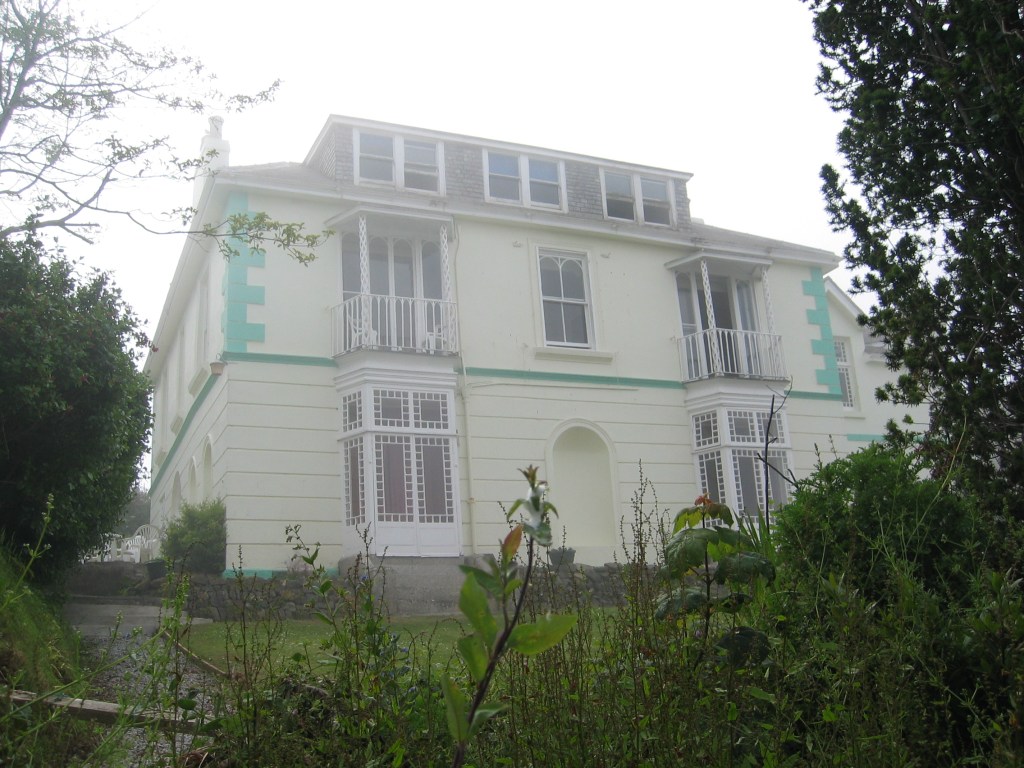
Hilton Hall, home of David “Bunny” Garnett, a member of the Bloomsbury group, novelist and critic, is for sale at that price.

Virginia Woolf’s niece Angelica Bell lived at Hilton Hall after her marriage to Garnett. Angelica was 23 at the time of the wedding; Bunny was 49.

Garnett had earlier been in a relationship with Angelica’s mother and Woolf’s sister, Vanessa Bell, and artist Duncan Grant.

Another interesting tidbit that connects the village of Hilton with Woolf: From the Middle Ages to the nineteenth century, Hilton lay on a cattle route between St. Ives and London. The cattle fair at St. Ives, Woolf’s summer home for the first 12 years of her life, was one of the four biggest in the country.

Located 12 miles west of Cambridge in the village of Hilton, the 17th-century Hilton Hall has six bedrooms and is filled with reminders of its Bloomsbury past, according to the Times. You can read more about it here.

Ah, Google. It is such an amazing resource.

While doing a Google image search on another topic, I found the two images included in this post. Both are intriguing.

The first photo, titled “self portrait, virginia woolf dress,” is the basis for the second image, a graphite drawing on rag paper titled “every girl needs a virginia woolf dress …” that was offered for sale here. The artist says the dress reminds her of of Woolf “because it has pockets so deep that you could lose yourself within them.”

Sadly enough, the original Woolf dress sketch is sold now, but other drawings by the same artist, Jessica Ann Mills, are available.

self portrait, virginia woolf dress

every girl needs a virginia woolf dress ...

Did you know that a song cycle based on Virginia Woolf won the Pulitzer Prize for Music in 1975? I didn’t.

The piece, called From the Diary of Virginia Woolf, was composed by Dominick Argento for medium voice and piano. It was commissioned by the Schubert Club of St. Paul, and premiered Jan. 5, 1975, in Orchestra Hall in Minneapolis.

You can purchase a CD of a 1975 live performance by mezzo soprano Dame Janet Baker, with Martin Isepp on piano, here. The recording was released in 1997.