Feeds:
Posts
Comments

Archive for August, 2007

Victoria GlendinningWhen Victoria Glendinning‘s Leonard Woolf: A Biography hit the bookshelves last September, opinions about the book formed quickly. And comments — both negative and positive — flew.

Anonymous reviewers posted brief but critical comments on the Amazon UK Web site. Glendinning’s husband, Kevin O’Sullivan, responded with his own glowing defense and signed the review with his own name. That generated more furor.

Comments on the Amazon U.S.A. Web site were overwhelmingly favorable. And other sites, such as Simon & Schuster’s, posted complimentary blurbs from reviews at large. John Gross wrote his own positive assessment for Commentary Magazine entitled “Mr. Virginia Woolf.”Leonard Woolf bio cover

At this year’s 17th Annual International Conference on Virginia Woolf at Miami University in Oxford, Ohio, I heard one or two negative remarks about the book, but Glendinning’s biography of Leonard wasn’t a topic of any of the conversations in which I was involved. I did wonder, though, what people found problematic.

Yesterday, Anne Fernald mentioned on her blog, Fernham, that she is reviewing the book for the Virginia Woolf Miscellany. She said she “found a lot to like” in Glendinning’s biography. I agree. I found sections helpful when I was looking for information about Leonard’s and Virginia’s wartime experiences.  

The Whitbread-prize-winning biographer of Vita Sackville-West seems to have taken the furor in stride. At least that’s how it sounds in an interview conducted by Susan Johnson of the Sydney Morning Herald.

“`The whole thing was extraordinary but I suppose if you put your head above the parapet at all, there are some people who will decide they don’t like you, even if they don’t know anything about you,'” she says in the article published today.

She went on to explain that, “`Virginia Woolf has become so much more than she really was, you know, she’s become iconic and devotees almost worship her and impose upon her all sorts of attributes. They kind of feel they own her.

“`I’m the first to respect her work and I’m not trying to down Virginia but there’s this sort of cult … I gave a talk at a Virginia Woolf society in Birmingham before the book was published and at questions afterwards somebody asked if Woolf said something or thought something or other and I, in all innocence, asked, ‘Which Woolf are you talking about?’

“`There was this hoarse voice from the audience: ‘There is only one Woolf.’ And she did not mean Leonard,'” Glendinning told Johnson.

Glendinning has produced an impressive body of work. She is the award-winning author of Vita: The Life of Vita Sackville-West and Trollope, as well as Elizabeth Bowen, Edith Sitwell, Rebecca West, and Jonathan Swift. She has also written three novels: Flight, The Grown-Ups, and Electricity.

Read Full Post »

The passing of noted scholar Julia Briggs

Julia Briggs, noted Virginia Woolf critic and biographer, died at about 6:30 a.m. Aug. 16 in the Royal Marsden Hospital in London, England. She had been in a coma for a week.

She was the author of Virginia Woolf: An Inner Life, the groundbreaking 2005 biography of Woolf that focused on her writing life. Read a BBC interview with Ms. Briggs in which she discusses An Inner Life. She also wrote a volume of criticism called Reading Virginia Woolf, which was published in 2006.

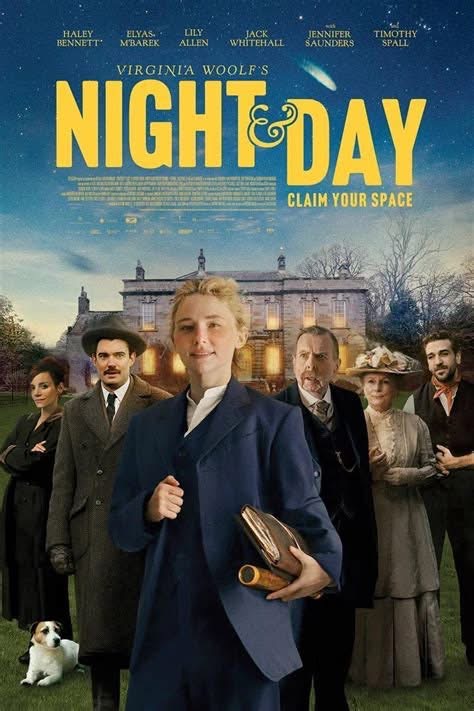
Ms. Briggs was the general editor of the highly successful Penguin Virginia Woolf, which included Three Guineas and A Room of One’s Own. She edited Night and Day for the series. 

Ms. Briggs also wrote Night Visitors: The Rise and Fall of the English Ghost Story, A Woman of Passion: The Life of E. Nesbit, 1858–1924, and This Stage-Play World, about the Elizabethan theatre. She was an expert on children’s literature and co-edited Children and Their books : a Celebration of the Work of Iona and Peter Opie.

She was a contributor to Cambridge Collections Online as well.

Ms. Briggs was a professor of English literature and women’s studies at De Montfort University in Leicester, England.  She served as chair of the faculty higher degrees committee and taught courses on Shakespeare, Virginia Woolf, twentieth-century and post-colonial literature.  Her research interests included Shakespeare and contemporary dramatists, women’s writing in early modern England and late-nineteenth and twentieth century literature.

Read obituaries in The Guardian and  The Independent, a story updated Sept. 21 in the Telegraph, and a thoughtful tribute by Anne Fernald on her blog Fernham.

6 February 2009 Update: Read more about Woolf Online, a Web resource conceived of and organized by Ms. Briggs before her death and launched this year.

Read Full Post »

For many, it’s just a statistic: In 1921 England there were one and three-quaSingled Outrter million more women than men. For Virginia Nicholson, Vanessa Bell’s granddaughter, that statistic is the start of a compelling story.

In Singled Out: How Two Million Women Survived Without Men After the First World War, Nicholson traces the fate of a generation of women left to blaze a new path for themselves after the slaughter of World War I. Known as ‘the Surplus Women’, the women of this generation met fates different from their Victorian forebears. Some accomplished great things as they took up traditionally male pursuits. Others felt trapped, lonely, and desperate.

In Singled Out, Nicholson draws on her extensive knowledge of the period, skillfully weaving the life stories of a sampling of women into a compelling tale of the interwar years for English women. Read more about the book, which will be out in the UK later this month.

Nicholson is also the author of Among the Bohemians and is the co-author of Charleston: A Bloomsbury House and Gardens. Speaking of Charleston Farmhouse in Sussex, she will be there to talk about her new book on Sept. 13 at 7 p.m. Tickets are £14 and include Nicholson’s talk and a glass of wine.

Wish I could join her. But I do plan to read Singled Out as soon as I can get my hands on a copy.

Read Full Post »

Great Big Glorious Book for SchoolsDespite complaints that The Great Big Glorious Book for Girls is nothing more than an instruction manual for recreating a 1950s childhood for girls only, it does have something to recommend it. The book includes Virginia Woolf in its section on inspirational women. And in my book, girls and boys everywhere should be advised to look to VW for inspiration.

The tome, which has hit the top of the list of nonfiction best sellers in the U.K., was written by Rosemary Davidson and Sarah Vine. The authors defend their approach and their subject matter by explaining that girls get immense pleasure out of knowing how to make things from scratch — from pom poms to daisy chains to cupcakes — and their book helps them learn how. Others have roundly mocked and spoofed GBGBG, as it’s known for short.

The Great Big Glorious Book for Girls is seen as the female version of  The Dangerous Book for Boys, which was a huge hit in Britain last year and is now available in the U.S. It, too, has been criticized as sexist. And both have been described as nothing more than gift books that appeal to adults because of their nostalgia factor.

I don’t know why publishers feel obliged to mark — and market — these books for specific genders. Why not The Great Big Glorious Book for Kids? Or The Dangerous Book for Girls and Boys?

Read Full Post »

From reading Woolf, I knew that Tavistock Square in London had been touched by war. But until today, I didn’t realize how closely it was aligned with peace.

Tavistock Hotel, the site of where 52 Tavistock Square once stood.

First, the war connections. It was in Woolf’s Bloomsbury flat on the third floor of 52 Tavistock Square during the winter of 1936-1937 that she is said to have received a packet of photographs from the Spanish government. These were “not pleasant photographs to look upon,” she wrote in Three Guineas, for they depicted “dead bodies for the most part,” and devastated buildings, all victims of the Spanish civil war.

In July of 1937, she was once again at her Tavistock Square address when the violence of that war touched her in a more personal way. She learned that her twenty-nine-year-old nephew, Julian Bell, a volunteer ambulance driver in Spain, had been killed. It was a devastating personal loss, one she described in her diary as “a complete break; almost a blank; like a blow on the head: a shriveling up” (D5 104).

Four years later, in October of 1940, Woolf was visited by war again, this time in a more direct physical way. Her Tavistock Square building took a direct hit from a German bomb. When she viewed the devastation, she found “a heap of ruins…where I wrote so many books” (331).

War’s violence in real time
Fast forward to July 7, 2005. Woolf has been dead for sixty-four years, but Tavistock Square still exists. War strikes the location once more, when four terrorists detonate bombs in the London transport system, just as the morning rush hour comes to an end.The last of the four goes off on the Number 30 bus as it arrives in front of the British Medical Association, located on the east side of Tavistock Square, around the corner from the site of Woolf’s former flat. The blast, another incident in the 21st century “war on terror,” kills 52 persons and injures more than 770.

It is ironic that the gritty violence and destruction of war came again and again to the London location where Woolf spent 15 of her most productive years as a writer – and the place where she wrote two of her volumes most intimately connected to war and peace –Three Guineas and The Years. Three Guineas gives a creative and cogent argument that women must establish their own “Outsiders Society” in order to achieve peace. And The Years establishes unmarried matriarch Eleanor Pargiter as the character that holds the novel together and holds out hope for peace.

Peace comes to Tavistock Square
Virginia Woolf is not Tavistock Square’s only female connection to war and peace. Today I read about Rose Hacker, 101, who joined more than 100 other peace activists in Tavistock Square this week to remember the victims of the atomic bomb that destroyed Hiroshima in 1945. The Bloomsbury square is the site of an annual commemoration of the Hiroshima victims.

At 101, Hacker has seen war come and go — and come again. She recalled sitting on the Tavistock Square gate and waving the Union Jack as residents flooded the square to celebrate the end of the First World War. And though she had been told by her teacher that there would be no more wars, she remembers hearing the same prediction when World War II ended.

Despite all that — and her feelings of shame that we still have nuclear weapons — she holds out hope for peace. “We must not lose hope,” she told the Camden New Journal. “If I have not lost hope in 100 years, then you young people can still have hope.”

The hope and wisdom of this longtime spokeswoman for peace inspires me. I feel the same way about a statue that I wandered across in Tavistock Square. It depicts Mahatma Gandhi, the martyred leader of the Indian independence movement who is known the world over for promoting active nonviolence.

This statue sits in the garden area of Tavistock Square on a central site donated by St. Pancras Borough Council. Since its unveiling in 1966, other peace memorials have been established in the square, and it has become a popular place for peace events.

On any given day, visitors to the quiet green space in the heart of bustling Bloomsbury can find individual candles around the statue’s base. The candles, glowing softly in the shadow of Ghandi’s statue, are lit by those who hope for peace.

Rose Harker can be counted among them. And Virginia Woolf is there in spirit.

Read Full Post »

« Newer Posts - Older Posts »