Whatever holiday you celebrate, you may need a last-minute gift idea for a favorite reader. Here are a few books that could suffice. The bonus is that each has a Virginia Woolf connection, however slim.
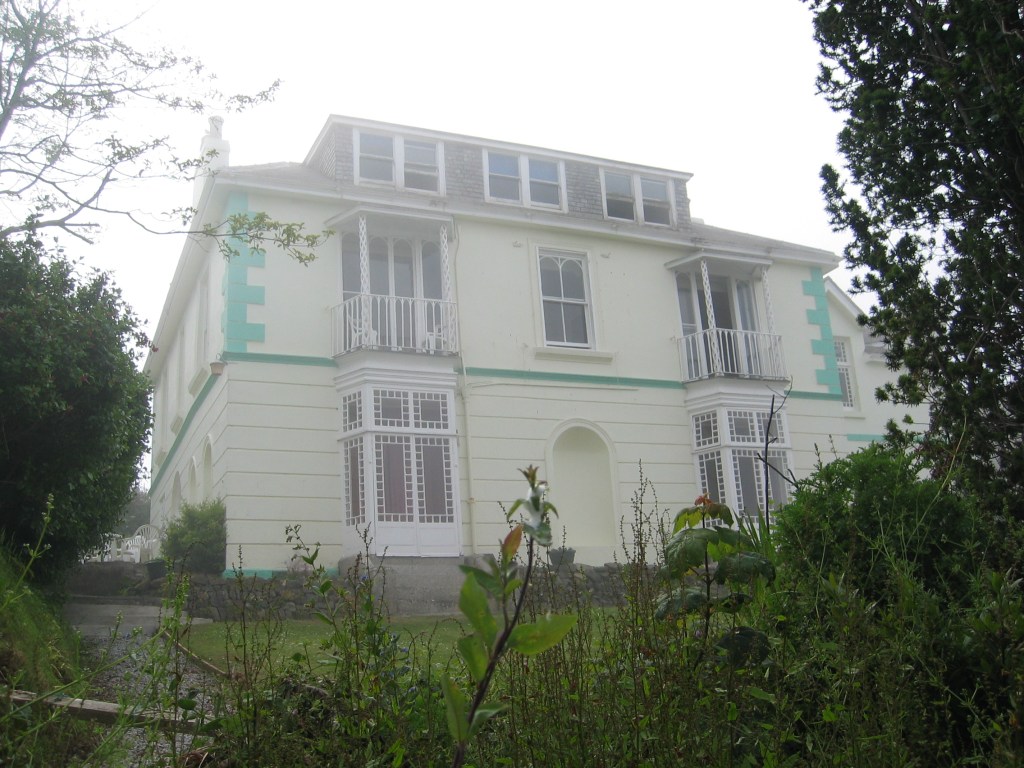
Writers’ Houses is a book produced by Francesca Premoli-Droulers that includes wonderful photographs of the homes of writers. Those of Vita Sackville-West and Virginia are included. Read more.
The newly released The Letters of T.S. Eliot, Volume Two: 1923-1925 includes letters from Virginia. It is edited by Valerie Eliot and Hugh Haughton and published by Faber Faber. Volume Two is being published simultaneously with the revised edition of Volume One of the letters, which covers the years from 1898 to 1922. Read more.
A new translation of The Second Sex By Simone de Beauvoir replaces all of the original material removed by its original translator. This material includes long extracts from works by Virginia Woolf, Sophie Tolstoy and Colette, among others. Translators Constance Borde and Sheila Malovany-Chevallier Jonathan Cape also corrected mistranslations of philosophical terms and punctuation. These changes, along with the replacement of approximately 15 percent of the original content — particularly from sections on history and literature — are said to make a meaningful impact for readers interested in gaining greater understanding of Beauvoir’s views on women’s lives. Read more.
Mark Hussey sent out an alert on the Woolf list-serv that the children’s book, Anastasia at This Address (1991), by Lois Lowry, has a character in it named Septimus Smith.
I checked it out at the library and read it with pleasure, while engaging in some nostalgia as I thought back on some of the books I read in my “tween” years. I wish I’d had the Anastasia Krupnik series—she’s a bright and adventurous role model for girls.
As for my Woolf quest, there was no clue to any other identity for this Septimus, also known as Tim, a well-to-do New York bachelor who places a singles ad to which Anastasia responds. I contacted Lois Lowry through her Web site, and she responded that there are no other Woolf references in the series, but in one of the earlier books – Anastasia Again! (1981) – there’s a Gertrude Stein. She explained her motivation when writing the books:
“I remember taking a certain amount of private pleasure in inserting references that kids wouldn’t notice—or care about if they did—but which from time to time, adults pick up on. Of course a 12 or 13 year old girl won’t get that. But they read right past it. And maybe sometime years later they will encounter Gertrude Stein, or Septimus Smith … and a little light bulb will illuminate.”
News blogs and Web sites are busy publishing ruminations about books and writing. Here are links to a few with connections to my favorite author. Virginia Woolf, of course.
In the Wall Street Journal, Rebecca Stott names Woolf’s Orlando as number two in a list of the top five works of historical fiction.
A Seattle Post-Intelligencer reader blog, written by a local librarian named Ann G., is “Looking back at reading by the decade.” In the post, Ann picks her favorite book by decade. For the 1930s, her choice is The Years. The novel, Woolf’s last published in her lifetime, was praised by the New York Times as her “richest novel” when it came out in 1937. It became a best seller in the United States that year. As a result, Woolf was featured on the April 12, 1937, cover of Time magazine. The cover story compared Woolf to Margaret Mitchell, whose Gone With the Wind was a 1936 best seller.
In an ode to diaries on The Guardian’s Web site, writer Gyles Brandreth pays homage to an edited volume of Woolf’s diary entries. Brandreth praises the volume, titled A Moment’s Liberty: The Shorter Diary of Virginia Woolf, for including “a gem on every page.” Anne Olivier Bell is the editor.
Margaret Drabble opines about the unique genre of the short story on The Guardian Web site. In her piece, she says Woolf tried to emulate her rival Katherine Mansfield’s short story style. But Drabble finds Woolf’s style “less accomplished, and sometimes embarrassingly whimsical.”
Family Album by Penelope Lively, whose City of the Mind is clearly influenced by Mrs. Dalloway, and
A Paradise Built in Hell: The Extraordinary Communities That Arise in Disaster by Rebecca Solnit, plenary speaker at this year’s Woolf and the City, the 19th Annual International Conference on Virginia Woolf.
Virginia Woolf and race was the topic of a recent discussion on the Virginia Woolf Listserv. Here are some of the sources readers and scholars suggested:
Jane Marcus’s book Hearts of Darkness
Patricia McManus article “The “Offensiveness’ of Virginia Woolf: From a Moral to a Political Reading” in Woolf Studies Annual 14 (2008)
Laura Doyle’s chapter titled “Voyaging Beyond the Race Mother: Melymbrosia and To the Lighthouse” in her book Bordering on the Body: The Racial Matrix of Modern Fiction and Culture. Oxford University Press, 1994.
Work by Urmila Seshagiri, including “Orienting Virginia Woolf: Race, Aesthetics, and Politics in To the Lighthouse”
Gretchen Gerzina’s work on Bloomsbury/Woolf and race