Feeds:
Posts
Comments

Archive for the ‘Bloomsbury pacifists’ Category

Last week, NYPL Berg Collection librarian Rebecca Filner gave me the hot tip that I could find unpublished letters written by Vanessa Bell to Maynard Keynes at the Morgan Library & Museum. Today I went there to read them.

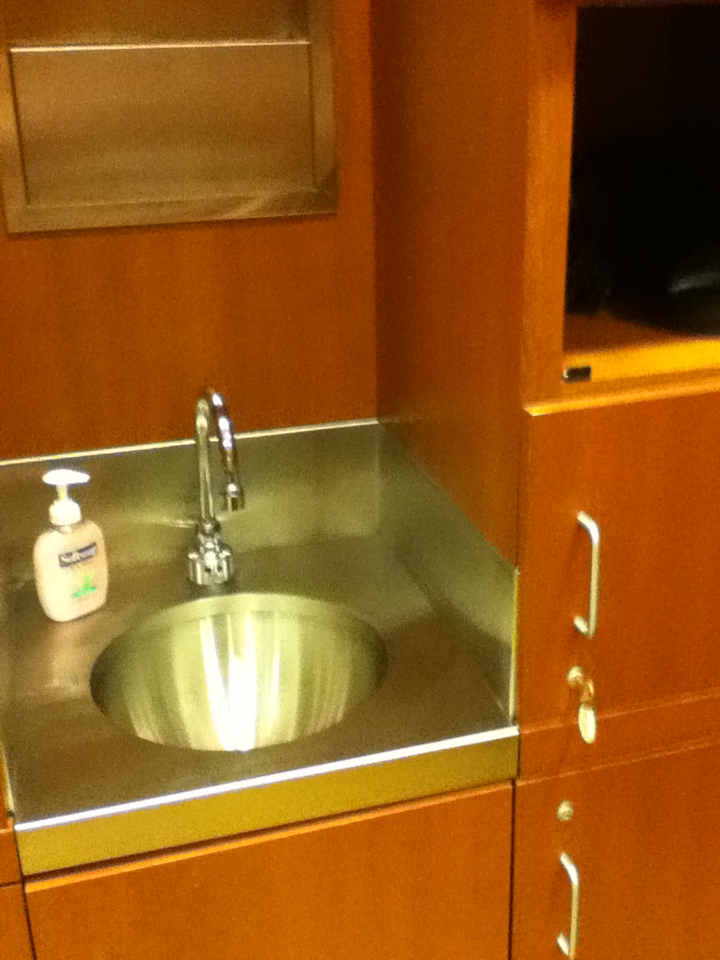
The routine at the Morgan is different than that at the Berg. At the Morgan, one is required to lock one’s personal items in a small locker, wash one’s hands, then read a full page of instructions about handling the rare materials before any are handed over. Then the materials come to you one slim folder at a time, after being checked and logged by the librarian. When you are ready for another, you let her know, and she picks up the current folder and brings a new one. As a reader, you never carry the materials.
At the Berg, one is brought as many as five folders at once and just expected to be careful. There is no hand washing procedure, and the librarian locks your purse in a bookcase after one has checked other items in the NYPL cloakroom. Sometimes I returned the materials to the librarian’s desk; other times she picked them up from me.

Today at the Morgan, I focused on letters written during World War I. About 17 of them connected to the Bloomsbury pacifists, the topic of my Short-Term Research Fellowship. But other tidbits included in these letters caught my eye as well. Here are a few of them:

  • Vanessa gave her children haircuts and shaped the hair of one of her servants into what sounded like a stylish bob (May 1916).
  • Vanessa complained that a vist from Ottoline Morrel was so taxing she couldn’t spend more than one weekend a year with her (August 1916).
  •  Both Vanessa and Clive asked Keynes to look over their investments and make suggestions for ways they could maximize their income (February 1918).
  • Keynes invested in David “Bunny” Garnett’s bee keeping enterprise (February 1918).
  • Wood was so scarce during the latter part of the war that Vanessa asked Keynes to save packing cases from a recent wine purchase for her to use as rabbit hutches (February 1918).
  • Vanessa couldn’t imagine anything more hellish than Keynes’s upcoming three-day trip to America (October 1918).

The bit that popped out at me the most, though, was the contrast between Vanessa’s letters to her sister Virginia written shortly before the birth of her daughter Angelica on Christmas Day 1918 and those written to Keynes. The letters to Virginia were filled with a panicky rush of last-minute requests and instructions regarding the upcoming birth and the care of Vanessa’s two older children. Her letters to Keynes are measured and sedate, calculated to reassure him that all is well.

To Keynes, she writes that Duncan Grant (Angelica’s father, although Vanessa’s husband Clive Bell played that role for many years) is quite anxious to be useful around the house. She mentions that he has cut up wood for the fire and done other necessary chores, while agreeing to stay on until after the baby is born.

Vanessa also boasts that Grant is spoiling her. She says she spends the mornings in bed, is only allowed downstairs for lunch, then is kept quiet in the drawing room for the rest of the day. Best of all, she notes, Grant never lets on that this domestic pampering routine is the least bit boring.

I found it interesting the way Vanessa changed the tone and content of her letters, based upon her audience.

Read more about my time at the Berg for my NYPL Short-Term Research Fellowship:

Read Full Post »

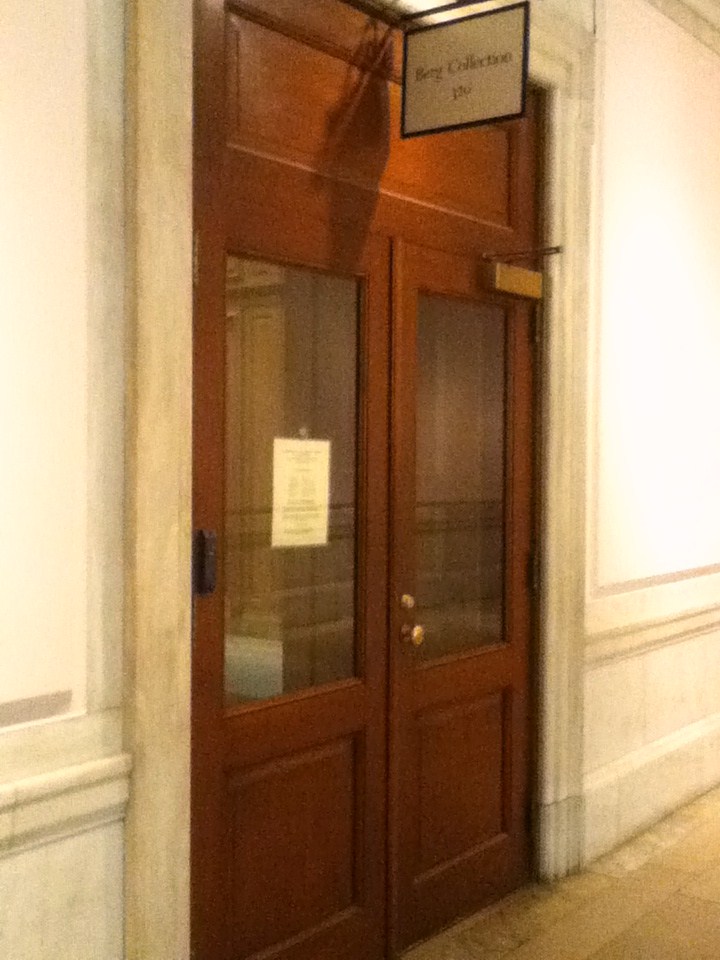
Door to the Berg Collection

After four hours of reading mostly unpublished letters from Vanessa Bell to her sister Virginia Woolf today, I felt sad.

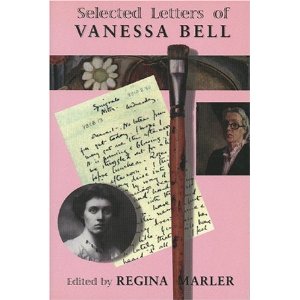
The letters — and there are 371 of them dating from 1910 to 1940 in the New York Public Library’s Berg Collection — are full of details about living arrangements, house guests, child rearing, artistic endeavors and personality conflicts.

But the thing that stuck out to me today — which is well off my research topic of the Bloomsbury pacifists — was how much Vanessa had to juggle. And that made me sad.

The letters written during the World War I years, which was also the period of time in which she had young children at home, had the biggest impact on me. In them, I saw how much she did to keep so many balls in the air at once.

Vanessa kept the household running smoothly, doing her best to economize on household expenses such as coal and foodstuffs and to work around such challenges as war rationing and exiting servants.  She kept the men in her life, Clive Bell and Duncan Grant and David “Bunny” Garnett, happy and productive, and she helped Grant and Garnett obtain conscientious objector status. She raised three children, instructing at least two of them in French and music, along with the similarly aged children of friends.

To me, several of the most poignant letters were written shortly before Christmas 1918, after the Armistice but before Vanessa gave birth to her third child and only daughter, Angelica. Those letters, obviously written hastily, with last-minute thoughts scribbled up the margin and across the top of the page, were full of instructions to Virginia about the children.

Virginia had generously agreed to care for Vanessa’s two eldest, Julian and Quentin, when she gave birth to her third child. And Vanessa was frantic to convey her gratitude, as well as her advice — about using nightlights and administering bromide and promising to ship additional clean clothing for the boys after their arrival.

While writing the last of the letters, on Christmas Eve, Vanessa went into labor. Angelica was born on Christmas Day.

Even then, there was no real rest for Vanessa. For she had guests. Garnett was at Charleston Farmhouse on the day of the birth, and Maynard Keynes was a houseguest as well.

More amazing than all this is that on top of the busy life as a wife and mother that Vanessa led, she produced art, wonderful art. How did she find the time and energy for it all?

All I can say is, she was a woman. And that is what women do. Isn’t it?

Read more about my time at the Berg for my NYPL Short-Term Research Fellowship:

Read Full Post »

Today at the New York Public Library’s Berg Collection, I got firsthand help from curator Isaac Gewirtz.

First, he showed me an article he wrote comparing the proof copy of Virginia Woolf’s A Room of One’s Own to the first published copy. It includes an appendix listing every variant between the recently-acquired proof (long thought to have been lost) and the first published version.

As the article shows, Woolf made significant revisions, many related to her views on war and patriarchy. Dr. Gewirtz’s article was published last year in Woolf Studies Annual Volume 17.

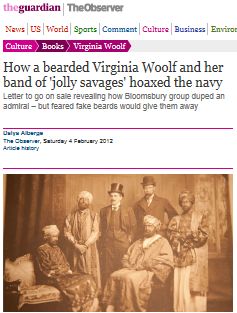
Second, Dr. Gewirtz gave me a printout of a Feb. 4 Guardian article that discusses a newly found letter related to the Dreadnought Hoax in which Woolf and four of her friends impersonated Abbysinian royalty to dupe a British admiral and board a Royal Navy dreadnought ship in 1910.

Written by Horace de Vere Cole, one of the pranksters, the letter is being offered for sale by Rick Gekoski, a London dealer in rare books and manuscripts who is imported from the U.S. The letter is accompanied by an original photograph of the hoaxers.

Third, Dr. Gewirtz told me that the Berg Collection holds one of the few existing photos of the Bloomsbury Group members who participated in the Dreadnought Hoax.

All three pieces of information connect to my research topic, the Bloomsbury pacifists.

Isaac Gewirtz is another reason why I ♥ librarians, including library curators.

Read more about my time at the Berg:

Read Full Post »

Rebecca Filner, librarian at the New York Public Library’s Berg Collection, doesn’t leave her job behind when she walks out of the Schwarzman Building on 42nd Street and Fifth Avenue.

What that means for me is that after she left work last night, she continued thinking about the Bloomsbury pacifists, the focus of my research at the Berg. And when I arrived this morning for the second day of my Short-Term Research Fellowship, she had some tips to share.

She told me of a recent Berg acquisition, a letter from Lytton Strachey to Duncan Grant.  And she also sent me links to unpublished letters from Vanessa Bell to Maynard Keynes currently housed at the Morgan Library & Museum, 225 Madison Avenue at 36th Street in Manhattan, and sent me the link to the reading room application.

Rebecca is another reason why I ♥ librarians.

Read more about my time at the Berg:

Read Full Post »

« Newer Posts