Feeds:
Posts
Comments

Archive for the ‘diaries’ Category

Last time here, we wrote about a Virginia Woolf cocktail. This time, we write about her encounter with an inebriated T.S. Eliot at tea, as she documented in her diary on this date, Dec. 19, 100 years ago today.

How elliptical this book becomes! I dont respect events any more; I’d like to record poor Tom’s getting drunk, all the same. We went to a flat in an arcade, & asked for Captain Eliot. I noticed that his eyes were blurred. He cut the cake meticulously. He helped us to coffee–or was it tea? Then to liqueurs. He repeated, L. noticed, “Mrs Ricardo”, as L. told his story; he got things a little wrong . . . Tom then quietly left the room. L. heard sounds of sickness. After a long time, he came back, sank into the corner, & I saw him, ghastly pale, with his eyes shut, apparently in a stupor. When we left he was only just able to stand on his legs . . . Next day, I spent 10 minutes at the telephone receiving apologies–how distressing, what could we all think? Could we forgive him– the first time–would we ever come again? . . . One of those comedies which life sometimes does to perfection. – Diary 2, 278.



Read Full Post »

One hundred years ago today, on Dec 3, 1923, Virginia Woolf began a long diary entry about her brother Adrian’s separation from his wife Karin with a rumination on writing vs. reading:

Back from Rodmell; unable to settle in; therefore I write diary. How often I have said this! An odd psychological fact–that I can write when I’m too jangled to read. Morever, I want to leave as few pages blank as possibe; & the end of the year is only some three weeks off. – Diary 2, p. 276.


Read Full Post »

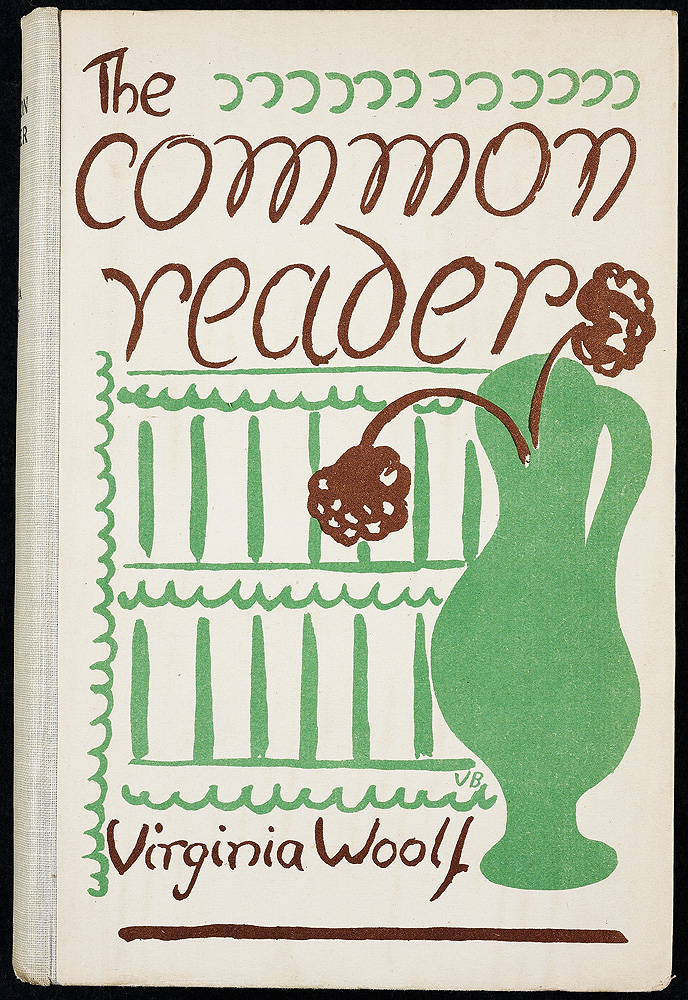
The Common Reader, Virginia Woolf’s book of essays published in 1925 with a jacket design by her sister Vanessa Bell, was provisionally titled Reading.

In it, she planned to revise some of her previously published essays and add some new ones, according to Mark Hussey in Virginia Woolf A to Z. Among its most important essays are “On Not Knowing Greek,” “Modern Fiction,” and “How It Strikes a Contemporary.”

One hundred years ago today, in her Sept. 5, 1923, diary entry, Woolf fills the half hour before dinner with her thoughts about beginning to write her book of collected essays:

A cold douche should be taken (& generally is) before beginning a book. It invigorates; makes one say “Oh all right. I write to please myself,” & so go ahead. It also has the effect of making me more definite & outspoken in my style, which I imagine all to the good. At any rate, I began for the 5th but last time, I swear, what is now to be called The Common Reader; & did the first page quite moderately well this morning. After all this stew, its odd how, as soon as I begin, a new aspect, never all this 2 or 3 years thought of, at once becomes clear; & gives the whole bundle a new proportion. To curtail, I shall really investigate literature with a view to answering certain questions about ourselves–Characters are to be merely views: personality must be avoided at all costs. I’m sure my Conrad adventure taught me this. Directly you specify hair, age, &tc something frivolous, or irrelevant, gents the book –Dinner! – Diary 2, 265.

Read Full Post »

In August of 1923 Virginia Woolf was in the middle of writing the novel that would eventually be published in 1925 under the title Mrs. Dalloway. After writing in her diary that she was “battling for ever so long” with the novel — tentatively titled The Hours — on the following day, she spelled out the stream of consciousness technique she planned to use in her groundbreaking work.

In this oft-quoted passage written on Aug. 30, 1923, she describes the process as digging out “beautiful caves” behind her characters. This is what she wrote:

You see, I’m thinking furiously about Reading & Writing. I have no time to describe my plans. I should say a good deal about The Hours, & my discovery; how I dig out beautiful caves behind my characters; I think that gives exactly what I want; humanity, humour, depth. The idea is that the caves shall connect, & each comes to daylight at the present moment — Dinner! –Diary 2, 263.

Later in the year, on Oct. 15, she describes the process a bit differently:

It took me a year’s groping to discover what I call my tunnelling process, by which I tell the past by installments, as I have need of it. – A Writer’s Diary, 60.


Read Full Post »

One hundred years ago today, on Saturday, 29 August 1923, Virginia Woolf wrote in her diary about the novel she was writing. Originally titled The Hours, it would be published in 1925 as Mrs. Dalloway.

I’ve been battling for ever so long with ‘The Hours’, which is proving one of my most tantalising & refractory of books. Parts are so bad, parts so good; I’m much interested; can’t stop making it up yet — yet. What is the matter with it? But I want to freshen myself, not deaden myself, so will say no more. Only I must note this odd symptom; a conviction that I shall go on, see it through, because it interests me to write it. — Diary 2, 262.

Read Full Post »

« Newer Posts - Older Posts »