Feeds:
Posts
Comments

Archive for the ‘The Hours’ Category

I have written about Virginia Woolf and fountain pens and her ink preferences before. But today I learned of a new discovery that links Woolf even more strongly to the everyday work of the Hogarth Press, thanks to her use of purple ink.

First page of The Hours notebook 2 (purple ink). Courtesy of SP Books

Nicola Wilson of the University of Reading and the Modernist Archives Publishing Project, a digital project that debuted at the 2017 Woolf Conference and focuses on the Hogarth Press, posted this note to the VWoolf Listserv:

We have recently found evidence of Woolf’s purple pen in the Hogarth Press archives up to Feb 1940 – on the stock cards! Taking account of the figures? This is very exciting as it gives a real indication of Woolf’s presence at the Press and corroborates the kind of information on figures she tracks in the diaries.

Purple ink and the Hogarth Press

Esther Folkersma made the discovery while working with Danni Corfield to clean, sort, and organize the Hogarth Press stock cards as part of her research internship with MAPP.  The Hogarth Press stock cards indicate where the stock of a specific book was being held, when the entity received the stock and how many copies they received, how many copies were issued, the number of copies printed at what date, the number of bound copies, and the balance in sheets.

“As more and more purple appeared under our sponges, brushes, and scalpels, and as the colours became more pronounced, Woolf’s presence in these cards grew,” Folkersma wrote in a post on the MAPP blog.

“The scale of Woolf’s handwriting in these stock cards surprised me, as her presence in the press, at least in a material sense, is often difficult to find, even though the significance of her role in the press has always been undeniable, especially as seen through her own diary entries.”

Folkersma explains that “the abundance of Virginia Woolf’s purple ink readily found on a majority of the Stock Value Cards illustrates her involvement in the press to an extent beyond what I had even gathered from her diaries. These very utilitarian cards show how involved Woolf was in the more administrative operations behind the scenes.”

Purple ink and The Hours (Mrs. Dalloway)

According to Mark Hussey, Bloomsbury scholar and author, “most of The Hours (‘Mrs Dalloway‘) holograph is in Woolf’s favored purple ink, with some in black and a little in blue. Her corrections on the American proof are also in purple ink.”

In 2019, SP Books published a gorgeous edition of the handwritten manuscript of what would become Woolf’s famous 1925 novel, allowing anyone who could obtain a copy to see that many of the pages were written in purple ink. I did and wrote a post about it.

Purple ink a chapter, a letter, and a diary entry

Folkersma also recommends reading Ted Bishop’s chapter “Getting a Hold on Haddock: Virginia Woolf?s Inks” from Virginia Woolf and the World of Books (2018), the selected papers from the 2017 conference.

And she mentions two Woolf quotes — one from a letter and one from a diary

This ink is Waterman?s fountain pen ink. Cheap, violet, indelible. (Which sounds as if I were paid to write their advertisements). – from a 1923 letter to Dorothy Brett

The degradation of steel pens is such that after doing my best to clip & file one into shape, I have to take to a Waterman, profoundly though I distrust them, & disbelieve in the capacity to convey the nobler & profounder thoughts.” – from a 1918 Diary entry

Roundtable participants at the 2017 Annual International Conference on Virginia Woolf sit below a screen showing a digitized ledger sheet from the Hogarth Press. Note the purple ink.

Read Full Post »

One hundred years ago today, on Saturday, 29 August 1923, Virginia Woolf wrote in her diary about the novel she was writing. Originally titled The Hours, it would be published in 1925 as Mrs. Dalloway.

I’ve been battling for ever so long with ‘The Hours’, which is proving one of my most tantalising & refractory of books. Parts are so bad, parts so good; I’m much interested; can’t stop making it up yet — yet. What is the matter with it? But I want to freshen myself, not deaden myself, so will say no more. Only I must note this odd symptom; a conviction that I shall go on, see it through, because it interests me to write it. — Diary 2, 262.

Read Full Post »

If you missed the Metropolitan Opera’s live performances of “The Hours” and didn’t catch it when it was shown live or recorded at your local theater, you still have a chance to watch it — right in the comfort of your own living room.

The much-lauded new opera will be the premiere episode of the 17th season of Great Performances at the Met on PBS. The first airing will be Friday, March 17, at 9 p.m. ET. In my area, it will also air Sunday, March 19, at 5 p.m. and Tuesday, March 21, at 8 p.m. All times are Eastern Standard.

Viewers in the U.S.A. can check local listings for the broadcast schedule of their PBS affiliate in their area.

The sold-out opera event of the year

“The Hours” played to sold-out audiences during its run at New York’s Lincoln Center from Nov. 22 through Dec. 15, 2022.

PBS Newshour called it, “The opera event of the year.” A Variety review claimed, “it’s Woolf who’ll make you swoon.”

Composer Kevin Puts adapted the opera from Michael Cunningham’s 1998 Pulitzer Prize–winning novel and the 2002 Academy Award-winning film by librettist Greg Pierce.

Inspired by Virginia Woolf’s Mrs. Dalloway (1925), it stars Renée Fleming alongside Tony winner Kelli O’Hara and opera star Joyce DiDonato. Phelim McDermott directs the production with Met Music Director Yannick Nézet-Séguin conducting. Christine Baranski hosts.

Get ready with reviews, synopsis, program

The opera uses Woolf’s and Cunningham’s prose as a departure point from which to explore the novels’ ambiguities and fluidities that are heightened further by musical expression, according to the PBS website.

You can read more rave reviews from critics, prepare for the performance by reading a synopsis, and download a program.


Read Full Post »

Imagine my double-take when, scrolling through the LitHub Daily recently, I came across an ad for a new book, Insignificance by James Clammer.

The caption read “A plumber’s Mrs. Dalloway.”

The book is described as an interior-monologue lyric novel, a single day in the life of Joe Forbes, reluctant plumber and anguished father. The TLS calls it “A descent into the suburban uncanny and the English soul.” The Spectator links it to Woolf: “Like Mrs. Dalloway, it immerses us in the rush of a different life, the strangeness of another body.”

I may not read it, but the reviewers are taking it seriously, and it sounds compelling. Who am I to snicker?

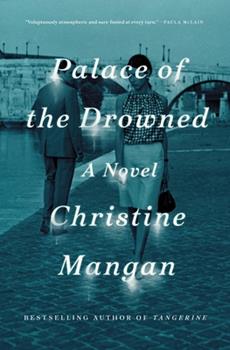
Palace of the Drowned

A New York Times review drew me to Christine Mangan’s Palace of the Drowned, which “heaves with allusions to other books and other authors — a little Patricia Highsmith here, a little Virginia Woolf there, glimpses of Shirley Jackson’s “The Haunting of Hill House” someplace else.”

A novel about a novelist, when Frankie’s latest work is panned and she causes a scene, she goes to Italy, where she’s stalked by an admirer:

“You’re not the first author to receive a bad review,” Gilly tells her. “Dostoyevsky. Hemingway. Did you know Virginia Woolf was terribly affected by criticism? She didn’t even like to read what others wrote about her fellow authors. She said that no creative writer can swallow another contemporary.”

As the Highsmith and Jackson references imply, there’s suspense and intrigue here too, and Venice—all that’s missing are the Bellinis (the drink, not the painter or the composer).

The Plot

 I can’t resist novels about writers writing; Jean Hanff Korelitz’s The Plot is another. A twisted tale of plagiarism and intrigue, the protagonist justifies his actions: “He would hardly be the first to take some tale from a play or a book—in this case, a book that had never been written!—and create something entirely new from it. Miss Saigon from Madam Butterfly. The Hours from Mrs. Dalloway. The Lion King from Hamlet, for goodness’ sake!”


Read Full Post »

I just stumbled across a saved email from two years ago that included a link to a 16-minute YouTube video that provides a photographic timeline of Virginia Woolf’s many looks, from youth to adult, from formal to playful.

The music accompanying the timeline, which I am belatedly sharing, is by Philip Glass, who also composed the music for the 2002 film “The Hours.”

Read Full Post »

Older Posts »