Well, Woolf lovers, just in time for Father’s Day comes Fathers: A Literary Anthology, a collection of poems and essays that explore the idea of fatherhood. Included in the volume are two essays by Virginia, “Leslie Stephen” and “Edmund Gosse.”
Other authors included are Alice Munro, Franz Kafka, E.E. Cummings, Dylan Thomas and E.B. White.
From author Andre Gerard’s introduction:
As Telemachus learns [in The Odyssey], “It’s a wise child who knows its own father,” and it’s a rare child indeed who hasn’t been troubled by trying to make sense of its father, in the flesh or in the spirit. We don’t, it would seem, have to be Hamlets to be troubled by the ghosts of our fathers, living or dead. With the possible exception of mother, father is the most burdened word in our language, containing within it a bewildering profusion of emotions, experiences, understandings, and misunderstandings.
Fire Lookout on Solitude (and Lots of Time to Read), New York Times
This year, I’m bringing some Virginia Woolf — “To the Lighthouse,” which I’ve never read — half a dozen issues of the London Review of Books and New York Review of Books, a collection of Balzac novellas, “Mating” by Norman Rush, Terry Castle’s new …
Dine with Famous Dead Folks at the Contemporary Jewish Museum, SF Weekly (blog)
We’ll be disappointed if Virginia Woolf and Gertrude Stein don’t break latkes over the direction of modern feminism and more importantly, what’s the most flattering length for a caftan. Enquiring minds. Laura Beck is a founding editor of Vegansaurus! …
The Baroque Folk of Foxtails Brigade, East Bay Express
Some are based on fairy tales, with language filched from her favorite canonical authors — Oscar Wilde, Virginia Woolf, Hans Christian Andersen. Others, like the title track, were inspired by her experiences as a substitute teacher. …
Books by dudes for dudes, books by chicks for dudes, Los Angeles Times
Included in the list: Zadie Smith, Kelly Link, Marilynne Robinson, Jhumpa Lahiri, Lydia Millet, Doris Lessing, Djuna Barnes, Toni Morrison, Harper Lee, Clarice Lispector, Iris Murdoch, Shirley Jackson, Gertrude Stein, Virginia Woolf, Elizabeth Bishop …
The class war: Why everyone feels insecure, The Guardian
It would explain a lot even though the middle class – snooty Virginia Woolf despised them too – whose postwar expansion lies behind such feelings of insecurity is also entitled to feel threatened, not least by globalisation. “Squeezed middle”? …
A new book club on Twitter (better be concise!), Marketplace
Primarily a biographer whose works include studies of Maria Callas, Virginia Woolf, and Camille Claudel, she is the author of 18 published books. Her latest, Margaret Mahler, A Biography of the Psychoanalyst, was published recently by McFarland …
Stands the church clock at ten to three, Varsity Online
The appeal soon caught on and Brooke became the centre of a set which included Keynes, Virginia Woolf, Wittgenstein and Forster. They were the Neo-Pagans. For them, time, appointments, deadlines, seemed as distant as these figures now seem to us. …
Commencement 2011: Senior orators, The Brown Daily Herald
Combs will speak about the effect Virginia Woolf’s work has had on him. He first discovered her work in a class last semester, and he said Woolf taught him to read and write in a new way and appreciate “what it can do for us as people. …
The Blagger’s Guide To…Self-Publishing, The Independent Virginia and Leonard Woolf’s Hogarth Press, launched in 1917, published many of Woolf’s works, along with the first UK edition of TS Eliot’s The Waste Land in 1924, and In A Province (1934), the first book by Laurens van der Post. …
Literary guide, San Francisco Chronicle
A series of poem songs that narrate a story – via words, jazz, rock, electronica – of a dinner party populated by Gertrude Stein, Virginia Woolf, Bobby Fischer and other dead eccentrics. 7 pm The Yud gallery, Contemporary Jewish Museum, 736 Mission St. …
Portrait of the artist as a headscarf-wearing woman, Ha’aretz
The studio’s name was Mizrahi’s idea, and as suggested by the play on Virginia Woolf’s “A Room of One’s Own” it points to a feminist agenda. As head of the art track in Ulpanat Tzvia in Ma’aleh Adumim, a religious girls’ high school, Mizrahi – from …
Inspiration is never quite where you expect it to be, The Cornishman
Unfortunately, I am not that au fait with the wit and wisdom of Virginia Woolf, well apart from “A woman must have money and a room of her own if she is to write fiction.”To be honest that would have seemed rather a pretentious introduction especially …
The nearness of heartbreak, The Australian
In 1929 Virginia Woolf thought it could be procured for pound stg. 500 a year, but she did not specify by what means this money was to be found. Paid work, Simone de Beauvoir said, weighing in on the debate 20 years later, was the answer. …
Vorticism: the biz of the buzz – review, The Guardian
In Orlando, Virginia Woolf definitively mocked the idea that literature, that prose style, was the toy of social conditions: “Also that the streets were better drained and the houses better lit had its effect upon the style, it cannot be doubted. …
Essays, Volume 6: 1933-1941, By Virginia Woolf, The Independent Virginia Woolf, high priestess of modernism, had to earn her living like anybody else. These days, her kind of fiction, richly figurative, with her characters’ narratives floating dreamily between inner and outer life, is not fashionable. …
To the River: A Journey Beneath The Surface, By Olivia Laing, The Independent
But it is inevitable that the Ouse should be associated with the Woolfs: here Virginia committed suicide, as Leonard realised the moment he saw her stick lying on its bank. But none of Virginia Woolf’s biographers has identified, as Laing does here, …
Virginia Nicholson: Heroines on the home front, Telegraph.co.uk
Most surprisingly, perhaps, Nicholson quotes Virginia Woolf, her grandmother’s younger sister, after whom she is named and to whom she bears more than a passing resemblance. “It would have been hard for me to leave her out,” she says, even though Woolf …
June’s Little Black Dress, Wall Street Journal London dealer Peter Harrington will offer an intimate letter written in 1932 by Virginia Woolf to her fellow writer Vita Sackville-West in which she says, “I would pitch you a very melancholy story about my jealousy of all your new loves” (price: …
The Irish Times – Friday, May 27, 2011, Irish Times
Produced Around the World in 80 Days. Carrie Fisher’s dad. Used to be Richard Jenkins. A selection of what? 10 Greer Garson braves the war at home. Queen Victoria dallies with a servant. Vanessa Redgrave plays a Virginia Woolf heroine. …
Sisterhood does not exist, DAWN.com
In the words of Virginia Woolf: “Women have served all these centuries as looking-glasses possessing the magic and delicious power of reflecting the figure of a man in twice its natural size.” According to Women’s Action Forum member, Neelum Shah, …
St. Louis Art Capsules, Riverfront Times
Invoking Virginia Woolf’s seminal feminist essay, A Silk Worm of One’s Own, cordons off space with tangled white threads that dangle from the ceiling in mud-smeared clumps or writhe freely in space. A video piece, entitled I Breathe, I Walk, …
The Typewriter — Part Of What We Are, Irish Independent
Other upstanding authors of note included Virginia Woolf, Tom Wolfe and Vladimir Nabokov. Jack Kerouac typed his most famous novel, On The Road, on a long roll of paper so he wouldn’t have to break his train of thought. After a fortnight he’d produced …
Cary Grant Wasn’t Gay, Says His Daughter, Village Voice (blog)
“Perhaps Dad had what Virginia Woolf described as ‘an androgynous mind’,” she concludes. But did dad ever experiment sexually? wonders Jennifer, aloud. “I don’t know. Have I ever experimented sexually? Have you? If experimentation makes one gay, …
Alexandra Harris, University of Liverpool and author of Romantic Moderns: English Writers, Artists and the Imagination from Virginia Woolf to John Piper, which won the Guardian First Book Award last year. Harris also has plans in the works for two other books.
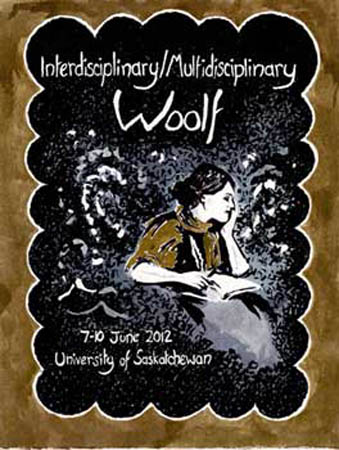
According to the conference website, the theme is “inspired by Woolf’s efforts to cross, undermine, and sometimes reassert disciplinary and other boundaries in her body of work. Conference organizers welcome scholars, teachers, students, readers, activists, community groups and artists who respond to Woolf and her circle from diverse points of view. Of particular interest are interdisciplinary, multidisciplinary and transdisciplinary approaches to Woolf, whether in the form of research, pedagogy and creative work or community or institutional activities.”
A call for papers will be circulated this summer, and more details about the program and events will be posted soon.
For more information, contact organizer Ann Martin.
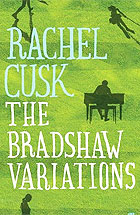
I recently read a review of Rachel Cusk’s latest novel, The Bradshaw Variations, in Rain Taxi, a journal of book reviews. The reviewer evokes Woolf in a flattering if tongue-in-cheek comparison:
“What makes it not only Cusk’s best work to date but also one of the most engaging British novels of recent years is the extent to which the author commits to the insipid, the domestic, the mundane. If Virginia Woolf had gone for a jog everyday instead of smoking so much, she might have written The Bradshaw Variations (though this is still strict realism, much more Night and Day than The Waves).”
Cusk, who has written eight novels in 10 years, must be dancing on air, as she has proclaimed Woolf’s influence, particularly in her 2007 Arlington Park. The one-day-novel set in a London suburb was inspired by Mrs. Dalloway.
Now I’m reading the new collection of stories by Julian Barnes, Pulse. Barnes is a witty wordsmith, eloquent at times, egotistical and chest-beating at others. In both regards he reminds me of John Updike. My favorite story in this book is, ironically, “Sleeping with John Updike.” Jane and Alice, middle-aged, moderately successful authors and long-time colleagues and friends, are on a train traveling home from a literary festival at which they both presented.
They are generous with their praise for each other, their work, their recent readings, though “each privately liked the other’s work a little less than they said.” And under the radar they reflect to themselves critically as well on each other’s dress and appearance, mannerisms and morals.
As I was reading this, I started to picture Virginia Woolf and Katherine Mansfield in this scenario. They engaged with each other in much the same way—devoted friends professing mutual admiration, while at the same time snide critics and fierce competitors.
And Updike? It turns out that years ago at a party Alice perched on his knee, and he “twinkled” at her. But she let Jane believe that it had gone further, because “one has one’s pride,” and their sex lives are another area of competitiveness. Hmmm, who shall we cast in Updike’s role in Virginia and Katherine’s story?
Publication of the hardcover volume means that all of Woolf’s essays are available as an entire collection for the first time.
A review of that volume is now posted on The Independent’s website. Written by Michèle Roberts, it describes the volume as “beautifully and expertly edited by Stuart N. Clarke” and praises the intelligence and diversity of this collection of essays.
The Scotsmanreviewed the book more than a month ago. Reviewer Jane Shilling praised Woolf’s beautiful writing and her ability to write “tenderly about the humble, the overlooked, the unknown.”
The Irish Times published a review on April 2. In it, author Eve Patten focuses on Woolf’s honing of her essay writing technique.