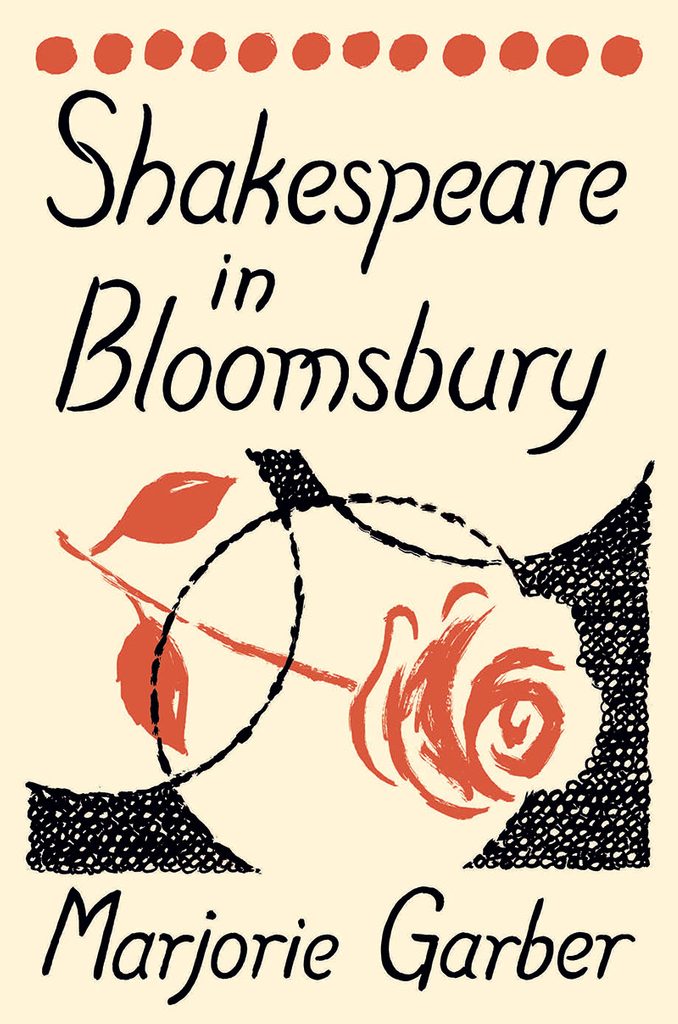
Shakespeare and Bloomsbury. They may not seem to go together, but they do. And theFolger Shakespeare Library has created a podcast in its “Shakespeare Unlimited” series that explains how.
In episode 221, Harvard Professor Marjorie Garber explains how modernist writers of London’s Bloomsbury group made Shakespeare their own. In this conversation with Barbara Bogaev, she discusses the threads of Shakespeare that run through Woolf’s novels, how Lytton Strachey changed our perspective on Shakespeare’s late plays, and what got her interested in the Bloomsbury Group in the first place, according to the website.
Garber is the author of Shakespeare in Bloomsbury (2023), in which she traces the influence of Shakespeare on the members of the group, which included Virginia Woolf, E.M. Forster, Vanessa Bell, Dadie Rylands, Strachey, John Maynard Keynes, and others.
What surprised me was how widespread it was . . . they are all writers and they’re interested in style, but no matter what they’re writing about, Shakespeare comes in. . . He is for them the pinnacle of a certain kind of intellectual achievement.
NKP Theatre Company’s production of a 50-minute adaptation of Eileen Atkins’ playVita & Virginia will be on stage at the Midlands Arts Center (The Mac) in Birmingham for one performance only at 7:30 p.m. on Nov. 11.
The play was recently staged at the Edinburgh Fringe in August and for members of the Virginia Woolf Society of Great Britain.
Here’s a quote from Andrew Girdwood in the Edinburgh Reviews:
Emma Francis and Ruth Cattell smash it. Each gives incredible, powerful, provocative yet heart-felt, down-to-earth performances.
About the show
Ticket price: From £11.50 Booking: Book here. Location: The Midlands Arts Center (The Mac), Cannon Hill Park, Birmingham, B12 9QH Get more information.
About the play
This abridged version was created for an intimate setting by NKP Theatre Company. In it, Virginia Woolf meets fellow author Vita Sackville-West in London in the 1920s. The two embark on a 20-year relationship that inspires one of Virginia’s most famous novels, Orlando. Abridged from the original play by Eileen Atkins, Vita and Virginia deftly brings to life the real letters and diaries of the two women, revealing deep friendship, wit and passion between the literary genius and the aristocratic yet middle-brow poet.
Doorway leading from Virginia Woolf’s bedroom to the back garden at Monk’s House. Woolf’s bedroom was part of a two-story extension the Woolfs added in 1930 and could only be accessed from the outside.
Hannah Minton, who describes herself as “a long-time admirer of the VW Blog [Blogging Woolf]” who loves “all the work that your group does to promote Woolf’s image” wrote us to share a photo of Virginia Woolf that she has colorized.
The photo, which comes from the Houghton Library at Harvard University, depicts Woolf at Monk’s House, circa 1933-1935, according to library records. It is one of many black and white images that Minton has colorized as part of her fledgling colorization business.
Minton describes the photo as being taken in Woolf’s “room at Monk’s House,” which I took her to mean it was taken in Woolf’s bedroom, a room that was part of a two-story extension the Woolfs added in 1930 and could only be accessed from the outside.
Virginia Woolf’s bedroom at Monk’s House, showing the fireplace with tiles decorated by her sister, Vanessa Bell.
Investigating location
However, when I took a close look, I did not recognize the fireplace tiles as being those in Woolf’s bedroom, as those tiles feature a lighthouse. (See photo at right.)
So I went to a booklet I picked up at Monk’s House in 2019. Published by the National Trust and titled Virginia Woolf at Monk’s House, it includes the black and white version of the photo Minton colorized and explains that it was taken “in one of the upstairs rooms at Monk’s House, date unknown” (30).
Below, thanks to Minton, we share both the original black and white version, as well as her subtly colorized version. See what you think.
Virginia Woolf seated reading a book at Monk’s House (Rodmell, England) : portrait print, circa 1933-1935., 1933-1935.. Virginia Woolf Monk’s House photographs, MS Thr 564, (60) RESTRICTED, Box: 2. Houghton Library.
Do crafting and feminism go together? The answer is yes.
At least they made a great duo on the afternoon of day two of this year’s Virginia Woolf conference. And they are now the topic of a Zoom event set for Wednesday, Nov. 15, at 6-8 p.m. GMT (2-4 p.m. EST).
About the conference craft workshop
Amy E. Elkins, Melissa Johnson, and Catherine Paul presented a craft workshop at the 32nd Annual International Conference on Virginia Woolf: Woolf and Ecologies at Florida Gulf Coast University. Using typewriters, card catalogues, needle, thread, fabric, paper, and glue, each presenter showed participants how to create a craft that connected to Woolf — or another member of the Bloomsbury group.
About “Crafting Feminism”
Now Elkins is back, along with multi-media artist Kabe Wilson, with a “Crafting Feminism” event she is offering on Zoom, along with Decorating Dissidence, an online platform exploring the role of craft and the decorative from modernism to today.
Catherine Paul (standing) shows Alice Lowe, Amy Smith, and Lisa Coleman how to use simple embroidery techniques to create a new expression of their feminism, as well as their love of literature, during the craft workshop at the 32nd Annual International Conference on Virginia Woolf.
Craft workshop participants at the 32nd Annual International Conference on Virginia Woolf used manual typewriters to type new and meaningful verbiage on old cards from library card catalogues.
This was the old card catalogue entry that Woolf scholar Mark Hussey chose at the craft workshop at the 32nd Annual International Conference on Virginia Woolf.
Hussey chose to add this wording to the back side of the card above, using a vintage typewriter.
Workshop participants at the 32nd Annual International Conference on Virginia Woolf also cut up text, which they threaded through a page with an image of their choice to create interesting juxtapositions.
This was Alice Lowe’s finished project at the craft workshop during day two of the 32nd Annual International Conference on Virginia Woolf, held June 8-11 at Florida Gulf Coast University.
Virginia Woolf Society Turkey is holding another online seminar, and this one covers Virginia Woolf and fashion.
What: A free online talk: “‘She had a flair for beautiful, if individual dresses’: Virginia Woolf’s Style Itineraries,” as part of the Woolf Seminars series of the Virginia Woolf Society Turkey.
When: Oct. 20 at 7 p.m. (Turkey time) or noon-2:30 p.m. EST. Check times for your location.
Who: Antoine Perret, a PhD candidate in English literature at Université Sorbonne Nouvelle, Paris, will be the speaker.
This talk will explore the intriguing paradoxes surrounding Virginia Woolf’s sartorial style. Deemed highly unfashionable by her contemporaries, she now stands as a style icon, inspiring designers and gracing the pages of fashion magazines. Woolf’s personal relationship with clothes was in itself contradictory, always oscillating between love and hate.
Perret arguesthat Woolf’s shabby looks and ostensible disinterest in dress can be seen as a posture that not only helped crafting her bohemian public persona, but also took part in her subsequent celebration on the fashion scene. Drawing from her fiction, he will eventually explore how Woolf’s distinctive style and fascination with dress also influenced her literary use of clothes.
About the speaker
Antoine Perret is a PhD candidate in English literature at Universite Sorbonne Nouvelle, Paris. Supervised by Professor Catherine Lanone and Dr. Floriane Reviron-Pi?gay, he is currently writing a doctoral thesis on fashion, style, and modernism, focusing particularly on the works of E.M. Forster, Virginia Woolf, and Jean Rhys. Arguing for a material approach to literary modernism, his research addresses the role of clothing within the diegesis, while also exploring the concept of fashion taken as a social phenomenon, in particular its influence on the literary community and on aesthetic practices, so as to interrogate the modalities of modernism and its reception.