Feeds:
Posts
Comments

Virginia Woolf & the Natural World: An Exhibition in Conjunction with the 20th Annual International Annual Conference on Virginia Woolf: Woolf and the Natural World is scheduled for May 13 -June 9 at the Anne Wright Wilson Fine Arts Gallery at Georgetown College in Georgetown, Ky.

The hours and schedule

The exhibit is free and open to the public. Hours are Monday through Friday, noon-4:30 p.m. and by appointment. Special hours during the conference weekend are  June 3, 6:30-8:30 p.m.; June 4 and 5, noon-5 p.m.; and June 6, 11 a.m.-1 p.m. For an appointment, contact the gallery via e-mail at galleries@georgetowncollege.edu or by phone at 502-863-8173.

The exhibition of fine art, rare books and other printed material has been curated by Dr. Juilee Decker, chair of the art department at Georgetown College. The juried show features 32 pieces, many for sale, by regional, national and international artists.

Free exhibition events include:

  • Opening reception on June 3, 6:30-8:30 p.m.
  • Closing reception and keynote address by Diana Swanson of Northern Illinois University on June 6, 11 a.m.-1 p.m.

The art on exhibit

Virginia Woolf bust by Valentina Mazzei

A range of works include representations of Woolf in the following media:

  • a bronze bust
  • a drawing of the author created in one sitting and using more than 20 pencils
  • a digital print from several perspectives
  • an oil on panel.

Artwork responding to Woolf’s writing and the conference theme include:

  • a visual tribute to The Waves
  • abstract and representational mixed media on panel
  • acrylic and graphite on paper
  • watercolor landscapes
  • digital prints that blend word and image
  • several finely woven works that incorporate white oak, reed, maple, macaw and copper
  • a six-foot wide installation of carved wooden leaf-like forms arranged in a circle on the floor with a 12-inch opening in the center that subtly suggests the void from where a tree trunk might emerge.

The artists

Artists whose work was selected for the exhibition are: Bill Andrus (Lexington, Ky.), Jennifer Barnett Hensel (Altadena, Calif.), Ashley Bell (Baton Rouge, La.), Diana S. Brennan (Greenville, R.I.), Herb Goodman (Richmond, Ky.), Mille Guldbeck (Bowling Green, Ohio), John Higdon (Pensacola, Fla.), Cynthia Kukla (Bloomington, Ill.), Lauren Garber Lake (Gainsville, Fla.), Liz Lee (Fredonia, N.Y.), George Lorio (Brownsville, Texas), Valentina Mazzei (Rome, Italy), Linda Stein (New York, N.Y.), and Kim Rae Taylor (Cincinnati, Ohio).

In addition, two works by Isota Tucker Epes (1918-2009) have been lent from the collection of J. J. Wilson.

The printed work on display

The Hogarth Press housed at Sissinghurst

Printed material will be on view from private and public collections, including the Special Collections Library at the University of Kentucky, the Ekstrom Library at the University of Louisville and the Cincinnati Public Library.

First editions published in London and New York will be displayed, including a number of works printed by the Woolfs and at the Hogarth Press:

  • Woolf’s Common Reader (Hogarth Press, 1925)
  • Monday or Tuesday with woodcuts by Vanessa Bell (Hogarth Press, 1921)
  • the sketch of Kew Gardens, number 12 in an edition of 500 copies decorated by Vanessa Bell.

The publications disclose, further, the range of activity printed by the Woolfs on behalf of the Bloomsbury Group, including Roger Fry (The Artist and Psycho-Analysis, 1924). Works by a larger circle of intellectuals will be included in this exhibition. Included are the work of John Carl Flugel, whose The Psychology of Clothes was published by the Institute of Psycho-Analysis in 1930.

Of special mention is the collection of Victorian photographs taken by Julia Margaret Cameron and printed by Leonard and Virginia Woolf at their press in 1926.

The conference

Cecil Woolf

While the exhibition and closing keynote are free and open to the public, a full slate of speakers and presentations is available to conference attendees.

Noted scholars Bonnie Kime Scott  of San Diego State University, Carrie Rohman of Lafayette College and Christina Alt of the University of Ottawa will offer keynote addresses.

In addition, Cecil Woolf, publisher of the Bloomsbury Heritage Series and a nephew of Leonard and Virginia Woolf, will give a talk.

Registration and more information

The deadline for advance registration is April 25. After that date, the registration fee will increase $30. Individuals interested in hearing conference talks may take advantage of daily, on-site registration at $55 per day.

Fuller conference details are available from the conference organizer, Dr. Kristin Czarnecki at Kristin_Czarnecki@georgetowncollege.edu.

The Virginia Woolf Collection

To mark the 20th Annual International Conference on Virginia Woolf, Cynthia Nash has created a collection of specially designed jewelry named in honor of Woolf.

The Virginia Woolf Collection includes tanzanite and garnet Swarovski crystals, with tanzanite representing Woolf’s favorite colored ink and garnet symbolizing friendship, wholeness and success, according to Nash.

The idea for the jewelry collection started with Kristin Czarnecki, organizer of this year’s conference at Georgetown College in Georgetown, Ky, whose theme is “Woolf and the Natural Word.”  She said Nash asked many questions about Woolf and read To the Lighthouse before designing the necklace, bracelet and earrings in Woolf’s honor.

“Cindy’s Virginia Woolf jewelry is a lovely, lasting memento of Woolf’s significance in our lives and the fellowship we enjoy at each year’s conference,” Czarnecki said.

Orders placed by May 10 receive a 10 percent pre-conference discount. To get the discount, use the code vwoolf at checkout. Conference attendees will also save the customary $8 shipping fee, as they can pick up their orders when they arrive at the conference. Pieces from the collection will also be available for sale at the conference.

At the same time that I was rereading To the Lighthouse for a class, I also read Penelope Lively’s most recent novel, Family Album. Perhaps it was the proximity, but the family that Lively writes about had so many similarities to the Ramseys—a 21st century version of the Ramseys, had they all lived into the children’s adulthood.

The Ramseys were a scholarly, self-absorbed, authoritarian father and a home-loving, nurturing “earth mother.” So are the Harpers. The Ramseys have eight children, while the Harpers have six.

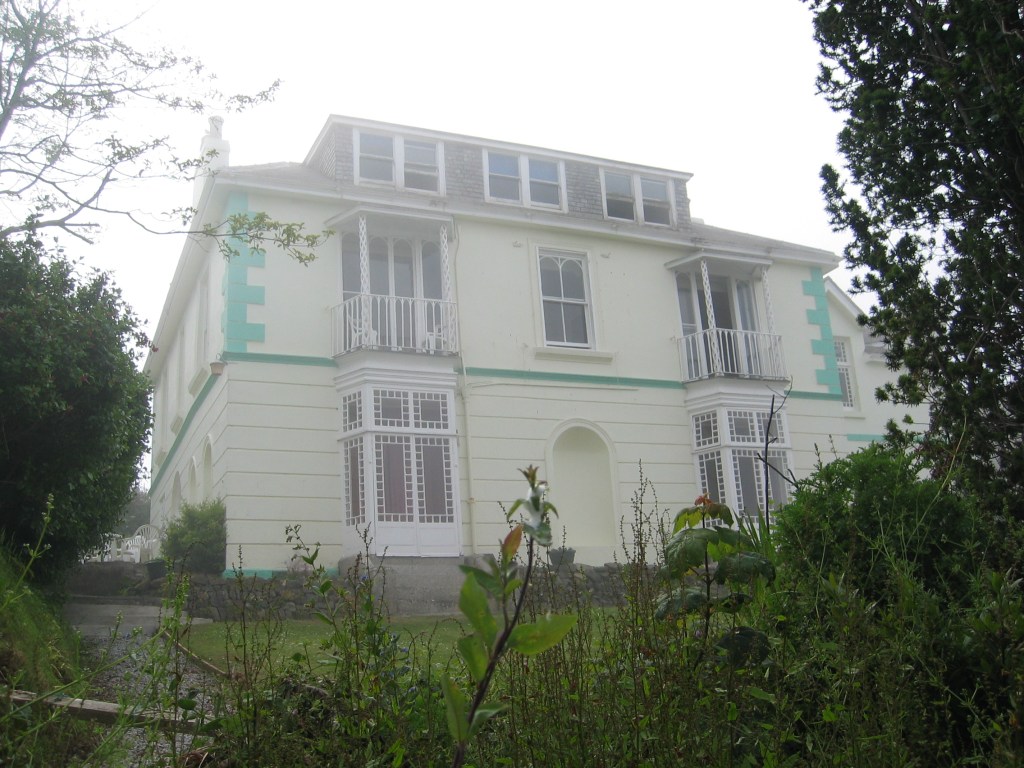
The Harpers have a house, Allersmead, “a substantial Edwardian house” outside of London. It isn’t in Cornwall like Talland House, but they do spend at least one summer vacation in Cornwall, a place called Crackington Haven, that sounds remarkably similar to St. Ives in earlier times, a coastal resort with “a scatter of houses and cottages, a village shop… a lovely, lovely family sort of place, just heavenly sea and the dear little beach and gorgeous walks along the cliffs.”

Mrs. Ramsey was partial to her youngest son, James; Alison Harper’s eldest son, Paul, is clearly her favorite, in spite of (or because of) his being a ne’er-do-well. James expresses anger and hatred toward his father, but Charles Harper has antagonized just about everyone, so that when his current manuscript is shredded, any number of them has cause, and he never knows that Clare, the youngest, is the guilty party.

Alison Harper is accomplished in the kitchen as opposed to overseeing a cook. “The kitchen was huge; once, some Edwardian cook would have presided here, serving up Sunday roasts to some prosperous Edwardian group.” Visitors arrive to find that, “The house smelled of cooking. You could unravel the constituent ingredients: garlic, herbs, wine—some earthy casserole, a coq au vin perhaps, or a boeuf en daube.”

There’s more, and the Stephen family popped up a few times as well, not surprisingly, as when the children reminisce about the Allersmead Weekly Herald, their version of the Hyde Park Gate News.

Adrienne McCormick

At last year’s Virginia Woolf conference, Adrienne McCormick presented a provocative paper on Woolf’s concept of “moments of being” as she saw it evoked in Lively’s City of the Mind. As a Lively fan, I’ve thought about Woolfian influences in her writing, and it’s something I plan to pursue.

Read a review of Family Album in The Guardian.

It was 69 years ago today, March 28, 1941, that Virginia Woolf left behind Leonard, Monk’s House, and two suicide notes and walked across the Sussex Downs.

With stones weighing down her coat pockets, she waded into the River Ouse and drowned.

In memoriam, we repeat the last line of the memorial poem Vita Sackville-West wrote in tribute to Woolf, which was published in The Observer in April of 1941. It contains more truth than Sackville-West could have imagined.

“She now has gone/Into the  prouder world of immortality,” Sackville-West wrote.

For a touching video that pays homage to what Woolf accomplished during her life — and what she could have accomplished if she had lived on — watch “The Adventures of Virginia Woolf” on You Tube.

For an earlier memoriam to Woolf, click here. You can also read the Associated Press “Today in History,” which mentions Woolf.

Or read more about the response of her contemporaries to her untimely death in the 2005 book, Afterwords: Letters on the Death of Virginia Woolf, edited by Sybil Oldfield, and in the post below, ” Bloomsbury archives newly open to public.”

Editor’s Note: This was originally posted on March 28, 2008. I have included new information and am reposting it today in Woolf’s honor.

An archive of Bloomsbury group letters from two collections is being opened to public viewing at Cambridge University for the first time, according to a Guardian report.

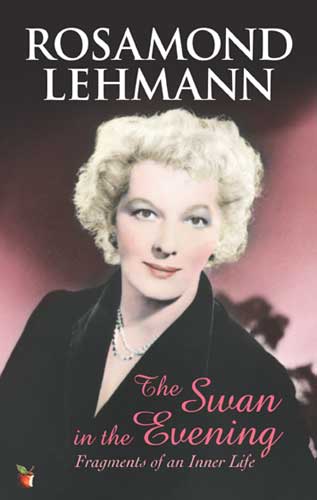
Both collections belonged to the novelist Rosamond Lehmann and the diarist and writer Frances Partridge, who became friends at Cambridge. The archive, acquired by King’s College, Cambridge, includes more than 1,000 pages of letters and 30 photo albums.

Of particular note are those letters by and pertaining to Virginia Woolf and her death. Included among them is an April 3, 1941, letter from Clive Bell to Partridge, written while Woolf was missing yet had not been declared dead.

See photographs from Partridge’s Bloomsbury collection. Read more in the Daily Mail and the New Zealand Herald.