Feeds:
Posts
Comments

"Waving at the Gardener," the 2009 Asham Award collection of short stories, will be published by Bloomsbury in September.

Another home once owned by Virginia Woolf is in the news. Earlier this month, the news was that the Round House is up for sale. Now the news is that the site of Asham House is full of trash.

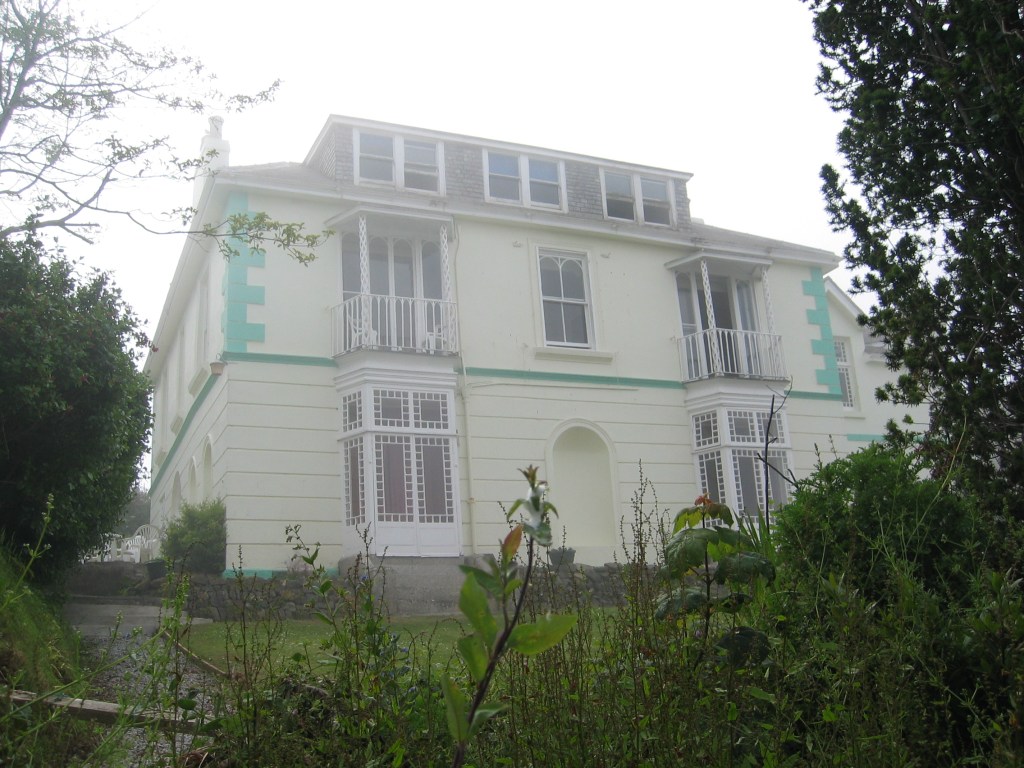
Asham House, Woolf’s country home in Sussex from 1912 to 1919, was demolished in 1994 so that a landfill could expand. The Virginia Woolf Society opposed the demolition, but it took place anyway. 

The amount paid in compensation to the East Sussex County Council was used in part to set up the Asham Literary Endowment Trust.

Now the 60-acre landfill — which has taken in around 250,000 tons of rubbish each year — is full. It will close today for what operators call a “substantial restoration programme.”

The program will restore the site to a “Sussex Downland standard, in keeping with the surrounding environment and landscape, providing a high quality habitat for plants and animals,” according to a story in the Mid Sussex Times.

When Virginia and Leonard Woolf lived in Asham House, the legend was that the house was haunted. This became the basis for Woolf’s two-page short story “A Haunted House,” which tells the tale of a ghostly couple who glide through the rooms of their well-loved home at night.

Ironically, the gentle ghostly couple were searching for “buried treasure.” But neither Woolf nor her fictional characters could have imagined the tons of trash that would be buried on the site over the course of 15 years.

Is Virginia Woolf fun? Most people don’t think of her that way, but she definitely had a fun, playful side.

That side will be center stage when the band Princeton and the Stephen Pelton Dance Theater combine to present “it was this: it was this:”, songs and dance inspired by the life and work of Virginia Woolf and the Bloomsbury Group, at this year’s 19th Annual International Conference on Virginia Woolf.

The performance, June 5 at 8 p.m., is being billed as “Southern California frolic meets Northern California serious in a one-night-only collaboration of song and dance.”

It will be held at Pope Auditorium, 113 W 60th St. on the Fordham University campus in New York City, and tickets are still available.

Princeton will perform all of the songs from their recent album titled “Bloomsbury.” Each song presents a musical portrait of a member of the Bloomsbury group, including Leonard Woolf, Lytton Strachey, Virginia Woolf and John Maynard Keynes.

The band, comprised of twin brothers Jesse and Matt Kivel and Ben Usen, will be joined by eight additional musicians in recreating their frolicsome, exuberant take on the cast of Bloomsbury characters.

The Stephen Pelton Dance Theater, known for known its intimate theatricality and emotional intensity, may be familiar to audiences from previous Woolf conferences.

This year the company will perform several new works, including the premiere of “it was this: it was this:”, a choreographic study of Woolf’s punctuation. Using a single paragraph from To the Lighthouse, the company dances its way from the first word to the last, pausing briefly for every comma, parentheses and semicolon in between. The company also performs a revised version of “The Death of the Moth,” first seen at the Plymouth State Conference in 1997.

The artists will combine forces for the premiere of Lytton/Carrington, a portrait-in-miniature of this original love story.

“What is most interesting to me in this collaboration with Princeton, is how remarkably different our approaches to Woolf are,” Pelton writes.” I suspect that some of this may be attributable to the fact that we are from completely different generations—I am in my mid-forties, they in their early twenties. Their sweet, light-hearted and, at times, irreverent response to the material would have been unthinkable to me twenty years ago when I started to read Woolf and make dances inspired by her.

“Though they are always respectful, their songs embrace the playful spirit in Woolf’s work and in the lives of her colleagues; whereas I have tended to focus my response on the gravity of Woolf’s concerns. This contrast should make for a very fascinating evening in the theater.”

The performance will be part of Woolf and the City, the 19th Annual International Conference on Virginia Woolf, held June 4 to 7 at Fordham.

The editors of The Review of English Studies invite contributions to the RES Essay Prize on any topic of English literature or the English language from medieval times to the twentieth century.

The winner will receive:

  • Publication of the winning essay in The Review of English Studies
  • A cash prize of £250
  • £250 worth of Oxford University Press books
  • A free year’s subscription to The Review of English Studies

How to enter

  • Get the online entry guidelines and full details of the competition rules.
  • Submit your essay through the online submission system. Access the system and submit your paper.

Contest details

  • Word limit: 10,000 maximum
  • Submission deadline: 30 September 2009

For more information, visit the RES Essay Prize Web page. Read past winning essays for free here.

Just out in a Persephone Books paperback is Julia Strachey’s 1932 novella, Cheerful Weather for the Wedding.

The light comedy of manners was originally published by Virginia and Leonard Woolf’s Hogarth Press.

A Cleveland Plain Dealer mini-review says it “mimics Mrs. Dalloway in its method of unveiling lives through a single afternoon, in this case during an English wedding.” An NPR review extolls its “comic high anxiety and unexpected imagery.” You can read more enchanting prose about the little volume and Persephone Books itself at Fernham.

The book is also available as a Persephone Classic and on cassette tape.

If you don’t live in London, where Persephone Books is located, don’t despair. You can find ordering information here

While you are on the Persephone site, take time to look around. You  may not want to leave.

Speaking of books that mention Virginia Woolf, here is one I want to read: When I Forgot by Finnish journalist and filmmaker Elina Hirvonen.

At the beginning of the novel, the author places her main character, Anna, in a cafe where she is attempting to read Michael Cunningham’s The Hours.

In the novel, Anna experiences a long, reflective “moment in April” much like Clarissa Dalloway’s “moment of June,” according to the New York Times review. She wonders what the rocks looked like that Woolf used to fill her pockets before she walked into the River Ouse. She speculates about Woolf’s thoughts as she sank under the water. She wonders if Woolf had regrets.

In the process, Anna also recalls her introduction to Woolf via a seminar where her writing teacher talked about Woolf as “this dazzlingly intelligent woman who lived a hundred years ago and who wanted to capture even the tiniest movements of the mind.”

You can read an excerpt from When I Forgot here. It includes the section about Woolf.