Blithe Spirit and I have something in common. I share her self-described “abiding (nay, obsessive) interest in Virginia Woolf.”
Blithe is the creator of the blog Julia Hedge’s Laces, and this week she e-mailed Blogging Woolf to share her post about a recent visit to the Bruce Peel Special Collections Library at the University of Alberta.
While there, Blithe was awed by their exhibitof Hogarth Press books. She praises the exhibit itself, which is titled “Woolf’s Head Publishing: The Highlights and New Lights of the Hogarth Press” and is available until May 28. But she also praises the exhibit’s catalogue and recommends contacting the exhibit site to enquire about purchasing one.
You can read her interesting and detailed post, “An Exhibit of Woolf’s Own,” here.
Am I the only one who did not know that Judy Chicago’s The Dinner Party includes a Virginia Woolf plate? Take the poll below and let me know.
The Woolf plate and its setting, one of 39 included in Chicago’s ground-breaking iconic feminist work of art, is ripe with symbolism.
It features a three-dimensional plate formed to look like a blooming flower with seeds in the center. According to Chicago, the plate itself symbolizes Woolf’s belief in unrestricted expression and the fecundity of her creative genius.
Beneath the plate, a thin chiffon fabric runner symbolizes Woolf’s fragile mental state, while underneath that, a stitched and painted light beam glows, symbolizing To the Lighthouse.
For more details about the symbolism of Woolf’s plate, go here. You can also find her friend Ethel Smyth’s plate here.
And if you are like me and have never seen Chicago’s masterpiece in person, you can view it online here as a long-term installation in the Elizabeth A. Sackler Center for Feminist Art in the Brooklyn Museum.
We know a lot about Virginia Woolf by reading her writing. Her essays, novels, short stories, letters and diaries reveal much about her personality and her artistry.
We look at the way Woolf shapes her words to understand who she was and the vision she tried to share.
Lidia Fogarolo, however, looks at Woolf from another angle. She looks at what the shape of her letters and the spacing between her words can tell us about Woolf herself.
Lidia Fogoralo is a graphologist and the director of the Morettian Graphology School in Padua, Italy. She provides an analysis of Woolf’s handwriting on her Web site.
Fogarola says Woolf’s handwriting indicates her propensity to engage in powerful criticism of herself and her writing and a chronic dissatisfaction with her own ability to express concepts that were important to her.
“In fact, her handwriting shows not only exceptional mental qualities, but also exceptional qualities of her feeling, deeply original, sensitive, intuitive,” according to Fogarolo.
Woolf is one of just seven famous individuals who Fogarolo analyzes on her site. You can read background on Woolf here and the full analysis of Woolf’s handwriting here.
Romance and nostalgia are the latest buzz words in the world of beauty right now, I’m told. And somehow those two characteristics have combined to connect the caché of Virginia Woolf to a new fragrance.
Today’s Sunday Times connects Woolf to the Rosewood, Blackcurrant & Cyclamen Fragrance of the Greek brand Korres. It sells for £38.
The review describes the “sweet and light ” fragrance by saying, “This isn’t simply about the charm of an English rose — it’s not all Sissinghurst flower beds — but rather a Virginia Woolf take on it all; rose through a glass darkly, if you will (it comes in a brown glass bottle).”
A Virginia Woolf take on fragrance? Through a glass darkly? Oh, please.
"Waving at the Gardener," the 2009 Asham Award collection of short stories, will be published by Bloomsbury in September.
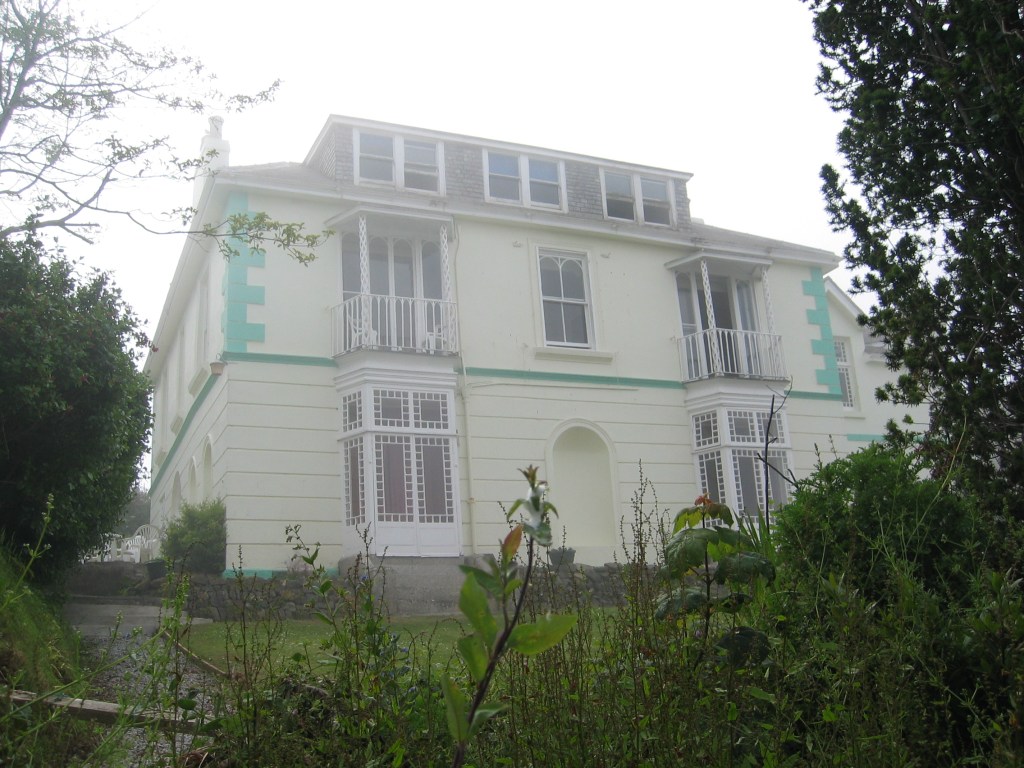
Another home once owned by Virginia Woolf is in the news. Earlier this month, the news was that the Round House is up for sale. Now the news is that the site of Asham House is full of trash.
Asham House, Woolf’s country home in Sussex from 1912 to 1919, was demolished in 1994 so that a landfill could expand. The Virginia Woolf Society opposed the demolition, but it took place anyway.
The amount paid in compensation to the East Sussex County Council was used in part to set up the Asham Literary Endowment Trust.
Now the 60-acre landfill — which has taken in around 250,000 tons of rubbish each year — is full. It will close today for what operators call a “substantial restoration programme.”
The program will restore the site to a “Sussex Downland standard, in keeping with the surrounding environment and landscape, providing a high quality habitat for plants and animals,” according to a story in the Mid Sussex Times.
When Virginia and Leonard Woolf lived in Asham House, the legend was that the house was haunted. This became the basis for Woolf’s two-page short story “A Haunted House,” which tells the tale of a ghostly couple who glide through the rooms of their well-loved home at night.
Ironically, the gentle ghostly couple were searching for “buried treasure.” But neither Woolf nor her fictional characters could have imagined the tons of trash that would be buried on the site over the course of 15 years.