Feeds:
Posts
Comments

Some days I think my muse is Google. Especially when it leads me to things like the Virginia Woolf Pocket Book Reader.

Chris Tessnear created the altered purse with a Woolf theme. It is decorated with the writer’s image, art paper printed with a variety of text and Woolf’s last name spelled out in block-shaped beads. Three similarly decorated tags strung together with a pen, a pencil and a pair of eyeglasses are part of the piece.

Tessnear started her art career as a copy and color book artist, then took to watercolors, and now uses mixed media to create collages, altered art and altered books. Her Woolf piece was published in Somerset Studio, a stamping and paper crafting publication.

Literary puns are in store for those who browse this Web site to read more about the Virginia Woolf Whistle pendant.

The whistle, designed by Wendy Brandes in gold and diamonds, pops open to reveal a miniature wolf. The wolf is also available separately as a necklace in silver for $50.

Both seem to be popular with young women who are either infatuated with literary puns and/or wolves and/or unusual jewelry and/or Wendy Brandes and/or the iconic Woolf.

As one Wendy fan put it, “There really aren’t enough Woolf accessories in the world. How ’bout something inspired by Vita Sackville-West?”

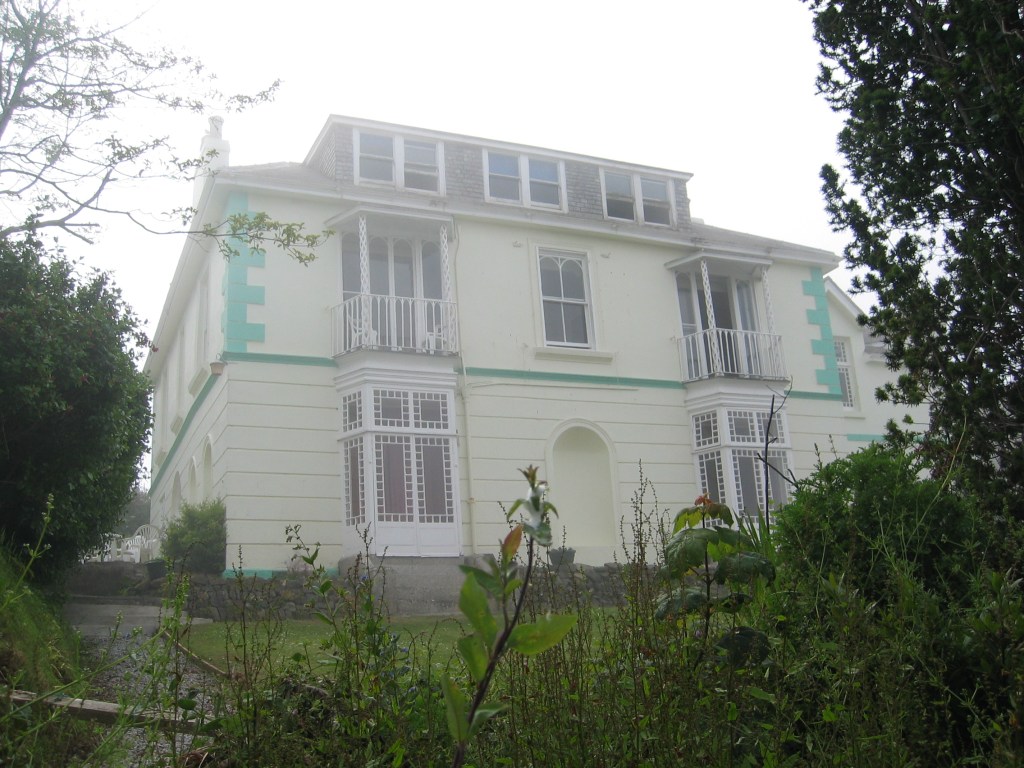
In 1919, Virginia Woolf purchased the Round House in Pipe Passage, Lewes for £300. This year it is for sale again, but the price is £800,000.

The Round House, which is said to look much as it did when Woolf bought it, is being sold by the same estate agents that originally sold it to her as a weekend and holiday home.

Charles Wycherley, who runs a family estate agent in Lewes, will auction the house June 9. Woolf bought the house from his great-grandfather, Alfred.

The current owner of the cottage, which was built in 1801 and was once the town windmill, is retired teacher Annie Crowther, who is moving to a home nearby. The Round House was also owned by John Every, ironmaster of Lewes Phoenix works.

The same year Woolf purchased the Round House, she discovered Monk’s House in nearby Rodmell, which both she and Leonard favored because of its orchard and garden. She then bought Monk’s House and sold the Round House.

Get more details about the Round House and view interior photos. Read about other Woolf places here and here.

Artistic creation is a voyage into the unknown, says creative writing teacher and fiction writer Peter Turchi.

Turchi operates from the premise that writers and other artists are explorers — mapmakers who try to show their readers and viewers where they are and how to get to where they want to go, according to Geeta Sharma-Jensen’s review in the Milwaukee-Wisconsin Journal Sentinel.

Maps of the Imagination: The Writer as Cartographer is Turchi’s meditation on human creativity. In it, Turchi enlists  various figures from the ancient Greeks to the Road Runner to show how writers such as Woolf guide readers through their imaginary worlds.

Turchi focuses on Mrs. Dalloway, discussing Clarissa’s “neural shimmer” and the “mental map” that Clarissa’s thoughts illustrate in Woolf’s novel.

Woolf has a cow

The Boston Cow Parade features colorful cow sculptures with fanciful names. A blue cow of special interest to Blogging Woolf is “The Light Within (for Virginia Woolf).”

The 125-pound fiberglass cows travel the world, raising money for charity. Anywhere from 32 to 450 cows appear in the parade and remain on display in the host city for two to four months.

Each year eight to 12 of the artist-designed cows are reproduced as collectible figurines and offered for sale. Sadly, Woolf’s cow is not among them.