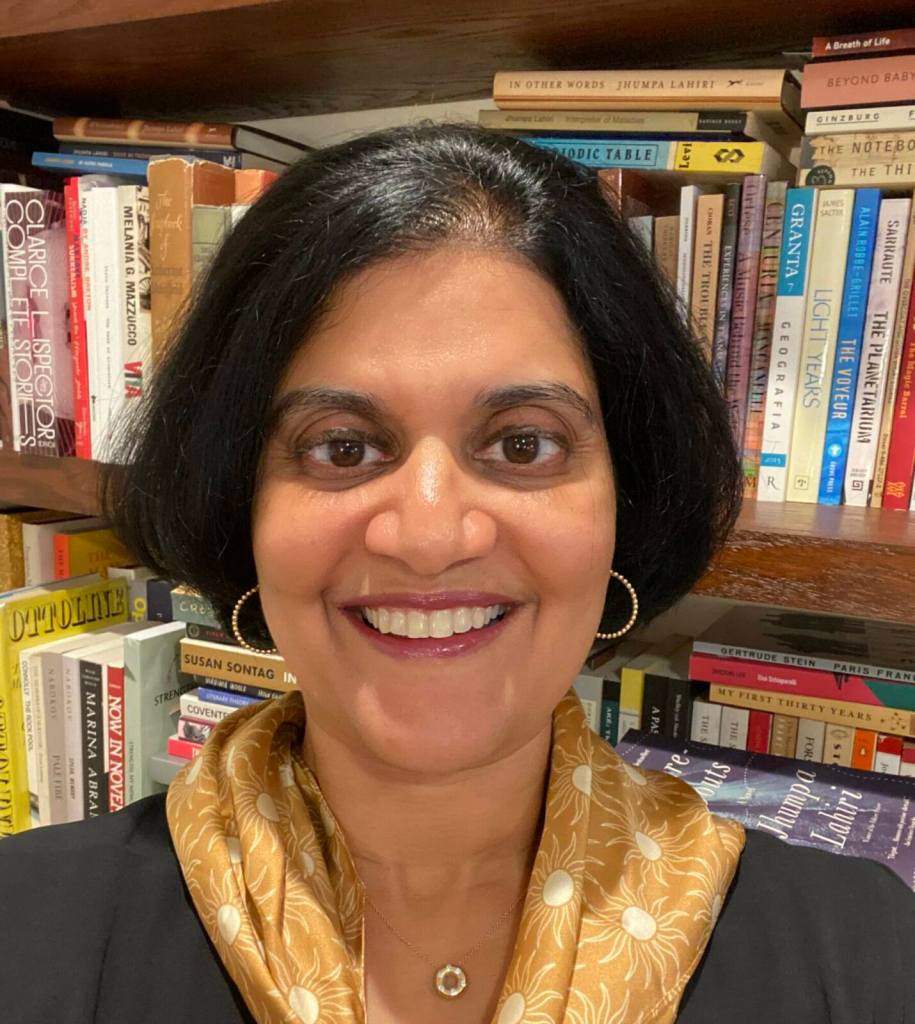
Here are just a handful of news bits about Virginia Woolf scholars. I know there are more. So if you have one, please add it as a comment below this post. Or send it to me by clicking on the email link in the right sidebar.
Maggie Humm’s book The Bloomsbury Photographs (2024) received two honors this year. It was a finalist in the American Writing Award 2025 for Academic/Educational book, and it won the American Writing Award 2025 for photography.
Amanda Golden and Karen V. Kukil edited The Poems of Sylvia Plath, which is listed in the Faber Spring Catalogue and is now available for pre-order on Amazon UK. It is considered the definitive edition of Plath’s poetry.
Anne Fernald has a new book coming out in August. Her Own Voice: Eight Women Who Rewrote Life and Art tells the stories of eight radical women who responded to social oppression and helped create the modernist movement. In it, Fernald argues that the stories we read shape the lives we imagine for ourselves, and offers these stories as possible templates for living boldly and creatively.
And next week, The Center for Fiction will welcome Seshagiri for a conversation with Woolf scholar Anne Fernald on the book, which is considered Woolf’s first work of experimental fiction.
The talk is available in person or as a livestream on Thursday, Oct. 16 at 7 p.m. EDT.
If you live in or near New York City, you may want to head over to 115 Lafayette St. in Brooklyn to attend in person at a cost of $10. If not, register for the livestream; it’s just $5.
Woolf readers at one of the exhibit and bookseller tables at the 34th Annual International Conference on Virginia Woolf.
Roughly 350 scholars from around the globe have gathered at the University of Sussex for the 34th Annual International Conference on Virginia Woolf. And coming from the United States, this year’s topic could not be more timely: Woolf and Dissidence.
As an American living under the destructive regime now ruling my country, I hoped that I and my compatriots would be greeted with empathy and understanding by those we met at this conference in England.
I was not disappointed. I and others from the U.S. have been embraced more warmly than ever by the students, common readers and scholars from around the world who have arrived in Falmer, the English town on the outskirts of Brighton, where the University of Sussex is located.
The universal question
Time for talk during a conference break.
Whether from Turkey, Korea, Brazil, Italy, Austria, Belgium, Norway, Canada or the UK, our fellow humans and Woolfians share our disappointment in the country I call my home.
And they almost universally ask the question we Americans have been asking ourselves since last November: “How did this happen?”
Sadly, we have no definitive answer. All we can offer are conjectures, theories, and speculations.
Dangerous words
Notice how I am writing here. I am choosing my words carefully. I am not saying exactly what I mean. Instead, I am offering hints. Instead, I am writing in a kind of code.
Why? I am afraid. Not so afraid that I will be silent, because, as Audre Lorde said, “Your silence will not protect you.”
But afraid enough to edit myself, to avoid publishing words on the web that might bring attention from the thought police. After all, I would like to get back into the country of my birth.
Clarissa Dalloway’s dangerous world
Which brings me to one of the best things I heard at the conference so far: Fordham University Professor Anne Fernald’s keynote presentation titled “Dangerous Days: A Century with Clarissa Dalloway.”
In it, she talked about the dangers we face in our current political climate and the dangers Clarissa faced in Woolf’s 1925 novel. Clarissa lost her sister at a young age. She lived through the Great War. She survived the influenza pandemic.
Woolf describes Clarissa’s feelings this way:
She had a perpetual sense, as she watched the taxi cabs, of being out, out, far out to sea and alone; she always has the feeling that it was very, very dangerous to live even one day. (MD 8)
I now understand that quote. And I recognize — once again — that Woolf’s words always apply.
Anne Fernald gives her keynote address, “Dangerous Days: A Century with Clarissa Dalloway.”
Academic tomes are usually quite pricey. But today the good news is that The Oxford Handbook of Virginia Woolfis now available in paperback, bringing the price down to $50.
The book is edited by Anne Fernald, professor of English and Women’s, Gender, and Sexuality Studies at Fordham University. Its 39 original chapters written by internationally prominent scholars do the following:
Consider Woolf’s career chronologically and places her novels in the context of her life, world events, and the non-fiction she wrote alongside them to highlight the centrality of essay-writing and reviewing to her career
Assume her feminism and examines its many facets and broadens our vision of Woolf’s world beyond Bloomsbury by looking at her many circles of women friends, her engagement with women’s education and the suffrage movement, and the role of Hogarth Press in the larger context of publishing
Include a wide range of chapters on Woolf’s afterlives.
On that call, we met many of the prominent international scholars who contributed the 39 original essays that appear in the volume. They include Urmila Seshagiri, Elsa Högberg, Vara Neverow, Elizabeth Outka, and Roxana Robinson, whose novel Sparta (2013) I used in a class I taught on women and war.
The YouTube video
During the discussion about the handbook, Fernald mentioned an April 5 discussion she had with Robinson about Virginia Woolf, which is now posted on YouTube.
In it they talk about many things, including how they first met Virginia Woolf, what she has to say to us today, and Fernald’s vision for the essays she included in The Oxford Companion of Virginia Woolf.
As she puts it, “I wanted to make a new pattern for what we know about Woolf’s life.”
Fernald is a professor of English and Women’s, Gender, and Sexuality Issues at Fordham University, editor of the Cambridge University Press edition of Mrs. Dalloway (2014) and author of Virginia Woolf: Feminism and the Reader (2006).