Feeds:
Posts
Comments

Posts Tagged ‘Penguin’

We are nearing the tail end of Women’s History Month and who better to read than Virginia Woolf?

Virginia and Leonard Woolf moved into Monk’s House in Rodmell in 1919, and as the Monk’s House guidebook states, “Books dominated the house.” During a 2019 visit, books were the first thing we saw as we entered through the back doorway. They lined the stairs to the second floor.

To that end, I have two resources that give advice on “Where to start with Virginia Woolf.”

At the starting gate with Penguin

“Are you afraid of Virginia Woolf?” asks Penguin. The publisher then advises: “There’s no need: there’s something for everyone in the Modernist writer’s back catalogue.”

The website gives a synopsis and link for seven of Woolf’s novels and/or polemics, along with links to other works related to Woolf, such as Square Haunting: Five Women, Freedom and London Between the Wars (2020).

The recommended Woolf works include the following:

At the starting gate with NYPL

The second comes from the New York Public Library. Their guide on “Where to Start With Virginia Woolf” includes a brief synopsis of each work and recommends reading them in this order:

  1. Mrs. Dalloway (1925)
  2. A Room of One’s Own (1929)
  3. To the Lighthouse (1927)
  4. The Waves (1931)
  5. Orlando (1928)

A book list of her own

Meanwhile, Woolf scholar Maggie Humm’s Twitter post two years ago on World Book Day included a list of the books Woolf liked and disliked most in 1924, 100 years ago.

Read Full Post »

A new study shows that Penguin Books’ publication of low-cost paperback editions of Virginia Woolf’s work helped her reach a mass market.

In “Virginia Woolf, Penguin Paperbacks, and Mass Publishing in Mid-Century Britain,” published in Vol. 25, No. 1 of Book History, Martina Vike Plock explores how Penguin negotiated financial, logistical, and ideological transactions with Leonard Woolf that re-packaged Virginia as a mass-market Penguin author (238-68).

Penguin, which had started to publish mass-produced, cheap paperbacks in the mid-1930s, began publishing Virginia’s non-fiction in 1938. In the 1950s and 1960s, Leonard went on to negotiate deals with Penguin that allowed them to publish most of her major works of fiction.

Meanwhile, Leonard continued to publish Virginia’s books under their Hogarth Press imprint.

Digging into the correspondence

Vike Plock, a professor at the University of Exeter, analyzed correspondence between Leonard and Penguin’s Alan Lane that  shows Leonard’s priority as the financial health of the Hogarth Press. Thus, sales figures of Virginia’s works were his main concern when dealing with Penguin.

Leonard refused to lease rights of Virginia’s work that were still selling well as Hogarth Press editions. As a result, only Woolf’s lesser-known titles, her essays and non-fiction, were initially signed over to Penguin Books.

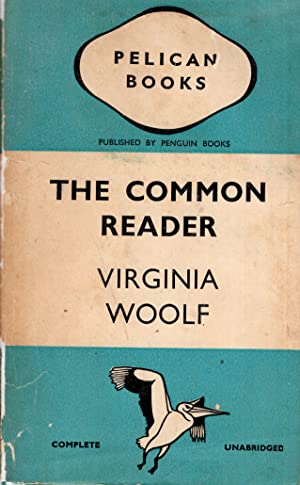
The first was Virginia collection of essays, The Common Reader. First published by the Hogarth Press in 1925, it appeared as a Pelican paperback in October of 1938. Penguin Books printed 50,000 copies, sold them for 6d, and paid the Hogarth Press an advance of £150 for the paperback rights, according to a story on the University of Exeter’s website. By the end of 1965, six Woolf novels were available as Penguins.

The arrangement turned out to be mutually beneficial for both Penguin and the Woolfs, particularly since Leonard was interested in making Virginia’s work available to a wide audience.

To come up with her conclusions, Vike Plock used archival resources held at the University of Bristol. Her article takes note of the different stages, key actors, and main considerations that contributed to Virginia’s gradual assimilation into Britain’s paperback industry.

Adding a feminist perspective

However, Vike Plock explores more than the financial considerations of the deals between Penguin and Leonard. She also explores them from a feminist perspective.

The materials in the Penguin archive work in support of critical narratives arguing that Woolf’s works were posthumously seized by a patriarchal, institutional culture she had repeatedly and vociferously criticized,” she states in the abstract for her article.

Read Full Post »

Read Full Post »