Feeds:
Posts
Comments

Archive for the ‘21st century Woolf’ Category

The beauty of the world, which is soon to perish, has two edges, one of laughter, one of anguish, cutting the heart asunder. – Virginia Woolf, A Room of One’s Own

Do pay a visit to Hearts Asunder before the month is out. It’s a 28-day blog that illustrates the Woolf quote above.

Another thing the Tumblr blog does is show how common readers are inspired by Woolf — and how they combine 21st-century pop culture and technology to share that inspiration.

These same common readers also connect Woolf to current events. For example, Hearts Asunder creator Brianna Goldberg posted a piece that links Woolf to this week’s devastating tsunami in Japan.  On a lighter note, a blogger describes Woolf’s reaction to the news of the late Pope John Paul II’s forthcoming Facebook page.

The RSS feed of the most recent Hearts Asunder posts are at the top of the sidebar at the right. And to make sure you don’t miss anything, take a look at the clever archives display of the online collaborative writing project too.

The site is definitely worth the trip. Read more about the project concept to find out why.

Hearts Asunder archives


Read Full Post »

Here is another song inspired by Virginia Woolf that debuted Sunday. You can listen to it here.

The song is appropriately titled “Virginia Woolf,” is performed by Freedom Or Death and appears on their album Ego.

It features bits of dialogue from the 1966 film “Who’s Afraid Of Virginia Woolf?”  Give it a listen and post your comments below.

Read Full Post »

This Bloomsbury 2010 tattoo is temporary.

Earlier this year, U.S. publisher Black Ocean said it would give a lifetime subscription – one copy of every book it produces – as a thank you to anyone who gets a tattoo inspired by a Black Ocean title.

“Just send us a picture of you getting your tattoo (so we know it’s not simply a magic marker), or find one of us in person and expose yourself to us (with fair warning),” the publisher’s blog cheerily offers.

Several readers obliged, sending photos of their tattoos inspired by The Man Suit, a book of poetry by Zachary Schomburg.

When it comes to tattoos, Woolf is no slacker.

According to Inside Higher Ed’s article “Unafraid of Virginia Woolf,” three young women recently acquired tattoos in honor of Virginia Woolf’s Mrs. Dalloway. All three featured the words “Fear no more,” famous words quoted from Shakespeare in Mrs. D.

While literary tattoos aren’t strictly an American phenomenon, The Guardian reported that in Clerkenwell London, the request for a literary tattoo is more likely to be for a quote from T.S. Eliot.

Editor’s Note: Read the comment below to learn about Amy Whipple’s Woolf tattoos. She blogs at http://www.amywhipple.com/.

Read Full Post »

The beauty of the world, which is soon to perish, has two edges, one of laughter, one of anguish, cutting the heart asunder. – Virginia Woolf, A Room of One’s Own

A new collaborative online writing project called Hearts Asunder launches tomorrow.

It will use 400-word blog posts to illustrate the Woolf quote above by “smashing ideas from her writing against items from today’s pop culture to help yank her charm and relevance into the 21st Century,” according to creator Brianna Goldberg.

The self-described “lit-loving Canadian writer and radio producer” will curate the project, which will run from March 1-28, the 70th anniversary of Woolf’s death. It is conceived of as a commemoration of her death as well as a celebration of her unique way of seeing the world as a double-edged sword that can incite both pain and laughter.

Goldberg’s aim is to overcome a tendency many Woolf scholars deplore. That is the public’s proclivity to focus on Woolf’s sad, serious side — including her final walk to the River Ouse — to the exclusion of her witty, humorous side, including her incredibly productive life.

Steven Daldry’s popular 2002 film The Hours‘ helped reinvigorate interest in Woolf and her writing. But it also reinforced the view of Woolf as a tragic figure, one reason why some Woolf fans and scholars panned the film. However, the film won a multitude of awards, including Nicole Kidman’s Oscar for best actress, the Golden Globes award for best drama and the best adapted screenplay honor from the Writers Guild of America.

Since then, online interest in Woolf has grown. And while I have my doubts that Woolf’s charm and relevance need to be “yanked” into the 21st century, no one has launched a project that inserts Woolf into mainstream media and pop culture the way that The Hours did. As a result, the public impression of Woolf remains a serious one.

Goldberg agrees, and she hopes her project will change that.

“I believe Woolf has been absorbed into our culture as an overly dour, overly serious character. By pairing her work with items of today’s pop culture in this blog project, I hope we can help show the author and her work in a new light—one that celebrates her sense of humour AND her gravitas. And her relevance to the 21st Century,” she wrote in an e-mail.

Goldberg says Hearts Asunder will feature a series of blog posts that take ideas, characters, and/or themes from Woolf’s work and “smash them against items of contemporary pop culture, resulting in brief and unique bits of creative writing in a variety of styles. In short, it’s a VW culture-jam.”

Blog contributors include a Canadian Stratford Festival actor, a baseball historian, a music critic, the star of a viral video comedy team, a mommy blogger and others. Goldberg says the writers have an interesting mix of perspectives and various levels of familiarity with Woolf’s work.

“But they’re all excited and eager to learn more about VW’s work through this project—and really, that’s a main goal of the concept for me, too,” she wrote.

Hearts Asunder is live now, and the full version of the Tumblr blog will launch tomorrow. See the RSS feed at the top of the right sidebar for links to the site’s most recent posts.

Read Full Post »

Graph of the number of times Virginia Woolf's name appears in English language books published between 1920 and 2008

How popular is Virginia Woolf around the world?

The Google Labs Books Ngram Viewer can help us figure that out. The database is culled from nearly 5.2 million digitized books. Its dataset consists of the 500 billion words in books published between 1500 and 2008 in English, French, Spanish, German, Chinese and Russian, explained the New York Times back in December.

This new resource allows anyone who logs onto the site to type in a string of up to five words and see a graph that charts the phrase’s frequency over time.

Take “Virginia Woolf,” for instance. The graph at right shows the number of times her name appeared in English language books between 1920 and 2008. As you can see, she reached the pinnacle of her popularity in those books in the late 1980s.

But we can break this down further. While her popularity peaked in British English books in the mid- to late 1980s, for Americans, the highpoint came in the late 1990s.

Among authors writing in German, Woolf peaked in the late 1980s, but her popularity was still riding high among authors writing in French into the mid-1990s. In both Russian and Chinese, Woolf’s popularity is simply a flat line.

Graph showing the number of times Virginia Woolf's name appears in English language books of fiction published between 1920 and 2008

This next bit will interest Alice Lowe, author of Beyond the Icon: Virginia Woolf in Contemporary Fiction, published by Cecil Woolf Publishers. Woolf peaked in the English fiction category in the late 1990s.

Woolf as commodity

Books, however, are not the only medium invoking Woolf’s name. In Virginia Woolf Icon (1999), Brenda Silver analyzes the appropriation of Woolf by both high and pop culture, from her 1937 appearance on the cover of Time to more recent appearances in movies, TV and theater.

And you can see for yourself the long list of items in the right sidebar that use her name, her words and/or her image. They range from dolls to mugs to tea towels to underwear.

Woolf in the online world

Virginia Woolf is a huge presence online, something that has grown dramatically since Silver published her book. Online sightings of her name and work come in by the dozens each week.

In “Virginia Woolf in the Cyber City: Connecting in the Virtual Public Square” in Woolf and the City: Selected Papers from the Nineteenth Annual Conference on Virginia Woolf, I mention that on 17 May 2009, my Google Web search on the name “Virginia Woolf” turned up 2.7 million hits (215).

On that same date, I found 31,400 hits for “Virginia Woolf groups” and 458,000 hits under the Google Images category for “Virginia Woolf.” My Facebook search conducted on the same date found more than 500 Woolf groups, with the total number of group members ranging from six to 2,600.

Tidbits on Woolf’s popularity in Europe and beyond

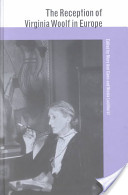
Below are some interesting tidbits regarding Woolf’s popularity that I found in The Reception of Virginia Woolf in Europe by Mary Ann Caws and Nicola Luckhurst and other sources.

  • In recent days, Woolfians from Italy, Africa, France and the U.S. have subscribed to Blogging Woolf.
  • According to the Fall/Winter 2010 issue of the Virginia Woolf Miscellany, Woolf organizations exist in the Netherlands, Korea and Japan, in addition to the Société d’Etudes Woolfiennes in France. And, of course, we must not forget the International VW Society and the VW Society of Great Britain. Links to these organizations appear in the right sidebar.
  • During the 1920s and ’30s, Woolf’s texts were translated into French faster than into any other language, according to Caws and Luckhurst (5).
  • On Page 10 of their book, Caws and Luckhurst provide a full list of European languages and dates of publication of translations of the full text of Woolf’s writing in book form. Swedish was first with Jacob’s Room in 1927. Lithuanian was last with Mrs. Dalloway in 1994.
  • The first of Woolf’s books to be translated into Turkish was To the Lighthouse, which appeared in 1945.
  • In “‘For God’s and Virginia’s sake why a translation?’ – Virginia Woolf’s Transfer to the Low Countries,”  published in Comparative Critical Studies in 2006, Els Andringa says the first mention of Woolf in a Dutch publication was in 1920 in a scholarly book on literature. But only after 1925 did regular reviews and essays begin appearing (204), while the first translation of her work in Dutch was not published until 1948. However, the boom in Woolf translations did not arrive until 1976 (205).
  • The Hogarth Press encouraged formal, consistent relationships with foreign publishing houses that may have helped spur translation of Woolf’s works (Caws and Luckhurst 330).
  • Susan Sellers posted an interview with Professor Yang Lixin in which the scholar explained Woolf’s popularity in China: “As an important pioneer of the ‘stream of consciousness’ literary technique and the western feminist movement, Virginia Woolf is well known in China – particularly to the common reader she herself valued so much.”
  • Biljana Dojčinović-Nešic discusses the political ramifications of translations of Woolf’s work, as well as Woolf’s views on translations, in “Translation as Border-Crossing: Virginia Woolf’s Case.”

Read Full Post »

« Newer Posts - Older Posts »