Last year, when I was writing “Virginia Woolf in the Cyber City: Connecting in the Virtual Public Square ,” I read Melba Cuddy-Keane’s book, Virginia Woolf, the Intellectual, and the Public Sphere (2004). In it, she discusses Woolf’s idea that most books should turn to dust after about six months unless they are deemed worthy of a second printing.
Shortly thereafter I read a New Yorker piece about the same subject, except that author Julia Felsenthal reframed the argument as a possible justification for e-books. Such books would be, she argues, “a cost-effective, eco-friendly, and disposable alternative to cloth-bound volumes.”
Felsenthal, too, quoted Cuddy-Keane. She also described a 1927 radio discussion between Leonard and Virginia Woolf concerning the question “Are Too Many Books Written and Published?” The scripted discussion, Virginia’s first of three on the BBC, was broadcast on 15 July 1927. In it, Leonard argues in favor of hand-made books, criticizes the mass appetite for popular fiction and laments the death of quality.
Virginia Woolf, publishing and democracy

Free Woolf e-texts
Virginia took a more democratic approach to book publishing. In her diary entry of 2 October 1932, she wishes for “a system that did not shut out.” If one must have a system, Woolf believes that system should be inclusive of all individuals and all ideas (Cuddy-Keane 57).
Cuddy-Keane also describes Woolf’s visit to the Lewes library in October 1940, which Woolf notes in her diary by saying she “was glad to see [her book] Common Reader all spotted with readers at the Free Library” (108). Woolf wanted readers to use her books and engage with her writing. The idea that her book of essays was dotted with spots pleased her, as they indicated that people felt comfortable with the physical book—and perhaps with her ideas as well.
In Radio Modernism: Literature, Ethics, and the BBC, 1922-1938 (2006), Todd Avery points out that Virginia counters Leonard’s argument that publishing has become “shoddy” by maintaining that such shoddiness was a necessary result of increased literacy, which actually resulted in a more egalitarian world (53).
Avery discusses the way Virginia Woolf’s participation in mass media broadcasts made it possible for her to cross the boundary between high and mass culture. For Woolf, mass media created common ground, just as public libraries did. Both are places of freedom where readers and thinkers of all classes and all interests could find the resources they needed to expand their thinking, then engage in active intelligent literary discourse.
Democratic readership delivered in paperback and wireless versions
Woolf thought books should be as cheap and as easy to purchase as a pack of cigarettes, according to Avery (54). Ten years later, in 1935, Penguin had the same idea — and began selling quality paperbacks at sixpence apiece, the price of a pack of smokes.
Two years ago, in response to the recession and the company’s 75th anniversary, Penguin launched its “Popular Penguins” classic titles series in Australia, New Zealand and India. Priced at AU$9.95 per hard copy, the series includes Woolf’s A Room of One’s Own (1929) and To the Lighthouse (1927).

Cigarette prices in NYC
I think Woolf’s philosophy of democratic inclusiveness can be applied to the world of e-books today. The $9.99 standard price for a digital best-seller on Amazon.com is nearly identical to the price of a Popular Penguin, and both are less than the $11 price of a pack of cigarettes in New York City, for example.
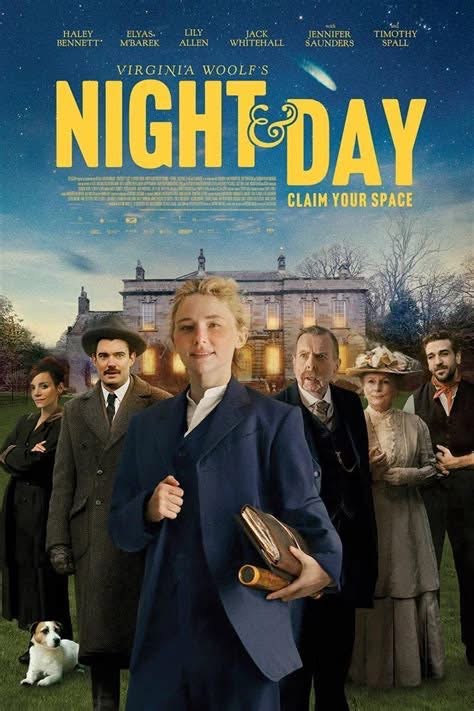
In some cases — in some of the best cases — e-books are free. From Amazon, iTunes, Barnes and Noble and other sources, Woolf classics such as The Voyage Out, Night and Day and Jacob’s Room can be downloaded at no cost. Other volumes of Woolf’s work are priced low — from 99 cents for Monday or Tuesday to $9.99 for A Writer’s Diary.
You don’t necessarily need a dedicated electronic reading device to read digital books either. You can download free apps to read e-books on your laptop, desktop, and/or smart phone. These include iBooks, the Kindle app, the NOOK app and others.
News for gadget geeks and book lovers

Virginia Woolf screensaver on the Kindle
I have a Kindle, which I love, so I am tuned in to e-book and e-reader discussion. So is the New York Times, which reported this week that e-readers were under many Christmas trees this season. The Times postulated that “possibly hundreds of thousands of people are expected to download books on the e-readers that they receive as Christmas gifts.”
The popularity of e-books has grown this year. They now make up 9 to 10 percent of trade-book sales, and publishers are predicting that digital sales may be 50 to 100 percent higher in 2011.
However, please don’t despair if you are not a person who loves the look of sleek high-tech gadgets. The Times also reported that some companies are specializing in making high-tech goods look retro-charming. A manual typewriter is reconfigured for use as a U.S.B. keyboard. A landline handset is connected wirelessly to a cell phone using bluetooth technology. A slim new MacBook is zipped inside a case that looks like a vintage leather-bound book.
And do be encouraged by the fact that many high quality books are available digitally. The Cuddy-Keane book I mentioned above is available electronically in at least four languages. What’s more, an e-book will never be out of stock.
Read Full Post »
 In less than two weeks, a Google alert for “Virginia Woolf” netted the following links. To view more examples of Woolf spotting online that I have collected during the past few years, visit the Woolf sightings page.






 Alice Lowe
 Catherine
 Kaylee Baucom
 Leanne Oden
 Paula Maggio
 Stefano Rozzoni
 seanmcphail
 suzannebellamy1
 veronikakra
 Vara Neverow
 William Patrick Wend
 Zoe Wolstenholme


