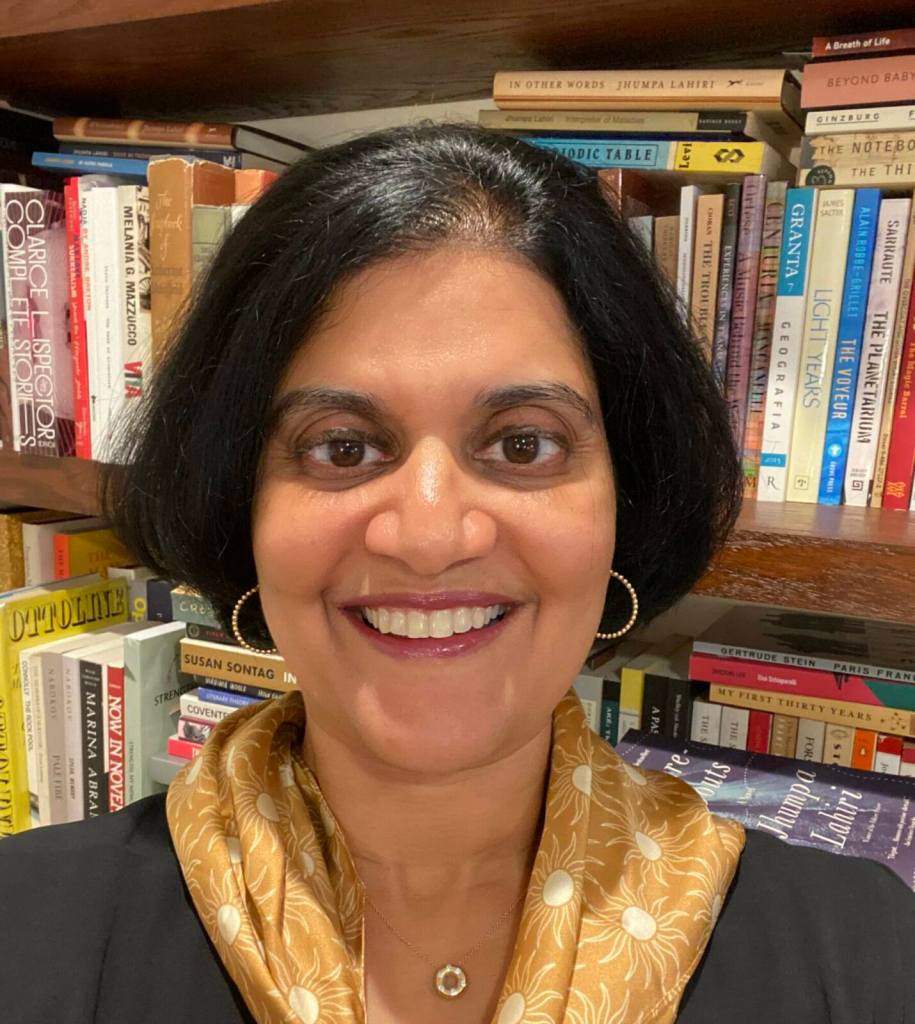
I had not thought much about Virginia Woolf and Simone deBeauvoir’s life writing until I decided to write a paper connecting their wartime diaries with those of writer Iris Origo.
I delivered my work, “Writing ‘as the mood comes’: Diaries as Dissident Feminist Practice During World War II for Virginia Woolf, Iris Origo, and Simone de Beauvoir” at the 34th Annual International Virginia Woolf Conference in England in June.
How serendipitous, then, that the Virginia Woolf Society of Turkey is presenting a free program connecting the two on Oct. 24 at 7 p.m. Turkey time or noon EST as part of the society’s new season of Woolf Seminars.
The talk by Luca Pinelli, is titled “Virginia Woolf, Simone de Beauvoir, and the Materiality of Life/Writing” and will take place on Zoom.
The presentation will explore the compelling intersections between Woolf and de Beauvoir, examining how both writers engage with the tangible, embodied experience of life in their biographies, diaries, letters, and memoirs.
The talk proposes that their work transcends literary categories to interrogate the very texture of existence as perceived by human and occasionally nonhuman subjects.
You can register online. But hurry. Participation is limited to 100 slots.
The hellos were said July 4 at King’s College London. The goodbyes were said July 11 at the University of Sussex as the five-day conference came to a close. Under the sunny skies of London and Brighton, both were marked by smiles, laughter, hugs, and promises to meet again.
Here are some photos from the occasions.
Opening reception at King’s College London
Closing reception at the University of Sussex, Brighton
Read more posts about the 34th Annual International Conference on Virginia Woolf: Woolf and Dissidence
Conference goers enjoy the fine weather at Charleston before the banquet for the 34th Annual Virginia Woolf Conference, held July 4-8 at King’s College London and the University of Sussex.
Not in the home’s dining room, where every surface is decorated and everyone from Virginia and Leonard Woolf to Roger Fry to Maynard Keynes to Desmond and Molly MacCarthy to T.S. Eliot to Jean Renoir once shared meals and drinks.
That room, with a large round table painted by Vanessa Bell, seats six and would be exceedingly small for the 150 of us who attended the traditional banquet celebrating the 34th Annual International Conference on Virginia Woolf: Woolf and Dissidence.
Gathering in the Hay Barn
Instead, on July 7 we gathered at long tables, beautifully set, in the nearby Hay Barn. I could hardly imagine a more magical, charming site for a meal with so many Woolfians.
We had piled onto buses and rode the 11 miles from the University of Sussex conference site to Charleston, the longtime home of Vanessa and Clive Bell that hosted frequent guests from the Bloomsbury group and beyond.
Our tour of the house and the garden ended with a cocktail reception in the garden before a dinner of boeuf en daube or a vegetarian option in the Hay Barn, located across a short gravel path from the house.
I was also curious about her memories. As the daughter of Quentin Bell, the granddaughter of Vanessa Bell, and the great-niece of Virginia Woolf, who died 14 years before she was born — she had many to share.
Nicholson recalled that the children slept in the attic (now off limits to visitors) when they stayed at Charleston, and she described the atmosphere of the home as “uninhibited and sort of liberated.”
She remembered wearing a mauve dress at the age of five as Vanessa and Duncan Grant painted her portrait, earning a six-pence bribe to sit for them. She owns the painting by Grant but laments the fact that Vanessa’s portrait has never been located.
Nicholson spoke of visiting Monk’s House while Leonard Woolf was alive, and she emphasized his thoughtfulness. When talking to him, “he stopped to think of what he’d say, then he would say it.”
Over the years, Charleston fell into disrepair, and when an effort was made to save it, the Charleston Trust was formed. That work began at Nicholson’s kitchen table, with notes taken on the backs of envelopes. Since 2018, she has served as the president of the Charleston Trust, and Charleston is an internationally renowned museum.
Today, she said, she is “thrilled, amazed and delighted” that the Bloomsbury summer home survives.
It even smells the same. The treasure I grew up with hasn’t changed. I think Vanessa would also recognize that her spirit is still alive here.
Here are some photos from our once-in-a-lifetime evening at Charleston.
Gathering in the Charleston garden for cocktails before dinner.
Long tables, beautifully set, filled the Hay Barn for the conference banquet at Charleston as Vara Neverow, one of the traditional Woolf Players, reads a passage from Woolf’s work.
Banquet goers filled the Hay Barn at Charleston
Jane Goldman of Scotland and Davi Pino of Brazil are engrossed in conversation at the banquet.
Artists Kabe Wilson of England and Ane Thon Knutsen of Norway
Cecilia Servatius of Austria and AnneMarie Bantzinger of the Netherlands
Conference organizers Anna Snaith, Helen Tyson, and Clara Jones react with surprise and glee as they open their thank you gifts presented by Amy Smith, vice president of the International Virginia Woolf Society.
Conference organizers Anna Snaith, Helen Tyson, and Clara Jones happily show off their thank you gifts presented by Amy Smith, vice president of the International Virginia Woolf Society. They received first American editions of Virginia Woolf’s Orlando, The Years, and The Captain’s Death Bed, and Other Essays.
Read more posts about the 34th Annual International Conference on Virginia Woolf: Woolf and Dissidence
Woolf readers at one of the exhibit and bookseller tables at the 34th Annual International Conference on Virginia Woolf.
Roughly 350 scholars from around the globe have gathered at the University of Sussex for the 34th Annual International Conference on Virginia Woolf. And coming from the United States, this year’s topic could not be more timely: Woolf and Dissidence.
As an American living under the destructive regime now ruling my country, I hoped that I and my compatriots would be greeted with empathy and understanding by those we met at this conference in England.
I was not disappointed. I and others from the U.S. have been embraced more warmly than ever by the students, common readers and scholars from around the world who have arrived in Falmer, the English town on the outskirts of Brighton, where the University of Sussex is located.
The universal question
Time for talk during a conference break.
Whether from Turkey, Korea, Brazil, Italy, Austria, Belgium, Norway, Canada or the UK, our fellow humans and Woolfians share our disappointment in the country I call my home.
And they almost universally ask the question we Americans have been asking ourselves since last November: “How did this happen?”
Sadly, we have no definitive answer. All we can offer are conjectures, theories, and speculations.
Dangerous words
Notice how I am writing here. I am choosing my words carefully. I am not saying exactly what I mean. Instead, I am offering hints. Instead, I am writing in a kind of code.
Why? I am afraid. Not so afraid that I will be silent, because, as Audre Lorde said, “Your silence will not protect you.”
But afraid enough to edit myself, to avoid publishing words on the web that might bring attention from the thought police. After all, I would like to get back into the country of my birth.
Clarissa Dalloway’s dangerous world
Which brings me to one of the best things I heard at the conference so far: Fordham University Professor Anne Fernald’s keynote presentation titled “Dangerous Days: A Century with Clarissa Dalloway.”
In it, she talked about the dangers we face in our current political climate and the dangers Clarissa faced in Woolf’s 1925 novel. Clarissa lost her sister at a young age. She lived through the Great War. She survived the influenza pandemic.
Woolf describes Clarissa’s feelings this way:
She had a perpetual sense, as she watched the taxi cabs, of being out, out, far out to sea and alone; she always has the feeling that it was very, very dangerous to live even one day. (MD 8)
I now understand that quote. And I recognize — once again — that Woolf’s words always apply.
Anne Fernald gives her keynote address, “Dangerous Days: A Century with Clarissa Dalloway.”
In a world where few things are free, you can read Woolf and Ethics: Selected Papers from the 31st Annual International Conference on Virginia Woolf at no cost. In this open-access volume, 25 papers address the theme from a range of perspectives.
Amy C. Smith and Paola Brinkley co-edited the volume, and Benjamin Hagen edits the series. The late Suzanne Bellamy created and donated the volume’s art.
What’s in the volume
Here are just a few of the 25 articles in the volume of selected papers from the 34th conference, held remotely June 9-12, 2023, at Lamar University in Beaumont, Texas:
“The Ethics of Representation: Woolf Writing Working Women” by Aili Petterson Peeker
“The Ethics of Wonder(ing) in To the Lighthouse by Eret Talviste
“Virginia Woolf, Jacques Derrida, Mysticism, and Ethics by Angela Harris
“’Floating Incidents’: The Ethics of the Essay as a Life-Writing Form in ‘A Sketch of the Past’ by Julia Dalloway
“Time & Tide, Form & Fold” by Benjamin Hagen, Shilo McGiff, Laci Mattison
“‘Daddy’s Girl’: Fathers, Daughters, and Female Resistance in Virginia Woolf’s Three Guineas and Valerie Solanas’s SCUM Manifesto” by Kimberly Coates
“’Thinking Peace into Existence’: Teaching the World War II–Era Work of Virginia Woolf, Jessica Dismorr, and Elizabeth Bowen” by Emily M. Hinnov
“’The World Is a Work of Art’: The Weaving of Fact and Fiction in Between the Acts” by Lucas Leita Borba
“On the Ethics of Teaching: Virginia Woolf’s Essays” by Beth Rigel Daugherty
“Translation as Reading: Jacob’s Room by Maria Rita Drumond Viana
View a list of the most popular papers in the volume.
Background on the series
Virginia Woolf: Selected Papers (VWSP) is an open-access publication funded by the International Virginia Woolf Society and edited by organizers of the Annual Conference on Virginia Woolf (ACVW).
The open-access annual publication continues the Selected Papers/Proceedings of the Annual Conference on Virginia Woolf, a series that began in 1992 with the publication of its first volume, Virginia Woolf Miscellanies, which collected papers presented at the first annual conference on Woolf at Pace University in 1991.
The final print volume in the Selected Papers series was volume one and volume two of Virginia Woolf, Europe, and Peace, a collection of chapters that expand presentations given at the 28th annual conference at the University of Kent in 2018.
The open-access volumes of the VWSP will feature original scholarly papers delivered at Woolf conferences by international researchers, scholars, students, and common readers.