“On this day in 1922 Virginia Woolf’s third novel, Jacob’s Room, was first published by the Hogarth Press. Approximately 1,200 copies were printed, priced at 7s 6d.
It was the first of Woolf’s novels to be published by her own company; from then on, all her works were published under its imprint. The printer was R. & R. Clark of Edinburgh.
Woolf’s Diary entry of Monday 26 January 1920 – the day after her 38th birthday – reveals her first thoughts about ‘a new form for a new novel’:
Suppose one thing should open out of another – as in An Unwritten Novel – only not for 10 pages but 200 or so – doesn’t that give the looseness & lightness I want: doesnt that get closer & yet keep form & speed, & enclose everything, everything? . . . I figure that the approach will be entirely different this time: no scaffolding; scarcely a brick to be seen; all crepuscular, but the heart, the passion, humour, everything as bright as fire in the mist. . . . conceive mark on the wall, K. G. & unwritten novel taking hands & dancing in unity. – Virginia Woolf, Diary 2, pp. 13–14. B. J. Kirkpatrick and Stuart N. Clarke, A Bibliography of Virginia Woolf, 4th edition, 1997, pp. 27–8.
A new study shows that Penguin Books’ publication of low-cost paperback editions of Virginia Woolf’s work helped her reach a mass market.
In “Virginia Woolf, Penguin Paperbacks, and Mass Publishing in Mid-Century Britain,” published in Vol. 25, No. 1 of Book History, Martina Vike Plock explores how Penguin negotiated financial, logistical, and ideological transactions with Leonard Woolf that re-packaged Virginia as a mass-market Penguin author (238-68).
Penguin, which had started to publish mass-produced, cheap paperbacks in the mid-1930s, began publishing Virginia’s non-fiction in 1938. In the 1950s and 1960s, Leonard went on to negotiate deals with Penguin that allowed them to publish most of her major works of fiction.
Meanwhile, Leonard continued to publish Virginia’s books under their Hogarth Press imprint.
Digging into the correspondence
Vike Plock, a professor at the University of Exeter, analyzed correspondence between Leonard and Penguin’s Alan Lane that shows Leonard’s priority as the financial health of the Hogarth Press. Thus, sales figures of Virginia’s works were his main concern when dealing with Penguin.
Leonard refused to lease rights of Virginia’s work that were still selling well as Hogarth Press editions. As a result, only Woolf’s lesser-known titles, her essays and non-fiction, were initially signed over to Penguin Books.
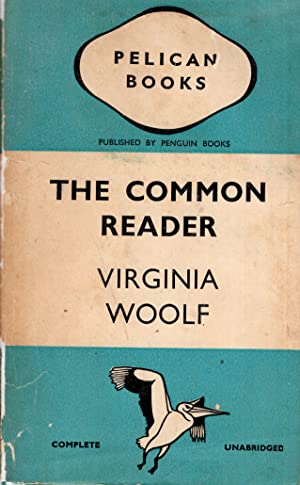
The first was Virginia collection of essays, The Common Reader. First published by the Hogarth Press in 1925, it appeared as a Pelican paperback in October of 1938. Penguin Books printed 50,000 copies, sold them for 6d, and paid the Hogarth Press an advance of £150 for the paperback rights, according to a story on the University of Exeter’s website. By the end of 1965, six Woolf novels were available as Penguins.
The arrangement turned out to be mutually beneficial for both Penguin and the Woolfs, particularly since Leonard was interested in making Virginia’s work available to a wide audience.
To come up with her conclusions, Vike Plock used archival resources held at the University of Bristol. Her article takes note of the different stages, key actors, and main considerations that contributed to Virginia’s gradual assimilation into Britain’s paperback industry.
Adding a feminist perspective
However, Vike Plock explores more than the financial considerations of the deals between Penguin and Leonard. She also explores them from a feminist perspective.
The materials in the Penguin archive work in support of critical narratives arguing that Woolf’s works were posthumously seized by a patriarchal, institutional culture she had repeatedly and vociferously criticized,” she states in the abstract for her article.
Got £3.5 million? If you do, you can buy Virginia and Leonard Woolf’s home in Richmond. The site where they founded the Hogarth Press in 1917 is up for sale again, but this time at a lower price.
In the fall of 2017, the refurbished home, where the Woolfs lived from 1915-1924, was on the market for a price of £4.4 million. It sold in 2019 for £2.95 million, property records show.
Before the redo
Emma Woolf in front of a vine-covered Hogarth House in Richmond in 2016.
The Woolfs’ former home on The Green wasn’t always pristine. Back in June of 2016, when I visited it with Emma Woolf, the Woolfs’ great-niece and the daughter of publisher Cecil Woolf, the front was covered with thick, overgrown vine that nearly obscured the blue plaque marking it as an historic site.
At that time, unpainted plywood covered the main entrance and a list of “Site Safety” cautions was plastered to the front door of the Georgian brick home in south west London.
A lot has changed since then, as you will see when you take a look at the recent stories picturing the luxurious new state of the Paradise Road home.
A bit of Hogarth House history
I wrote about the Woolfs in Richmond back in 2010, as follows.
According to Julia Briggs in Virginia Woolf an Inner Life (2005), the Woolfs took the lease on the property on Virginia’s 33rd birthday. Hogarth House was part of the present Suffield House, which at that time was divided into two separate homes. The Woolfs occupied half of the Georgian brick home, moving there in early March of 1915.
One of England’s famous blue plaques, added in 1976, is affixed to the house to commemorate the Woolfs’ residency. The plaque is one of 15 in Richmond.
Richmond, Woolf’s writing, and the Great War
The Hogarth Press began publishing at Hogarth House in July 1917. Woolf published Two Stories, Kew Gardens, Monday or Tuesday and Jacob’s Room between 1917 and 1924. Interestingly enough, Woolf could see Kew Gardens from the rear windows of Hogarth House.
When German air raids during World War I disturbed the sleep and the safety of the Woolfs and their servants, they moved to the basement at night. And when peace came, Woolf celebrated along with other Richmond residents.
On July 20, 1919, she wrote her diary entry about the “peace” celebrations:
After sitting through the procession and the peace bells unmoved, I began after dinner to feel that if something was going on, perhaps one had better be in it…The doors of the public house at the corner were open and the room crowded; couples waltzing; songs being shouted, waveringly, as if one must be drunk to sing. A troop of little boys with lanterns were parading the Green, beating sticks. Not many shops went to the expense of electric light. A woman of the upper classes was supported dead drunk between two men partially drunk. We followed a moderate stream flowing up the Hill.
Richmond makes its way into Woolf’s later novels as well. In The Waves (1931), for example, the reunion dinner at the end takes place at Hampton Court, which is located in Richmond. In the novel, Bernard calls it the “meeting-place” for the group of six longtime friends.
Likes and dislikes
Like most things in life, though, Woolf wavered between liking and disliking Richmond. Briggs says that even though Woolf described Hogarth House in one of her diaries as “a perfect house, if ever there was one,” by June of 1923 she was anxious to move back to London. In a diary entry that month, she wrote, “we must leave Richmond and set up in London.”
In March of 1924, the Woolfs left Richmond to move back to London. They set up housekeeping and publishing at 52 Tavistock Square.
In it, Fullagar explores Virginia’s diaries and letters, along with Leonard’s autobiography, to reveal how Richmond influenced Virginia’s personal life, as well as her writing life, from 1914-1924.
Hogarth House in June of 2016, overgrown with vines and with its front entrance boarded up and papered with “Site Safety’ cautions.
The blue plaque noting the historical significance of the Woolfs’ residency in Hogarth House was nearly obscured by overgrown vines in June of 2016.
Sign directing visitors to parking for Paradise Road, the location of Hogarth House.
Booth in the train station welcoming visitors to Richmond.
The deadline is extended to Sept. 30 for the call for papers for an upcoming issue of the Virginia Woolf Miscellany focused on “Collecting Woolf.” Get the details.
In addition to more formal academic essays, the issue will collaborate with Blogging Woolf to feature a special section called “Our Bookshelves, Ourselves.”
Our book collections tell stories about our reading lives and also about our lives in the larger community of Woolf?s readers and scholars. In fact, a history of our bookshelves might begin to tell a history of the International Virginia Woolf Society itself.
If you are a “common book collector,” and your books tell a story about your immersion in Woolf or Hogarth Press studies, tell us about it. If you have interesting strategies or stories about acquiring collectible editions of Woolf and Hogarth Press books on a budget, let us know!
Send submissions of 2,000 words for longer essays and 500 words for “Our Bookshelves” by Sept. 30, 2018, to Catherine Hollis via hollisc@berkeley.edu
Clemson University Press is offering two books at a substantial discount until May 1. Download the flyer as a PDF.
An Annotated Guide to the Writings and Papers of Leonard Woolf
The revised edition of An Annotated Guide to the Writings and Papers of Leonard Woolf, by Janet M. Manson and Wayne K. Chapman (2018), 292 pp. (paperback). Normal retail: $34.95. 50% off: $17.50 plus s&h Order the book.
The Annotated Guide is a finding aid to collections of Leonard Woolf papers, which substantially augments previous research tools.
Virginia Woolf and the World of Books
Virginia Woolf and the World of Books, edited by Nicola Wilson and Claire Battershill (forthcoming, 2018), 310 pp. + (hardcover). Normal retail: $120. 70% off: $34.95 plus s&h Order the book.
Just over 100 years ago, in 1917, Leonard and Virginia Woolf began a publishing house from their dining-room table. This volume marks the centenary of that auspicious beginning.
Inspired by the Woolfs’ radical innovations as independent publishers, the book celebrates the Hogarth Press as a key intervention in modernist and women’s writing and demonstrates its importance to independent publishing and book-selling in the long twentieth century.