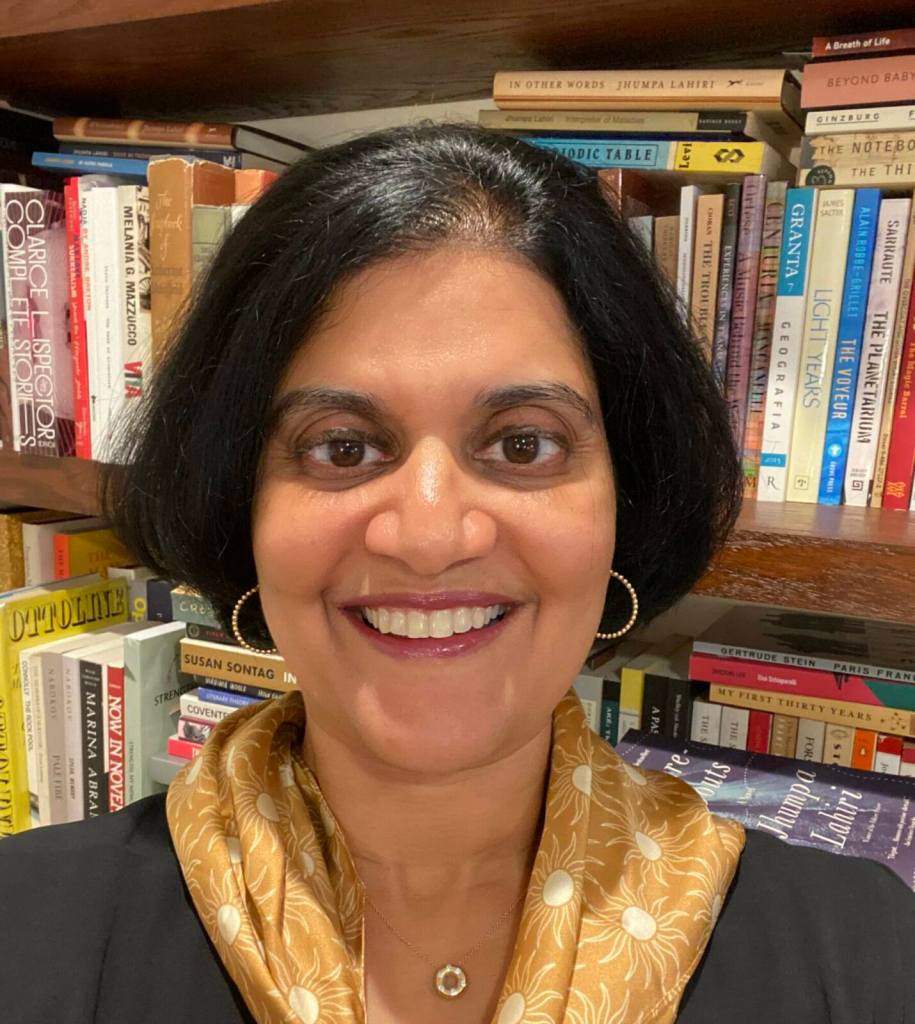
If you’ll be in England this month, you have the opportunity to travel to Charleston for a special event with Mark Hussey and his new book, Mrs. Dalloway: Biography of a Novel.
The details
What: Mrs Dalloway: Biography of a Novel When: Wednesday 12 November, 7 p.m.
Celebrate the centenary of the publication of Virginia Woolf’s landmark novel Mrs Dalloway, with leading author and academic Mark Hussey as he introduces his new book, Mrs Dalloway: Biography of a Novel.
Discover the story behind the story: follow the remarkable ‘life’ of Mrs Dalloway, from its first stirrings in Woolf’s diaries, through her struggles to shape its form, to the novel’s critical reception and lasting legacy. Discover the hidden history of the novel that redefined modern literature.
I have written about Virginia Woolf and fountain pens and her ink preferences before. But today I learned of a new discovery that links Woolf even more strongly to the everyday work of the Hogarth Press, thanks to her use of purple ink.
First page of The Hours notebook 2 (purple ink). Courtesy of SP Books
Nicola Wilson of the University of Reading and the Modernist Archives Publishing Project, a digital project that debuted at the 2017 Woolf Conference and focuses on the Hogarth Press, posted this note to the VWoolf Listserv:
We have recently found evidence of Woolf’s purple pen in the Hogarth Press archives up to Feb 1940 – on the stock cards! Taking account of the figures? This is very exciting as it gives a real indication of Woolf’s presence at the Press and corroborates the kind of information on figures she tracks in the diaries.
Purple ink and the Hogarth Press
Esther Folkersma made the discovery while working with Danni Corfield to clean, sort, and organize the Hogarth Press stock cards as part of her research internship with MAPP. The Hogarth Press stock cards indicate where the stock of a specific book was being held, when the entity received the stock and how many copies they received, how many copies were issued, the number of copies printed at what date, the number of bound copies, and the balance in sheets.
“As more and more purple appeared under our sponges, brushes, and scalpels, and as the colours became more pronounced, Woolf’s presence in these cards grew,” Folkersma wrote in a post on the MAPP blog.
“The scale of Woolf’s handwriting in these stock cards surprised me, as her presence in the press, at least in a material sense, is often difficult to find, even though the significance of her role in the press has always been undeniable, especially as seen through her own diary entries.”
Folkersma explains that “the abundance of Virginia Woolf’s purple ink readily found on a majority of the Stock Value Cards illustrates her involvement in the press to an extent beyond what I had even gathered from her diaries. These very utilitarian cards show how involved Woolf was in the more administrative operations behind the scenes.”
Purple ink and The Hours (Mrs. Dalloway)
According to Mark Hussey, Bloomsbury scholar and author, “most of The Hours (‘Mrs Dalloway‘) holograph is in Woolf’s favored purple ink, with some in black and a little in blue. Her corrections on the American proof are also in purple ink.”
In 2019, SP Books published a gorgeous edition of the handwritten manuscript of what would become Woolf’s famous 1925 novel, allowing anyone who could obtain a copy to see that many of the pages were written in purple ink. I did and wrote a post about it.
Purple ink a chapter, a letter, and a diary entry
Folkersma also recommends reading Ted Bishop’s chapter “Getting a Hold on Haddock: Virginia Woolf?s Inks” from Virginia Woolf and the World of Books (2018), the selected papers from the 2017 conference.
And she mentions two Woolf quotes — one from a letter and one from a diary
This ink is Waterman?s fountain pen ink. Cheap, violet, indelible. (Which sounds as if I were paid to write their advertisements). – from a 1923 letter to Dorothy Brett
The degradation of steel pens is such that after doing my best to clip & file one into shape, I have to take to a Waterman, profoundly though I distrust them, & disbelieve in the capacity to convey the nobler & profounder thoughts.” – from a 1918 Diary entry
Roundtable participants at the 2017 Annual International Conference on Virginia Woolf sit below a screen showing a digitized ledger sheet from the Hogarth Press. Note the purple ink.
Mark Hussey organized and hosted the first annual Woolf event at Pace University in New York City in 1991. Since then, the conference has been held at a different university or college every year.
The page is a work in progress, according to Neverow, but it already includes information about Woolf conferences dating from 1995 as far into the future as 2015. Links to conference Web pages are available beginning with the 2001 conference, “Voyages Out, Voyages Home,” which was held at the University of Wales in the UK.
The site also provides access to selected papers from the annual Woolf conferences. These include:
The first 10 volumes, initiated by Hussey, published in print format by Pace University Pressand dating from 1991 through 2000.
Beginning in 2001, Wayne Chapman at Clemson University Digital Press began to publish the selected papers electronically as well as in print-on-demand format. They can be read online in PDF format.
Sarah Ruhl‘s adaptation of Virginia Woolf’s Orlando will premiere in New York this month. And two Woolf scholars will moderate question and answer sessions after two of the performances.