Feeds:
Posts
Comments

Archive for the ‘The Waves’ Category

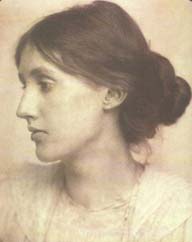
I had the best of intentions, but I didn’t give myself enough time. That is why I have not finished my re-read of Virginia Woolf’s The Waves.

As a result, I won’t be able to plunge into the Woolf in Winter discussion of the novel led by Clare on Kiss a Cloud. But I can stick my toe in the water. So here it goes.

During the past few days, I worked my way through the early years of Woolf’s six characters: Jinny, Susan, Rhoda, Neville, Bernard and Louis.

When I left them last night, all six were on their way home from boarding school for the summer holiday. Each was looking forward to something different. Susan was longing to be back in the country. Jinny was picturing herself as an independent young woman. Louis fancied himself a poet. And so on.

What struck me so far was how beautifully and accurately Woolf captured the minds and moods of children on their way to being grown-ups. The innocence, the complications, the wretched insecurities, the brave dreams, the pleasures and the pains of childhood can all be found in Woolf’s poetic words.

In the novel, Woolf outlines each character. Then she fills in the details in the same way that the pointillist painting provided by Kiss a Cloud does.

From a distance, the dots in a pointillist painting may seem alike. But up close, each one is different. In a similar way, young children may seem alike from a distance. But up close, each one is unique.

Woolf looks at her six children up close. She bends her knees to look at the world from their perspective. She tells their six stories from the shifting vantage points of children on their way to adulthood. She understands the way they think and feel.

What I take away from these first few chapters of The Waves is that despite her own childlessness, Woolf got kids in a way that few adults do. That’s just one more thing to like about her.
Read Full Post »

When I first read about Woolf in Winter, I planned to reread all four novels and participate in all the discussions. I regret that I have failed in my mission.

If you are in the same predicament, links to the online discussions we missed are below.

But please note that we still have a chance to redeem ourselves — albeit with one of the most challenging of Virginia Woolf’s novels, The Waves. The online discussion begins a week from today, on Friday, Feb. 23. You can join Clare and other Woolf readers at Kiss a Cloud.

I plan to put Simone de Beauvoir’s The Mandarins aside for the moment and ride The Waves for the next week. Won’t you join us?

Read Full Post »

Here’s a bit of Virginia Woolf trivia. Did you know that pianist Ludovico Einaudi‘s first album “Le Onde” was inspired by Virginia Woolf’s 1931 novel The Waves?

The cycle of solo piano ballads came out in 1996.

Einaudi’s music is often compared to that of Philip Glass, who composed the music for Stephen Daldry’s film “The Hours” — thus, another Woolf connection for the Milan-trained Einaudi.

Listen to the title track, and feel the waves wash gently over you. The sound is quite beautiful and soothing with just a hint of dramatic tension.

Read Full Post »

A student-faculty team at Mars Hills College has won grant funding to explore the connection between Taoism and the writing of Virginia Woolf.

Ali Andrejewski, an English and psychology student, was awarded $500, and faculty mentor Joanna Pierce won $250 to support research for the grant proposal titled, “’But how describe a world seen without a self?’: Taoist Principles in Virginia Woolf’s To the Lighthouse and The Waves.”

The college recently awarded grants to 12 students and faculty members for research projects ranging from mountain history to pop music.

Read Full Post »

hill bookSusan Hill had a mountain of books inside her Gloucestershire farmhouse that she had never made time to read. So she spent a year reading nothing but the unread books that filled her shelves.

The result is Howards End Is On the Landing: A Year of Reading From Home, published in August by Profile Books. Included in the book is a list of 40 titles that “I think I could manage with alone, for the rest of my life,” Hill said.

Among them is one by Virginia Woolf: To the Lighthouse.

Hill said she chose Lighthouse rather than The Waves, because the latter “always reminds me of the sort of highbrow radio play they used to broadcast on Radio 3.”

A review of Hill’s book in The Guardian calls the book “a mind-map of a novelist in her late 60s who has spent her life reading and writing books.”

Read the introduction to Hill’s book.

Read Full Post »

« Newer Posts - Older Posts »