Feeds:
Posts
Comments

Archive for the ‘Woolf in Contemporary Fiction’ Category

Two recent novels that have garnered rave reviews are touted as being influenced by Mrs. DallowayBoth are written by Black women, and both tackle the unholy trinity of race, class, and gender.

The Days of Afrekete by Asali Solomon

The New York Times review was titled “This Novel Nods to Virginia Woolf While Staring Down Modern Class Lines.” Inspired as well by Toni Morrison’s Sula and Audre Lorde’s Zami, Asali Solomon’s salute to Woolf is evident in the novel’s single-day-with-flashbacks structure and the culminating dinner party.

Liselle, a Black woman married to a white man, is giving a party for her husband’s associates. Her preparations, anticipation, and the dinner itself are the backdrop as she questions her life and dissatisfaction while moving in and out of the past, recalling earlier times and her college friend and lover, Selena.

Liselle isn’t heading out to buy the flowers herself; nor is she reveling in a lovely June day. It begins:

“Late one April afternoon, Liselle stood at the large kitchen window rubbing her hands together for warmth. She acknowledged that early spring was her least favorite time of year.”

A direct reference to Woolf is Liselle’s description of one of the guests: “Her face, its Virginia Woolf hollows….”

And the ending, which I won’t disclose, also pays homage to Mrs. Dalloway.

Assembly by Natasha Brown

The Guardian called Assembly “A modern Mrs. Dalloway … a short sharp shock of a novel … Assembly fulfils, with exquisite precision, Virginia Woolf’s exhortation to “record the atoms as they fall upon the mind in the order in which they fall.”

Another reviewer saw it is “Virginia Woolf’s Mrs. Dalloway meets Citizen by Claudia Rankine.

The nameless narrator is a young Black woman achieving success in the world of finance, while her grudging colleagues write her off as the company’s face of diversity. She isn’t giving a party; rather she’s preparing to attend one, hosted by her white boyfriend’s old-money family, who tolerate her on the assumption that she’s a passing phase, much as Clarissa Dalloway worried about but dismissed her daughter’s infatuation with Doris Kilman.

A first-person narration from an interior perspective, she questions her identity and her place in the world. Like Clarissa, unseen and unknown: “not even Clarissa any more; this being Mrs. Richard Dalloway.”

Read Full Post »

Imagine my double-take when, scrolling through the LitHub Daily recently, I came across an ad for a new book, Insignificance by James Clammer.

The caption read “A plumber’s Mrs. Dalloway.”

The book is described as an interior-monologue lyric novel, a single day in the life of Joe Forbes, reluctant plumber and anguished father. The TLS calls it “A descent into the suburban uncanny and the English soul.” The Spectator links it to Woolf: “Like Mrs. Dalloway, it immerses us in the rush of a different life, the strangeness of another body.”

I may not read it, but the reviewers are taking it seriously, and it sounds compelling. Who am I to snicker?

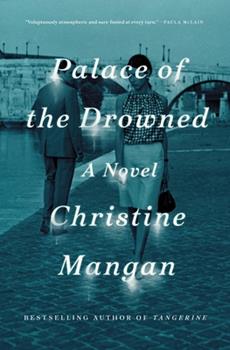
Palace of the Drowned

A New York Times review drew me to Christine Mangan’s Palace of the Drowned, which “heaves with allusions to other books and other authors — a little Patricia Highsmith here, a little Virginia Woolf there, glimpses of Shirley Jackson’s “The Haunting of Hill House” someplace else.”

A novel about a novelist, when Frankie’s latest work is panned and she causes a scene, she goes to Italy, where she’s stalked by an admirer:

“You’re not the first author to receive a bad review,” Gilly tells her. “Dostoyevsky. Hemingway. Did you know Virginia Woolf was terribly affected by criticism? She didn’t even like to read what others wrote about her fellow authors. She said that no creative writer can swallow another contemporary.”

As the Highsmith and Jackson references imply, there’s suspense and intrigue here too, and Venice—all that’s missing are the Bellinis (the drink, not the painter or the composer).

The Plot

 I can’t resist novels about writers writing; Jean Hanff Korelitz’s The Plot is another. A twisted tale of plagiarism and intrigue, the protagonist justifies his actions: “He would hardly be the first to take some tale from a play or a book—in this case, a book that had never been written!—and create something entirely new from it. Miss Saigon from Madam Butterfly. The Hours from Mrs. Dalloway. The Lion King from Hamlet, for goodness’ sake!”


Read Full Post »

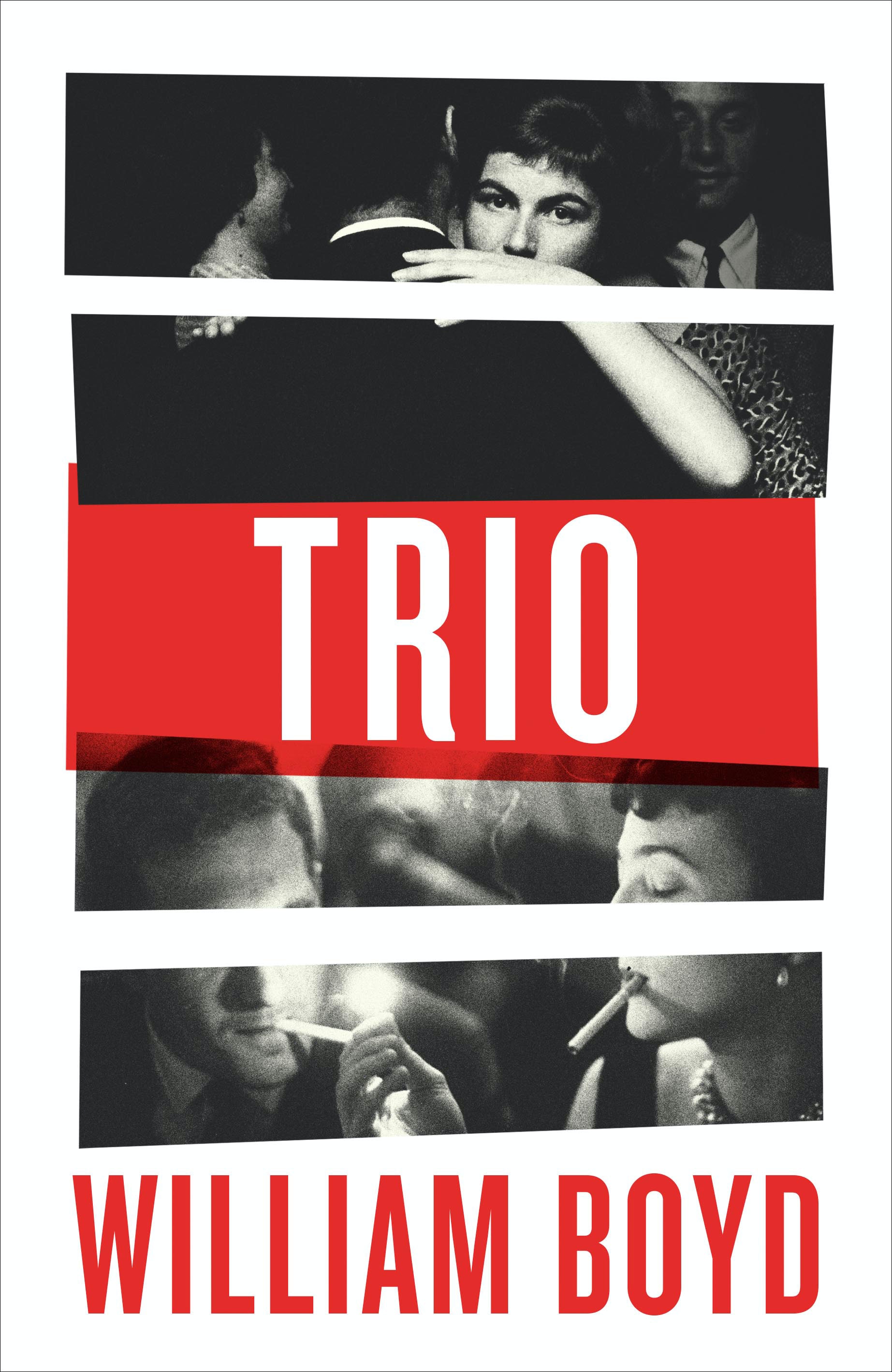
The Last Day of Virginia Woolf. That’s one of the proposed titles for Elfrida Wing’s next novel in English writer William Boyd’s Trio, a romp that takes place on a Brighton film set in 1968.

Elfrida, the director’s wife, is one of three protagonists whose stories are related in alternating chapters of Boyd’s novel.

An alcoholic and ten years past her last success, she was dubbed “the new Virginia Woolf” when her first novel was touted as a modern reworking of Mrs. Dalloway. She’s haunted by Woolf, doesn’t even like her novels, was “underwhelmed” by Mrs. Dalloway.

“She could see no similarity between her spirit, intellect and style as a novelist and Virginia Woolf’s. And that was why she stopped writing, she supposed. It was all Virginia Woolf’s fault.”

A revelation about Woolf’s final day

Then one day, even before her first drink, she has a revelation to write about Woolf’s final day. At a bookstore she asks for a biography and is told there isn’t one, as “Nobody’s much interested in that Bloomsbury set.”

The bookseller mentions A Writer’s Diary, which is out of print, but he tracks down a copy for her. She also buys a pamphlet, Virginia Woolf’s East Sussex, by a local author.

This is before the Woolf revival, before the published diary and letters and Quentin Bell’s biography. Elfrida’s agent is skeptical of the project: “She’s a bit passe, no?” But she’s undeterred.

In Rodmell she walks down the lane to Monks House, “trying to summon up the spirit of Virginia Woolf—and failing.” Peering over the wall from the churchyard, she sees “an ancient man in a beige linen jacket and panama hat deadheading dahlias.”

After he confirms that this was Virginia Woolf’s house, she asks when he came there. When he says “1919,” she says “Ah. You must be Mr. Leonard Woolf.”

She tells him she’s a novelist herself, often compared to Woolf, and wants to write about in Woolf’s final hours.  He bids her good day and stomps back to the house.

At the pub she reads Woolf’s last diary entry, thinks haddock and sausage a disgusting mixture, but she’s inspired: “She would gain a ‘certain hold’ on Virginia Woolf and her last day—and thereby kick-start her own career into life again—by writing it down.”

Making sport of Woolf

Boyd loves to make sport of Virginia Woolf. Rereading To the Lighthouse, Elfrida recalls how much she disliked it, “with its footling detail and its breathy, neurasthenic apprehension of the world, all tingling awareness and high-cheekboned sensitivity.”

When Boyd dissed Woolf in Any Human Heart, he said that it was because he’d taught her and specifically Lighthouse too long. But he considered her diary and letters her best writing, a bias I share.

And so it goes, plots and subplots and overflowing wackiness, a great read to take you out of yourself and the grim present.

Take a look at a YouTube video of Boyd discussing his 2021 novel Trio, which features three people with separate lives and secrets.

I try to push my fiction so far into the real that readers begin to suspect its fictive status. – William Boyd


Read Full Post »

Sigrid Nunez is most known to Woolfians for Mitz: The Marmoset of Bloomsbury, her 1998 (and reissued in 2019) fictional portrait of the Woolfs’ pet monkey, inspired by Flush, Virginia Woolf’s similar treatment of Elizabeth Barrett Browning’s dog.

Bloomsbury makes a brief appearance in her new novel, What Are You Going Through, a series of musings, meetings and memories. The nameless narrator follows some anecdotes about the divisions between women and men by reflecting that while she doesn’t like romance fiction, she’s fascinated by stories of unconventional or hopeless love. She imagines a collection of these tales, called Women in Strange Love.

She considers Dora Carrington’s unrequited love and devotion to Lytton Strachey, her marriage to Ralph Partridge and their lopsided ménage à trois to accommodate Lytton’s passion for Ralph. She recaps Carrington’s suicide two months after Lytton’s death. Virginia Woolf visited Carrington the day before and recounted that she said, “There is nothing left for me to do; I did everything for Lytton.” Woolf’s parting impression of Carrington was “Like some small animal left.”

“Women’s stories are often sad stories,” observes the narrator.

Nunez novel reflects on women’s lives—friendship, aging and death—in the context of the narrator’s response to a friend with terminal cancer. The title is a translation from Simone Weil, who said that love of one’s neighbor is being able to ask the question, Que lest ton tourment?


Read Full Post »

In fiction and in verse, Virginia Woolf continues to be recognized, referenced, and revered. How is it that the mention of her name or a subtle allusion to her work conjures instant identification and understanding, not just by writers or scholars, but by readers of all kinds. Here are two recent sightings.

Weather sighting

In Jenny Offill’s latest novel, Weather, she conveys her ideas and story in fragments that merge into a cohesive whole. Here’s her narrator, Lizzie, a university librarian:

“I do have one bookish superstition about my birthday. I like to see what Virginia Woolf said about an age in her diaries before I reach it. Usually it’s inspiring.”

She then quotes from Volume 3 of Woolf’s Diary about life being “if anything, quicker, keener at 44 than 24….”

Zooming in on poetry

A couple of weeks ago I had the good fortune to participate in a Zoom workshop with poet and essayist Natasha Sajé, after which I bought Vivarium, her poetic abecedary teeming with word play.

An entry for the letter “B” is the witty and wise “Beauty Secrets, Revealed by the Queen in Snow White.” The advice includes “Pace yourself for 35-55” and “Brace yourself for 55-85,” and this:

“Embrace a stash and a place, Virginia wrote, 80 years ago.”

Happy reading to all who are hunkered down in this time of sheltering at home.

Read Full Post »

« Newer Posts - Older Posts »