Feeds:
Posts
Comments

Archive for the ‘Woolf Letters’ Category

A CNBC story reports on a collection of Virginia Woolf’s letters and other items that is for sale en bloc for $4 million. The letters are beingCNBC letter sold by Glenn Horowitz Bookseller in Manhattan.

They include letters from Woolf to her nephew Julian Bell, as well as letters from Leonard Woolf, Vanessa Bell and Vita Sackville-West.

The most poignant, said Horowitz during the CNBC interview, is one written by Vita Sackville-West, describing Woolf’s suicide and the days leading up to the discovery of her body. “It’s really one of the most touching collections of letters I’ve had the privilege of handling,” Horowitz said.

The private collection was built over a period of 40 years by William B. Beekman, who started collecting Woolf items as a Harvard undergraduate before Quentin Bell’s 1972 biography brought her renewed interest from the academy, according to Horowitz’s site. Included in the collection are items that span Woolf’ life, such as photographs, letters, inscribed books and dust jackets.

Although the CNBC story put the value of the collection at $4 million, the Horowitz website prices it at $4.5 million. The collection was put on the market and exhibited in East Hampton last July.

In 2011, Horowitz published a digital catalog of Bloomsbury materials to its website. Virginia Woolf, The Hogarth Press, and The Bloomsbury Group contains more than 150 first editions, association copies, letters and more.

Read Full Post »

New work from Virginia Woolf will be out this summer. The work appeared in The Charleston Bulletin, a family newspaper founded by her nephews, Quentin and Julian Bell, in the summer of 1923.

The vignettes, written or dictated by Woolf between 1923 and 1927 and published in The Charleston Bulletin’s Supplements, describe incidents and individuals of Woolf’s family and household, including servants and members of the Bloomsbury Group. Quentin Bell provided the illustrations.

An article in The Guardian says Woolf’s writing in these supplements shows her “affectionate, mischievous side.”

Helen Melody, curator of modern literary manuscripts at the British Library, says the work is likely the last unpublished work of Woolf.

Yet Stuart N. Clarke, editor of The Essays of Virginia Woolf, Vol 5. and a member of the Virginia Woolf Society of Great Britain, maintains that each issue of the Virginia Woolf Bulletin includes at least one previously unpublished letter by Woolf. They include letters to Lady Aberconway, Mrs Easdale and Winifred Holtby.  Clarke says the Bulletin will soon include a number of letters written by Woolf to Lady Colefax.

The British Library, which acquired the works in 2003, will publish The Charleston Bulletin Supplements for the first time this June.

Read Full Post »

Anne Fernald posted a message to the VWoolf Listserv directing us to Sarah Funke Butler’s post on The Paris Review website that discusses a letter Woolf wrote to her nephew Julian Bell in 1929.

Patricia Laurence, author of Julian Bell, The Violent Pacifist, a monograph in Cecil Woolf Publishers Bloomsbury Heritage Series, added her insights to the listserv discussion:

“The poem that Woolf refers to in her letter is probably “Chaffinches” published in the Songs for Sixpence Series, 1929, Cambridge. Julian’s early poetry was not marked by `modernist’ or `currency’ in subject, diction, rhythms or metres. His promise in `Chaffinches’ is marked rather by his Hopkinesque description of birds:

Startled, flock after springing flock they rise
With rustle of beating wings as as each flies
The sudden coverts flicker white,
In drooping, jerked finch flight
Of rise and fall: Stray chinking call.

“Nature description and the pastoral came naturally to him in poetry and letters, and when in Paris in 1930, `his first experience of a large town’, made him not a modernist but `fiercely naturalist….sending…[him] to watch all the gulls and sparrows of Paris.” Romanticism (what he viewed as “emotionalism”) and modernism (currency) were anathema to him, and the consciousness of “the chasm in the road’ after the Great War is absent from most of his poetry–though he is of the Auden generation.

“Nevertheless, though he may not have been as talented as others in Bloomsbury, he was not given much encouragement by his family.”

The letter is part of a Virginia Woolf collection currently held by Glenn Horowitz Bookseller, Inc., which features a photo titled Virginia Woolf Goes to the Beach on its home page.

Woolf items are featured in two of Horowitz’s catalogues: The Robert Reedman Collection of Virginia Woolf and Bloomsbury and Virginia & Leonard Woolf. The company also offers Vita Sackville-West and T.S. Eliot catalogues.

Read Full Post »

Did you know that a student researcher found a 1932 love letter from Virginia Woolf to Vita Sackville-West decades after Sackville-West’s deathin 1962?

That letter was for sale recently at the 44th California International Antiquarian Book Fair in San Francisco. The letter asks, “When am I going to see you? because you know you love now several people, women I mean, physically I mean, better, oftener, more carnally than me.”

It was Woolf’s only known writing about their physical relationship, said Peter Harrington, a London bookseller who offered the manuscript for $51,000.

Woolf and Sackville-West became romantically involved in the 1920s. Woolf’s pseudo-biography Orlando (1928) was based on Sackville-West and is set in her family home in Kent, Knole. Her son, Nigel Nic0lson, has described the novel as “the longest and most charming love-letter in literature.”

Nicolson writes about his recollections of his mother’s relationship with Woolf in Portrait of a Marriage (1973).

Read Full Post »

An archive of Bloomsbury group letters from two collections is being opened to public viewing at Cambridge University for the first time, according to a Guardian report.

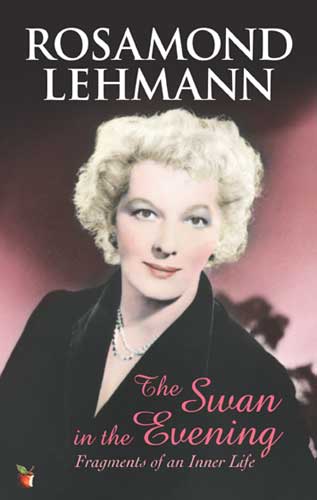
Both collections belonged to the novelist Rosamond Lehmann and the diarist and writer Frances Partridge, who became friends at Cambridge. The archive, acquired by King’s College, Cambridge, includes more than 1,000 pages of letters and 30 photo albums.

Of particular note are those letters by and pertaining to Virginia Woolf and her death. Included among them is an April 3, 1941, letter from Clive Bell to Partridge, written while Woolf was missing yet had not been declared dead.

See photographs from Partridge’s Bloomsbury collection. Read more in the Daily Mail and the New Zealand Herald.

Read Full Post »

« Newer Posts - Older Posts »