Feeds:
Posts
Comments

Archive for the ‘Woolf Letters’ Category

I love getting post from abroad. Everything about it is charming: the feel of the envelope, the look of the stamps, even the fact that “U.S.A.” is included in the address.

I never rip it right open. I usually hold the letter in my hands for a minute, thinking about the long distance it has come, the water it has crossed, the person on the other end who has taken the time to sit down and put pen to paper.

Sometimes I have to wait for the right moment before I can open it. I never want to read a letter from abroad when I am agitated or in a hurry or distracted by some mundane matter.

But when the moment is right, I settle down on my favorite sofa, the one where the late afternoon sun slants across my shoulder. In that calm and quiet spot, I carefully slit open the envelope. I sip the words slowly, letting them swish around in my mind. I savor their flavor and their meaning. I note their nuances and subtleties. I picture the person who wrote it and the place where he wrote.
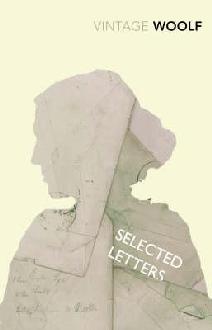
A letter, an old-fashioned handwritten letter from abroad, is something I can tuck in my book and read again later. It is something I can take with me wherever I go. It is something I can save forever, tied up with others like it, bound together and stored in a drawer.

So where is the Virginia Woolf connection in all of this? Well, we all know she wrote and received lots of letters — volumes in fact. Five of them sit on my bookshelf.

But two other things have made me think about letters. The first was a note I received from Cecil Woolf, nephew of Leonard and Virginia, who wrote to say that he and his wife Jean Moorcroft Wilson had spent 12 days in South Africa, where they spoke at the University of Capetown. Cecil’s talk was titled “As I Remember Them: Virginia and Leonard Woolf.” His missive was dated Jan. 26, and I thought about the significance of that date as well.

Cecil Woolf

The second thing that made me think about letters was the much-discussed news that Angelica Garnett has published a new volume of short stories, The Unspoken Truth: A Quartet of Bloomsbury Stories. These stories are not letters. But Garnett has been quoted as saying that the stories are autobiographical, not invented, for the most part.

Those things led me to ponder the similarities between real life and fiction and the differences between real life stories and the lives we share via letters. Both are edited, either formally or informally. Both alter the realities of our daily lives. Both stay true to those realities.

Read Full Post »

Whatever holiday you celebrate, you may need a last-minute gift idea for a favorite reader. Here are a few books that could suffice. The bonus is that each has a Virginia Woolf connection, however slim.

  • Writers’ Houses is a book produced by Francesca Premoli-Droulers that includes wonderful photographs of the homes of writers. Those of Vita Sackville-West and Virginia are included. Read more.
  • A Truth Universally Acknowledged: Thirty-Three Great Writers on Why We Read Jane Austen, edited by Susannah Carson, includes Virginia’s thoughts about the great novelist of Regency England. She is among 33 authors whose opinions are included in this volume, published by Random House. Read more. And check out a post about the book on a super Austen blog I just discovered, Jane Austen’s World.
  • The newly released The Letters of T.S. Eliot, Volume Two: 1923-1925 includes letters from Virginia. It is edited by Valerie Eliot and Hugh Haughton and published by Faber Faber. Volume Two is being published simultaneously with the revised edition of Volume One of the letters, which covers the years from 1898 to 1922. Read more.
  • A new translation of  The Second Sex By Simone de Beauvoir replaces all of the original material removed by its original translator. This material includes long extracts from works by Virginia Woolf, Sophie Tolstoy and Colette, among others. Translators Constance Borde and Sheila Malovany-Chevallier Jonathan Cape also corrected mistranslations of philosophical terms and punctuation. These changes, along with the replacement of approximately 15 percent of the original content — particularly from sections on history and literature — are said to make a meaningful impact for readers interested in gaining greater understanding of Beauvoir’s views on women’s lives. Read more.

Read Full Post »

Did Virginia Woolf like science fiction? Did science fiction influence her novels? Those questions never occurred to me until I read a Web site post titled “The Science Fiction Writer Who Received Fan Mail from Virginia Woolf.”

The piece reports on an article by Kim Stanley Robinson in New Scientist that discusses Woolf’s correspondence with the influential science fiction writer Olaf Stapledon.

In it, Robinson says Woolf did more than just read science fiction. She also allowed it to influence her writing. Robinson cites Orlando and the “Time Passes” section of To the Lighthouse as evidence for her claim.

She also cites correspondence from Woolf to Stapledon found in his papers at the University of Liverpool and not included in her Collected Letters. In her letters, Woolf praises Stapledon’s work, particularly the novel Star Maker, which he sent Woolf.

Of Star Maker, Woolf wrote: “sometimes it seems to me that you are grasping ideas that I have tried to express, much more fumblingly, in fiction.”

Robinson says Stapledon’s 1937 novel influenced Woolf’s Between the Acts. She describes the novel as ending “with Stapledonian imagery,” and writes that its final pages are “a kind of science fiction.”

After reading Patrick A. McCarthy’s introduction to Star Maker on Google Books, I am intrigued enough to read some Stapledon on my own.

Read Full Post »

Outside + Beside Herself, a dance performance about Virginia Woolf choreographed by a master’s student, is currently playing at the National Arts Festival in South Africa.

Choreographer Zoe Reeve says the performance, which is based on Woolf’s suicide letter to husband Leonard, explores elements of “drowning, friendship and letting go.” The words of the production are drawn from Woolf’s novel The Waves.

“It is very dark but there are light-hearted elements in it. There are gentle moments in the relationships between the performers,” Reeve said. Read more.

This is not the first dance performance in recent months that portrays Woolf’s end times. Cleveland, Ohio’s GroundWorks Dancetheater performed Unfinished Dialogues in the U.S. last fall. I attended and found it both mesmerizing and touching.  

Read Full Post »

From Mark Hussey, author of Virginia Woolf A to Z, comes the news that if you have a spare $153,580, eight of Woolf’s pocket diaries can be yours.

The diaries, which are being offered by an antiquarian bookseller in London, were kept by Woolf from 1930 onward. Among them is her pocket diary for 1941, the year she ended her life. The diaries include engagement entries, manuscript entries and other notes.

Get the pocket diary details here.

Want more details about Woolf for sale?

  • Read a post and comments about prices for Woolf’s novels here.
  • Get details about the Woolf letters offered for sale at a Christie’s auction last fall here.

Read Full Post »

« Newer Posts - Older Posts »