Feeds:
Posts
Comments

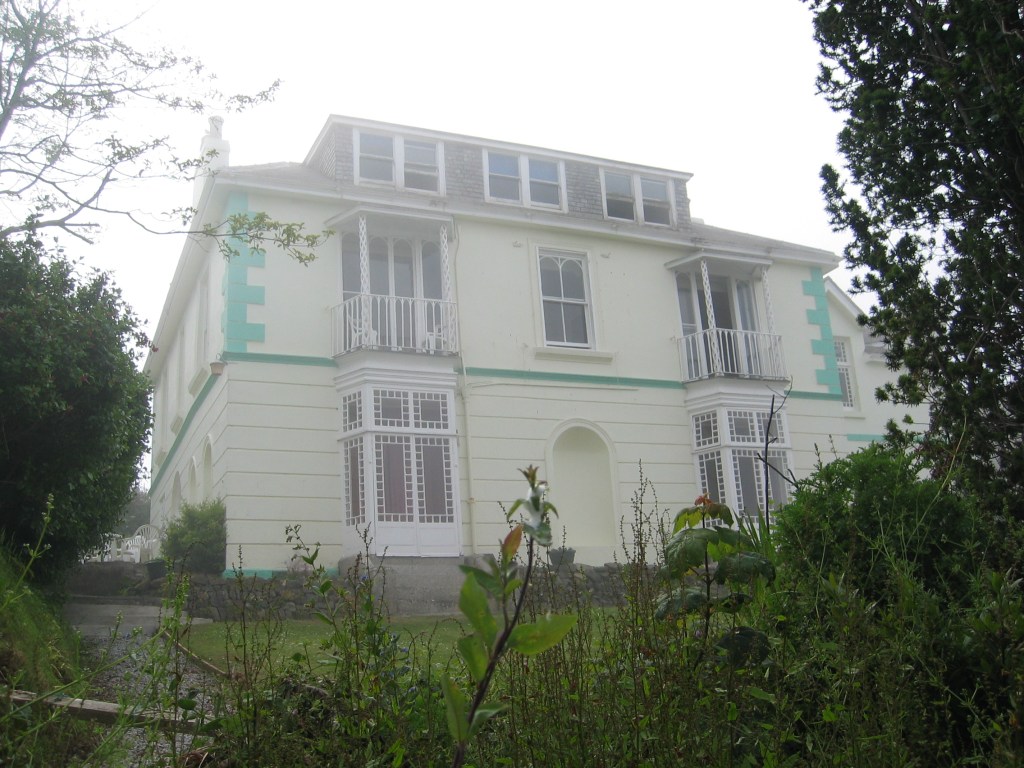
In 1981, in a small Northern California town, a group of like-minded feminists opened a community library. They wanted a place to read and write, to discuss books, and above all, they wanted “a library you can eat in. And thus The Sitting Room was born, and lives, and celebrated its 37th birthday this past Sunday, June 3.

Eminent Woolfian and Professor Emerita at Sonoma State University, J. J. Wilson is one of The Sitting Room’s founders and perhaps its luckiest member, as she lives (six months out of the year) in the library itself. Each room houses a different collection of women’s literature and art: e.g. the Poetry Room, the Writing Room, the Art hallway, and the Woolf Wall which graces the living room / workshop area. These collections are curated and organized by a dedicated volunteer, keeping the library’s offerings up-to-date and somewhat organized.

Books, tea, snacks and workshops

At The Sitting Room, there are books to borrow and books to read while sitting in an overstuffed armchair. Tea and snacks are freely available. Students and professors from nearby Sonoma State University use the library’s resources for research and discovery, community members pop by to read and think, and local writers hold workshops and readings.

J. J. Wilson calls The Sitting Room “an enactment of Woolf’s vision, but not an altar to her.” More than a room of one’s own, The Sitting Room is a library for everyone inspired by the values of feminism, conversation, and friendship. Its guiding spirits include not just Woolf, but also Tillie Olsen, Zora Neale Hurston, Adrienne Rich, Audre Lorde, and Meridel Le Sueur. The Woolf-inspired art of Suzanne Bellamy and other feminist artists creates a rich visual tapestry for the library.

Access the online catalog and more

To access books from this utopian, grassroots, feminist, long-lived, and beloved library, visit the library’s online catalog.

And look for more on J. J. Wilson, The Sitting Room, and the history of the International Virginia Woolf Society in an upcoming issue of the Virginia Woolf Miscellany with the theme “Collecting Woolf.” Meanwhile, see the call for papers below.

Call for papers
Collecting Virginia Woolf: A Special Themed Issue of the Virginia Woolf Miscellany

Who collects Virginia Woolf and Hogarth Press books? When did the demand for and economic value of Woolf’s and the Hogarth Press’s books begin in the antiquarian book trade? Are Woolf and Hogarth Press books more or less desirable than other modernist first editions? What are the emotional, haptic, and educational values of early Woolf and Hogarth Press editions for scholars, students, and common readers? What do the book collections of Virginia and Leonard Woolf tell us about their lives as readers and writers?

In addition to more formal academic essays, this upcoming issue of the Miscellany (in collaboration with Blogging Woolf ) will also feature a special section called “Our Bookshelves, Ourselves.” Our book collections tell stories about our reading lives and also about our lives in the larger community of Woolf’s readers and scholars. In fact, a history of our bookshelves might begin to tell a history of the International Virginia Woolf Society itself. If you are a “common book collector,” and your books tell a story about your immersion in Woolf or Hogarth Press studies, tell us about it. If you have interesting strategies or stories about acquiring collectible editions of Woolf and Hogarth Press books on a budget, let us know!

Send submissions of 2,500 words for longer essays and 500 words for “Our Bookshelves” by Sept. 30, 2018, to Catherine Hollis via hollisc@berkeley.edu

[1] June Farver, “2% Milk is the New Half and Half,” The Sitting Room Past, Present and Future (2012)

Editor’s Note: The deadline has once again been extended — this time until June 30.

Deadline for the fourth annual Angelica Garnett Undergraduate Essay Prize sponsored by the International Virginia Woolf Society has been extended to Wednesday, June 13.

The competition, held in honor of Virginia Woolf and in memory of Angelica Garnett, writer, artist, and daughter of Woolf’s sister, Vanessa Bell, asks undergraduates to write an essay on any topic pertaining to the writings of Virginia Woolf.

Essays should be between 2,000 and 2,500 words in length, including notes and works cited, with an original title of the entrant’s choosing. Essays will be judged by the officers of the International Virginia Woolf Society: Kristin Czarnecki, President; Ann Martin, Vice-President; Alice Keane, Secretary-Treasurer; and Drew Shannon, Historian-Bibliographer. The winner will receive $200 and have the essay published in the subsequent issue of the Virginia Woolf Miscellany.

Download the essay entry form: IVWS Essay Contest Entry Form 2018

Please send essays in the latest version of Word.

Questions? Contact Kristin Czarnecki at: kristin_czarnecki@georgetowncollege.edu.

  • Bloomsbury Spirit is the first exhibition in Sweden of the art and home decor of the Bloomsbury Group, including a recreation of Charleston. It takes place at Artipelag, set on Värmdö in the Stockholm Archipelago, just 20 minutes from the city centre of Stockholm. Dates: Through Sept. 30. Get tickets.
  • Virginia Woolf: an exhibition inspired by her writings is at Pallant House Gallery​ and features 80 female artists from 1854 to the present. Dates: May 26-Sept. 16. Organized by Tate St. Ives​ with Pallant & The Fitzwilliam Museum, Cambridge​. Pallant House Gallery is located at 9 North Pallant, Chichester, West Sussex, PO19 1TJ.

Share a photo of your room of your own with Virginia and Leonard Woolf’s Monks House.

The National Trust property in Rodmell, East Sussex, is creating a Woolf installation in her writing lodge, and there are two ways you can get involved:

  • Send an image of “A Room of Your Own” and briefly describe what you do in the space.
  • Donate your copy of the book, highlighting your favorite word, lines, or passage. Doodles, highlights and margin notes are welcome!

All images used will be added to a database and combined with other images to create an audio-visual installation. Books will not be returned.

Find out more about the A Room of One’s Own project.

This project explores the significance of the room in Virginia Woolf’s text as a creative space, be it real or psychological. – National Trust website

Lynnette Beers is a Woolf scholar and enthusiast who teaches British literature and creative writing at Santiago Canyon College in Orange, Calif. So it’s no surprise that Virginia Woolf would make an appearance in Lynnette’s first novel, Just Beyond the Shining River

Woolf introductions

The protagonist, Gemma Oldfield, discovers a cache of letters spanning six decades at the cottage of her recently-deceased grandmother in the East Midlands village of Moulton. The letters disclose family secrets with ever-widening ramifications across generations. The story balances between the past, as revealed by Gemma in the letters, and the present, as she grapples with crises and discoveries in her own life.

Epigraphs from Moments of Being and The Waves introduce each of three sections and help to establish themes of remembrance and change, resolve and renewal. Within the letters themselves, Mary, their author, tells Emily, Gemma’s grandmother, that “I find myself one of the lucky ones to have actually met Mrs. Woolf years ago.” In another Mary writes about an article she’s researching about suicides by drowning, specifically Mary Wollstonecraft and Virginia Woolf.

Sense of place

What I enjoyed most, though, was an ever-present sense of place. Lynnette brings London to life throughout the novel. As in Woolf’s own work, I was able to visualize so many scenes and sites, the Chelsea neighborhood of Gemma’s friend, their walks along the Embankment, back lanes of Soho, and more. But it was the story’s frequent surprises, its twists and turns—both Gemma’s and her grandmother’s—that kept me turning the pages.

Just Beyond the Shining River grew out of Lynnette’s MFA thesis, and involved extensive time and research in England. It has been selected as a finalist in the debut novel category for the “Goldie” awards of the Golden Crown Literary Society, which recognizes and promotes lesbian literature. Congratulations to Lynnette Beers!