Academic tomes are usually quite pricey. But today the good news is that The Oxford Handbook of Virginia Woolfis now available in paperback, bringing the price down to $50.
The book is edited by Anne Fernald, professor of English and Women’s, Gender, and Sexuality Studies at Fordham University. Its 39 original chapters written by internationally prominent scholars do the following:
Consider Woolf’s career chronologically and places her novels in the context of her life, world events, and the non-fiction she wrote alongside them to highlight the centrality of essay-writing and reviewing to her career
Assume her feminism and examines its many facets and broadens our vision of Woolf’s world beyond Bloomsbury by looking at her many circles of women friends, her engagement with women’s education and the suffrage movement, and the role of Hogarth Press in the larger context of publishing
Include a wide range of chapters on Woolf’s afterlives.
In September, the venerable location of Bloomsbury in the country will open a new venue in the former district council offices in Southover Road in Lewes that will feature a shop, a pop-up café pop-up café operated by Lewes-based Caccia & Tails, and a free program of co-produced community projects, artist-led workshops, gallery activities, and a learning program.
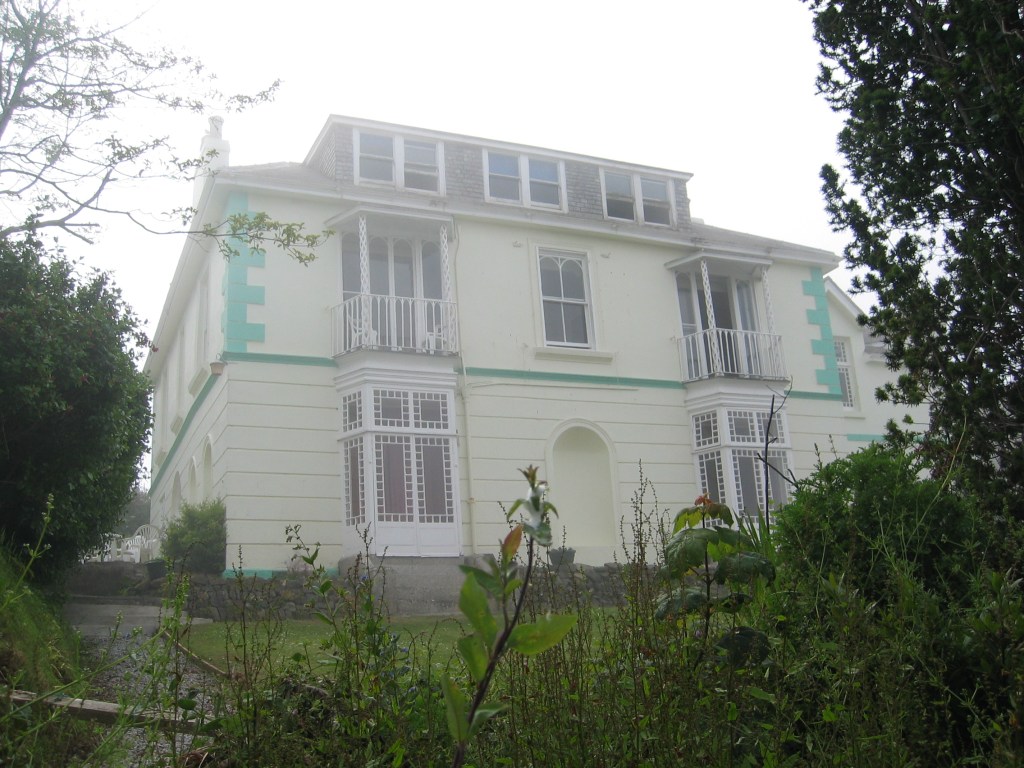
Charleston, 2019
The effort is the first step in bringing 100 of the most important Bloomsbury works back to Sussex and providing a growing Bloomsbury archive in a central location that is accessible to researchers and visitors.
Two free exhibitions will be featured during the venue’s first season, which will run Sept. 13 through Jan. 7, 2024:
“Bring No Clothes: Bloomsbury and Fashion,” which will feature catwalk fashion by the likes of Dior, Fendi and Burberry alongside never-before-seen Bloomsbury portraits and personal items including Virginia Woolf’s handbag, embroidered by Vanessa Bell, and
Here is what Nathaniel Hepburn, director of Charleston, has to say about the project:
“Since Charleston reopened after the pandemic, we have been working in partnership with the council and community groups in Lewes to develop a bold and ambitious vision which could transform the cultural life of Lewes and replicate the ‘Rodin effect’ from 1999 when Tate lent the famous Kiss sculpture to the town.
“It is exciting to be able to announce plans to launch this space in time for a major cultural season happening across Sussex to coincide with the largest contemporary art prize in the world – Turner Prize – being hosted in Eastbourne. It’s a great moment to put Lewes on the map as an important part of the region’s cultural offer.”
According to the Charleston website:
It is not a new idea for the Bloomsbury group to explore creating a cultural centre in Lewes. During the Second World War, the economist John Maynard Keynes, alongside Vanessa Bell and Duncan Grant, worked on a project for the precursor of the Arts Council, making designs for a theatre and art gallery – with a café – for small towns across the country, using Lewes as a model.
I can’t take credit for these non-fiction Woolf sightings. That goes to Benjamin Hagen, president of the International Virginia Woolf Society, who posted them on Facebook.
From Ann Patchett
First comes Ann Patchett’s “Eudora Welty: An Introduction,” in which Patchett describes her encounters with Welty in writing and in person.
It begins with Woolf and with Welty’s foreword to To the Lighthouse (1927) and leads into a reflection on first encounters and later returns.
The piece is included in These Precious Days, a 2021 collection of Patchett’s essays.
From Brian Dillon
Second is critic and essayist Brian Dillon’s “Vagueness” in Affinities, just out in paperback (2023), which includes a chapter on the proto-modernist photographs of Julia Margaret Cameron, Woolf’s Victorian great-aunt.
Hagen wrote that he was “Surprised to find this lengthy essay on Julia Margaret Cameron, which begins with her stunning photograph of Julia Jackson (later Stephen), Virginia Woolf’s mother. Woolf gets some attention here too.”
Thanks for being on the lookout, Ben.
Ben Hagen’s Aug. 6, 2023, Woolf sightings Facebook post, complete with photos of pertinent pages from the two books he mentions.
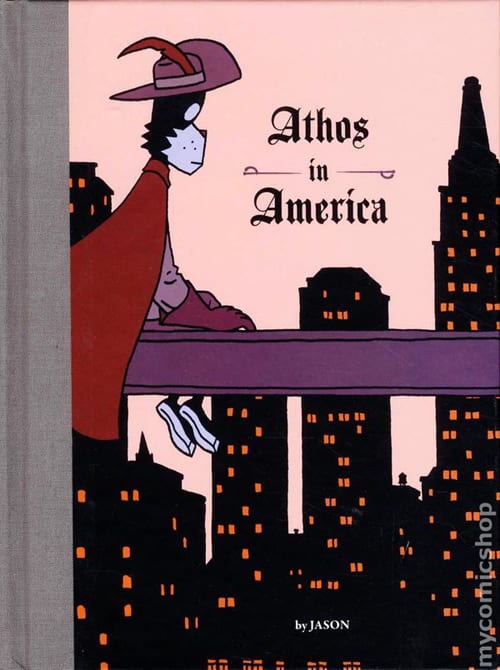
In his full-color graphic novella, Athos in America, Norwegian cartoonist Jason include the story “The Brain That Wouldn’t Virginia Woolf,” a mash-up of The Brain That Wouldn’t Dieand Who’s Afraid of Virginia Woolf, told in reverse chronological order.
Described as the volume’s “most heartbreaking tale” and as the peak of the artist’s “love of classic cinema and genre-bending,” the story may be a disappointment as a Woolf sighting. That is because it connects with the film made from Edward Albee’s play rather than Woolf herself, either as an author or a person.
The 2012 volume also includes five other stories, with the title story providing a prequel to Jason’s 2008 graphic novel, The Last Musketeer.
The most recent volume of Woolf Studies Annual, No. 29 (2023), edited by Benjamin Hagen, president of the International Virginia Woolf Society, is now available.
To purchase the journal, follow this link and click “Add to Cart.” At checkout, enter the discount code WSA2023 for 20% off. You do not have to create an account in order to make a purchase.
This issue features the research of Celia R. Caputi, Danielle N. Gilman, Lingxiang Ke, John Pedro Schwartz, and Kathryn Van Wert.
In addition to several new book reviews, Part 2 of the WSA Index, and an updated guide to scholarly collections, the volume also includes a forum on Mark Hussey’s 2021 biography of Clive Bell.
Contributors to the forum include Elizabeth Berkowitz, Claire Davison, Diane Gillespie, Maggie Humm, Christopher Reed, and Mark Hussey (in response).
Woolf Studies Annual is a refereed journal publishing substantial new scholarship on the work of Woolf and her milieu. Each volume includes several articles, reviews of new books, and an up-to-date guide to library special collections of interest to researchers. The Annual also occasionally features edited transcriptions of previously unpublished manuscripts.
Shakespeare in Bloomsbury coming next month
Yale University Press will publish Marjorie Garber’s new book Shakespeare in Bloomsbury in September. It’s billed as “The untold story of Shakespeare’s profound influence on Virginia Woolf and the rest of the Bloomsbury Group.”
Garber is the William R. Kenan, Jr. Research Professor of English and Visual and Environmental Studies, emerita, at Harvard University.
She is the author of several books on Shakespeare, as well as of books on cultural topics ranging from dogs and real estate to bisexuality and cross-dressing. Her most recent book is Character: The History of a Cultural Obsession.