Feeds:
Posts
Comments

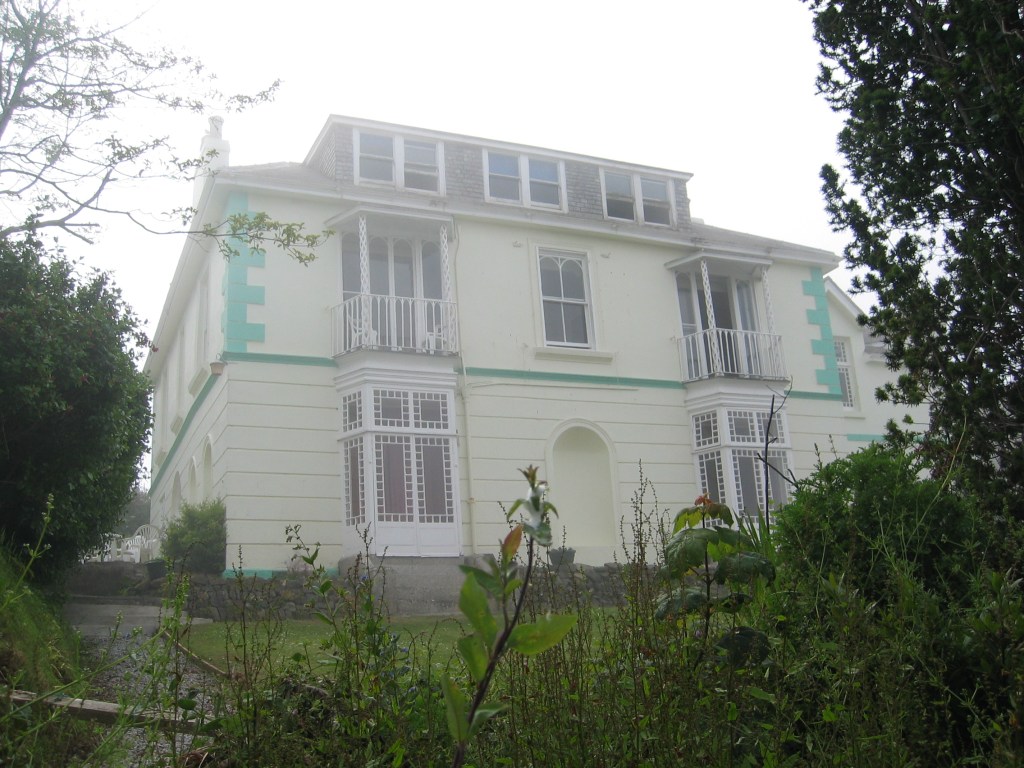
You can see two of the attic windows in this photo of Charleston taken in 2019.

I have been fascinated by attics since I was a little girl, when the bed in my childhood bedroom bumped up against the door to our home’s attic, where family treasures were left to collect dust.

Now, visitors to Charleston have the rare opportunity to visit that home’s attic, the former studio of Vanessa Bell and the site of a new free exhibit, “Near Heaven.” The title comes from a quote from Vanessa’s daughter Angelica Garnett, in which she explained how important the attic space was to her mother.

A steep climb to a place of escape

After a climb up two flights of steep and uneven steps, visitors can view this new exhibit by Langlands & Bell. It is billed as “exploring the space as an artistic refuge and a place of escape” and contemplation from the domestic demands Vanessa faced.

Lord knows they were many and pressing. Her letters housed in the Berg Collection at the New York Public Library show the many domestic concerns Vanessa had to juggle — living arrangements, house guests, child rearing, and personality conflicts — all while creating art.

While entry to the free exhibit does not include a tour of the home itself or its other exhibitions, visitors can get a view of the home’s famous garden from the attic windows.

How to book

“Near Heaven” is the first contemporary exhibit ever to be installed at the house. While free, it does require booking a specific time slot. The exhibit is open from April 2 through Aug. 29. 

Charleston is based in the heart of the South Downs National Park in East Sussex, UK.

Another exterior view of Charleston, 2019


What’s new — and old — in the world of Virginia Woolf and books? A couple of things.

A graphic biography

First, the new. In the summer of 2024, Weidenfeld & Nicolson will publish Virginia Woolf: A Graphic Biography,  Ella Bucknall’s “fascinating, engaged and deeply scholarly” graphic biography of Virginia Woolf.

The publisher says: “From Woolf’s earliest memoirs of the sound of the sea in St. Ives to her final submersion in the River Ouse, Bucknall tells the story of Woolf’s life, recalling deaths and marriages, friendships and rivalries, creative droughts and floods of inspiration.

“Combining her distinctive and intricate illustrations, with a scholar’s intellect and understanding of Woolf’s life and works, Bucknall’s is a completely original approach to this most beloved author, and a pioneering contribution to the biography genre.”

This is the first book for Bucknall, a writer and illustrator currently studying for a Ph.D. in creative writing at King’s College London.

Woolf tells all in Literary Confessions

Now the old. The book Really and Truly: A Book of Literary Confessions, was expected to sell for between £4,000 – £6,000 at Dominic Winter Auctioneers in Gloucestershire in January. Instead, it fetched £21,000.

In it, Woolf, along with Rose Macaulay, Rebecca West, Hilaire Belloc, Stella Benson and Margaret Kennedy, shares her thoughts on the best and worst writers in the literary world.

Woolf completed her questionnaire on May 6, 1924, answering all 39 questions and signing it using her trademark purple ink. The questions ranged from “who is the greatest prose writer that ever lived” to who was the “worst living English playwright”. The ten sets of handwritten answers were dated between 1923 and 1927.

Woolf named T.S. Eliot and Clive Bell as “the best living critic of literature.” She answered that Jane Austen was “the best deceased English novelist.” And when asked to name the deceased men of letters whose character she most disliked, she wrote: “I hate all dead men of letters.”

Margaret Kennedy’s grandson William Mackesy found the book while sorting through his late grandmother’s effects.

In under 100 handwritten words, in her distinctive purple ink, Virginia Woolf tells us so much about her literary passions and aversions. One could read whole biographies to seek out such snippets and here all is set out pithily on two pages. – Chris Albury, auctioneer

In her commemoration of the anniversary of Virginia Woolf’s death, Paula Maggio refers to the coverage in the New York Times. This took me back to one of my favorite novels, The Lost Garden by Helen Humphreys, which was a prominent example in my 2010 Bloomsbury Heritage Series monograph, Beyond the Icon: Virginia Woolf in Contemporary Fiction.

I’ve excerpted the section here:

“The Lost Garden, a story of a team of ‘Land Girls’, as the Women’s Land Army during World War II was known, begins at the time of Woolf’s death, but she nevertheless exerts a dominant influence. Helen Humphreys builds a connection with Woolf through Gwen Davis, a horticulturalist who is assigned to oversee wartime food production at a Devon farm. When Gwen is on the train out of London in March of 1941 to assume her duties, she sees over someone’s shoulder the announcement on the front page of The Times of Virginia Woolf’s disappearance and likely death:

I think of the letter I was writing in my head this morning to Mrs. Woolf. All the letters I write in my head. And now I’ve missed my chance to let her know how much I have loved her books, and to tell her that one evening, seven years ago, I think I followed her through the streets of London.

“Woolf is never far from Gwen’s thoughts. When viewing the estate at which she will be working, she notes that, ‘There is a river at the bottom of the hill. I think of Mrs. Woolf’. When one of her charges tells about her fiancé, who is missing in action, Gwen reflects that, ‘This makes me think of Virginia Woolf. Missing in action. That’s exactly what’s happened to her. She seems definitely to be a casualty of war at the moment. Like any other’.

“When Woolf’s death is confirmed, Gwen turns to the novel she treasures, To the Lighthouse. The final scene brings her clarity and closure:

There is Lily Briscoe on the lawn, trying to finish her painting… Her hand holds a paintbrush as a conductor holds a baton. This is the music of the moment, these words and images, and all of a sudden I know that it doesn’t matter whether or not it was Mrs. Woolf I followed through London that June evening seven years ago. I will never be closer to her than now. The book is the shared experience, the shared intimacy. The author is at one end of the experience of writing and the reader is at the other, and the book is the contract between you.

“Woolf has been an almost tangible presence, and the physical proximity of Gwen’s earlier sighting of her seems to transcend Woolf’s death and bring comfort, maintaining the ethereal connection that is enhanced by her identification with the novels. Gwen feels a bond with Woolf, a sense that in spite of obvious differences, they shared some common sensibilities, perhaps were kindred spirits. Woolf anchors Gwen in the reality of her life while at the same time enabling her to escape it.

“The Lost Garden is so infused with Woolf, deliberately invoking both the pathos of her disappearance and death and the magnitude of her impact on one reader.”

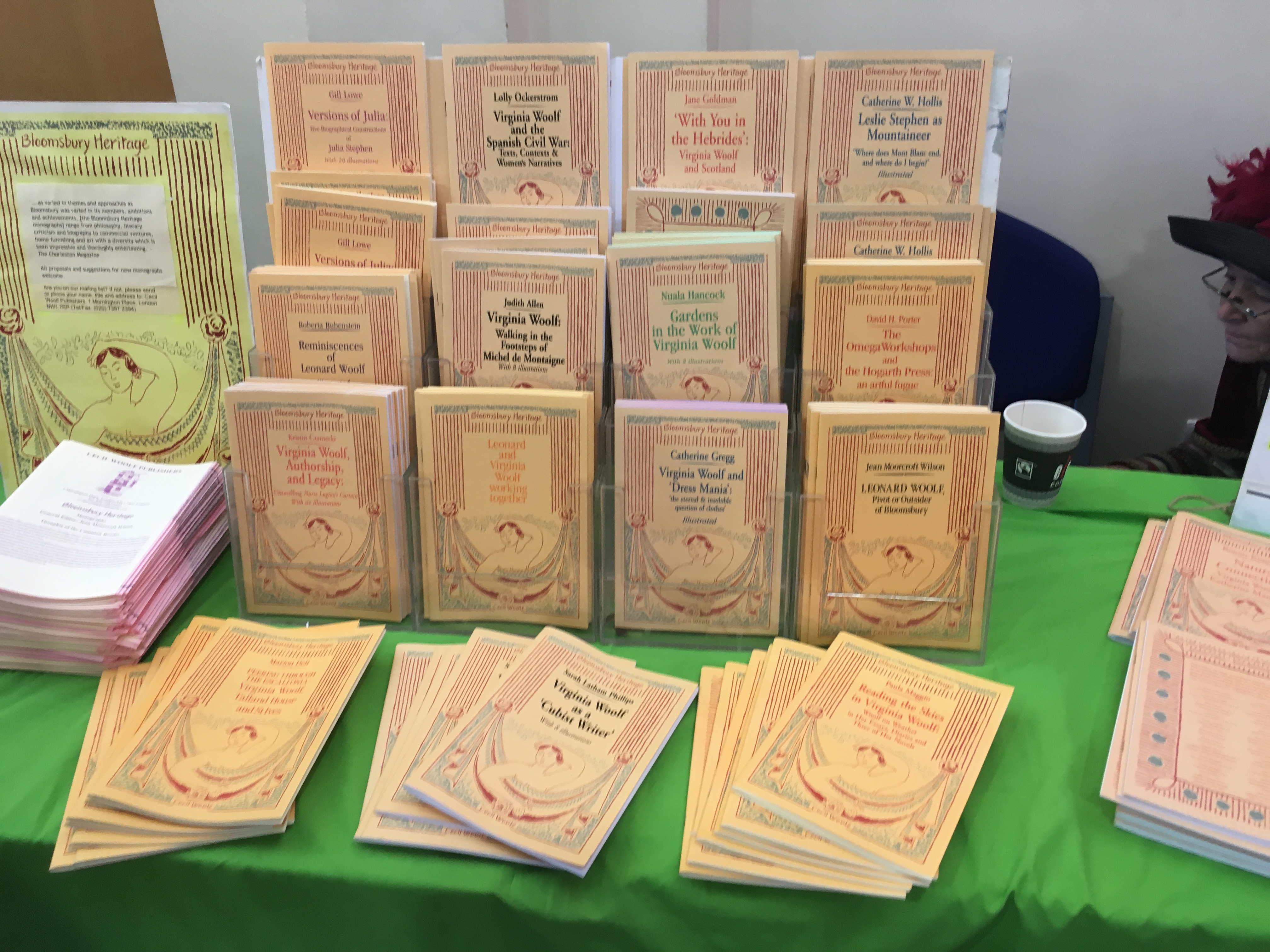
Some of the monographs in the Bloomsbury Heritage Series from Cecil Woolf Publishers.

Bridge over the River Ouse in Sussex

Every year on this day I post something to commemorate the death of Virginia Woolf, the sad event that took place 81 years ago, on March 28, 1941, when she walked across the Sussex Downs into the River Ouse.

Past tributes have ranged from the detailed to the simple.

Today, I share New York Times coverage of her disappearance, as well as the discovery of her body. Both are from the archives.

  • “OBITUARY: Virginia Woolf Believed Dead, Special Cable to The New York Times, April 3, 1941
  • “Mrs. Woolf’s Body Found: Verdict of Suicide Is Returned in Drowning of Novelist,” The Associated Press, April 19, 1941

You can also read more NYT articles about Woolf — ranging from her influence on fashion to her times in Cornwall.

Virginia Woolf’s walking stick in the Berg Collection of the New York Public Library


Virginia Woolf’s writing lodge at Monk’s House in Sussex, England

Virginia Woolf’s feminist polemic A Room of One’s Own (1929) continues to matter to women, particularly those who identify as feminists.

In a video presented March 18 by the South Orange Public Library in honor of Women’s History Month, Anne Fernald discusses Woolf’s seminal book. In the hour-long “Virginia Woolf and ‘A Room of One’s Own’ Today,” Fernald discusses rooms, freedom, and how feminist writers and scholars think through Woolf today.

She also asks listeners to imagine what their own room dedicated to creative pursuits might look like.

Fernald is a professor of English and Women’s, Gender, and Sexuality Issues at Fordham University, editor of the Cambridge University Press edition of Mrs. Dalloway (2014) and author of Virginia Woolf: Feminism and the Reader (2006).

Virginia Woolf’s desk in her writing lodge at Monk’s House, 2019