Feeds:
Posts
Comments

Archive for February, 2010

The European Journal of English Studies has issued a call for papers on the topic of contemporary gender resistance to be published in volume 16.

Guest editors for the special issue, which will be published by Routledge in 2012, are Eugenia Sifaki and Angeliki Spiropoulou.

Background Information: Socio-historical developments that have characterised the turn of the present century, such as increasing globalisation, migration and transnationalism, new technologies, the growth of the beauty industry and the medicalisation of the body, as well as various initiatives in equality and human rights legislation, have ushered in new conditions of experiencing and thinking subjectivity.

This issue seeks to interrogate the new experiences and conceptualisations of gender and sexualities that have been part of these transformations. Specifically, notwithstanding the assimilation of traditional feminist demands in official cultural discourses, what new forms of resistance to conventional gender discourses, categories and practices, and inversely, what novel manifestations of resilient gender asymmetries have emerged in this allegedly ‘post-feminist’ era?

The editors invite contributions that address the modes in which contemporary Anglophone literary, visual and popular culture refract and respond to the question of gender and sexualities today.

Themes that could be addressed include, but are not restricted to:

  • novel gender formations and experiences in contemporary Anglophone literature and culture
  • gender and genre
  • the response of contemporary women writers to the gender conditions of the 21st century
  • gender and racial, ethnic and religious minorities, transnational communities and diasporas
  • new ways of performing gender gender
  • sexualities and the law
  • reproduction and new reproductive technologies
  • reconfigurations of gendered private and public spaces
  • developments in theories of gender and sexuality

Proposals: Detailed proposals (1,000-1,500 words) for articles of c. 5-6,000 words, as well as all inquiries regarding this issue, should be sent to both guest editors: Eugenia Sifaki at evsifaki@gmail.com and Angeliki Spiropoulou at aspirop@uop.gr.

Deadlines: The deadline for proposals is 15 September 2010, with delivery of completed essays by 31 March 2011. The issue will appear in 2012.

Read Full Post »

In celebration of Virginia Woolf’s Un-Birthday and International Women’s Day, the Shakespeare’s Sister Company is hosting a Tea Party and Book Swap in proper British Style, and you are cordially invited.

The event will be held at Lady Mendle’s, 56 Irving Place, between 17th and 18th streets in New York City.


Save the Date:  Saturday, March 6

Patrons will enjoy the following:

7 – 7:30 p.m.:  Tea and Mingling
Enjoy an assortment of teas, a buffet of tea sandwiches and scones with clotted cream and jam!

7:30 – 8:10 p.m.:  Literary Book Discussions
Each guest will introduce the title/author of the book, one sentence describing what the book is about, an interesting fact about their favorite part of the book and what kind of book they are looking to swap for.

For those who prefer not to speak, we will provide ink and paper for you to write down your details and an SSC member would be happy to read it aloud on your behalf. We’re all friends here.

8:10 – 8:30 p.m.:  Literary Book Swap
Guests will have the opportunity to trade their book as many times as they’d like. Additionally, the SSC will provide a program listing all of the books being traded for patrons to reference.

8:30 – 9 p.m.:  Tea and Mingling
Enjoy an assortment of teas, a buffet of tea sandwiches and scones with clotted cream and jam!

Our event concludes at 9 p.m. However, patrons are welcome to migrate downstairs to the martini bar and heated outdoor garden for cocktails.

Regarding attire, please come dressed in your British best.  Dresses and suits are encouraged. Hats and gloves are not required, but are encouraged.

All-inclusive admission runs $35 per person.

RSVP by Feb. 26.

Payments shall only be accepted in advance either via PayPal to info@shakespearessister.org or by check to: Shakespeare’s Sister Company, 455 Ocean Parkway, ste 3D, Brooklyn NY 11218.

Read Full Post »

I know more people who, like myself, keep threatening to read Remembrance of Things Past “some day” than those who have actually done so.

This year I have the time and the resolve; I have acquired the first volume and have dipped in for a few warm-up sessions. Initial reactions: I find the languid pace entrancing at times, frustrating at others. I love his keen observations, his humor, but I can’t stay focused for very long at a time, so it will be slow going.

And of course I keep thinking about Woolf, about comparisons between the two, and particularly about her own response to this work at the time of its publication and acclaim. She started reading it in 1922 and was still working her way through in 1934, when she is said to have finished.

Proust appears frequently in her diaries and letters over the years, as a topic of conversation among friends as well as her own reactions to her reading. Given the frequency and relevance of her remarks, I’m amazed that Leonard Woolf includes no mentions of Proust in A Writer’s Diary, since clearly her reading influenced both her thinking and her writing.

She starts the second volume in January of 1923 and wonders if her writing will be influenced by his, as “one can hardly fail to profit” (Diary 2: February 10, 1923). She later writes: “No doubt Proust could say what I mean… . He makes it seem easy to write well; which only means that one is slipping along on borrowed skates” (Diary 2: Nov. 18, 1924). In 1932 she remarks that reading Proust, she feels free and can escape, compared to Lawrence, who makes her feel confined.

And so with a cup of tea and a madeleine, I open to page 66…

Read Full Post »

The Dreadnought Hoax, Rare Book, Manuscript, and Special Collections Library, Duke University.

A bit of a back and forth about the Dreadnought Hoax took place on the VWoolf Listserv today. So now that the dust has cleared, here are the facts, as established by our Woolf experts:

  • The hoax occurred Monday, Feb. 7, 1910.  Peter Stansky verified the date by checking the original telegram related to the affair. It is housed in the National Archives at Kew, which was formerly known as the Public Records Office. You can access the Archives’ Dreadnought folder here. Stanksy included a full account of the hoax in his book, On or About December 1910: Early Bloomsbury and its Intimate World, published by Harvard University Press in 1996.
  • Quentin Bell gives Feb. 10 as the date of the hoax in his biography of Woolf. In her biography, Hermione Lee gives Feb. 7 as the date, although she does not cite her source. In her 1997 biography Duncan Grant, Frances Spalding doesn’t give a source for her date either, but she does use the correct date of Feb. 7.
  • The Daily Mirror reported on Feb. 16, 1910, that “All England is laughing at the practical joke played a few days ago…”, beneath a photograph of the participants in the hoax.
  • The Dreadnought talk that Woolf gave to the Rodmell branch of the Women’s Institute is published in The Platform of Time, edited by S. P Rosenbaum. Georgia Johnston discovered the manuscript of the talk, and her account was published in the Woolf Studies Annual, Vol XV in 2009.
  • Adrian Stephen wrote The Dreadnought Hoax, published by the Hogarth Press in 1936.

Read Full Post »

I am enjoying a snow evening. Not a snow day, just a snow evening.

My university cancelled evening classes because of the snow, which means I don’t have to teach tonight. So instead of standing in front of a classroom, I am sitting at home on a sofa.

The unexpected free time feels especially fine. Outdoors I can hear my neighbor running his snow blower. In the kitchen, the tea kettle sounds ready to boil. The only jarring note is the TV, but it is the news hour, and my husband does have it tuned to PBS.

Meanwhile, with Jim Lehrer in the background, I pull together Woolf notes:

  • From Anne Fernald of Fernham, comes a tweet advising us to read “Always A Rambling Post on Common Readers, Classes and the Noise of Poetry,” which extols the virtues of Woolf, “a poet who wrote novels.”
  • S. Shulman shared a story about a Princeton exhibit in the Firestone Library’s Main Gallery called “The Author’s Portrait.” The exhibit runs through July 5 and includes a 1928 portrait of Woolf.
  • She also sent a link to a Londonist story, “Which is the Best London Novel?” Woolf’s Mrs. Dalloway is tied for the number three spot on the list. And Ian McEwan’s Saturday, inspired by Mrs. D, is number nine.
  • In an article in the London Times, Naomi Wolf cites Virginia Woolf in her article, Sleep is a Feminist Issue.
  • On The Walrus Blog, a post called “Ghost Stories” argues that the cult of authors may result in ” fancy editions of F. Scott Fitzgerald’s grocery lists, or leather-bound copies of Virginia Woolf’s to-do reminders.”
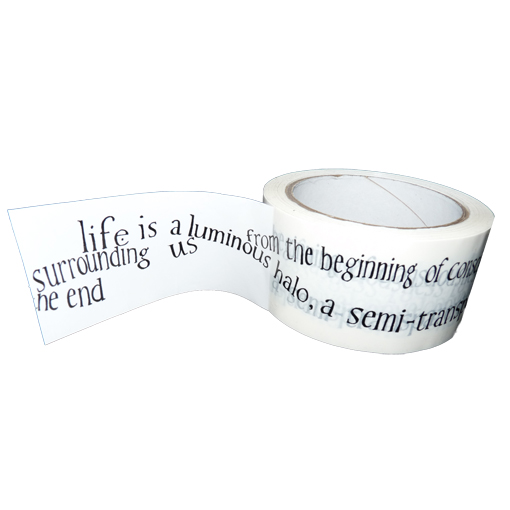
  • A note from the Literary Gift Co. illustrates our fetishization of authors. The company offers “Virginia Woolf Parcel Tape” to seal your special packages. It is emblazoned with a Woolf quotation, “Life is a luminous halo, a semi-transparent envelope which surrounds us from the beginning of conciousness to the end,” from her essay  “Modern Fiction.”
  • A VWoolf Listserv conversation about Woolf’s mental state generated tips for further reading. They include:
  • And if you need a chuckle after all this serious talk, take a look at the Punch cartoon whose link was sent by Stuart N. Clarke in response to the discussion on the VWoolf Listserv regarding Woolf and weather, a topic obviously dear to my heart.

Which leads me full circle to the topic with which I began: I am enjoying a snow evening. And it is pure white bliss.

Read Full Post »

« Newer Posts - Older Posts »