Feeds:
Posts
Comments

Archive for June, 2012

Woolfians, in a lengthy VWoolf Listserv discussion, have deduced (I use the term loosely) that June 21 just might be — or at least the Woolfers have deemed it so — “Clarissa Day,” that day in June on which Mrs. Dalloway takes place, the Woolf counterpart to Joyce’s Bloomsday on June 16. I’m not going to recap the evidence, but rather I’ll do what I usually do, which is to talk about a book I’ve just read.

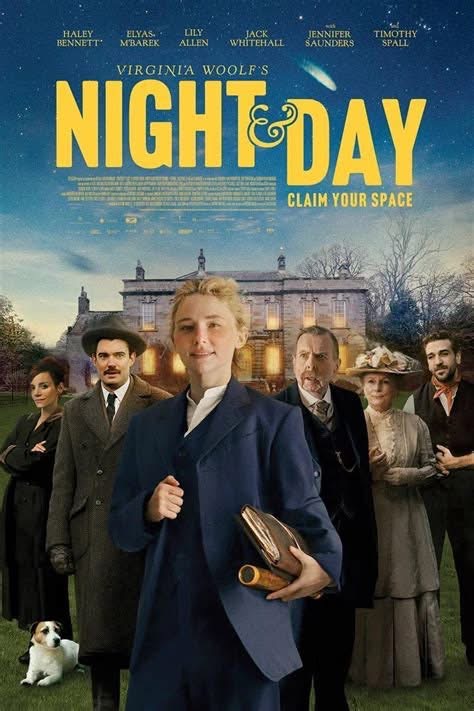
I think I first saw An Unexpected Guest by Anne Korkeakivi mentioned here, in one of Paula’s weekly lists of Woolf sightings in the media. As a circadian novel (one taking place in a single day), it was compared to Mrs. Dalloway — as all such novels are — in its own book jacket and in reviews, including one by Margot Livesey. Of course I had to read it.

The narrator is Clare (!) Moorhouse, an American living in Paris, married to an English diplomat, Edward. Her life is full of social responsibilities, and tonight she’s having an important, politically-charged dinner party. She goes through the day preparing for the party, with flashbacks to her past and the love of her youth, the Irish firebrand Niall. Niall was the dangerous one; Edward is the safe and reliable one. Sound familiar? What about the flowers, you ask?

Of course, she could have called in an order to the florist, but as with the asparagus, choosing them herself was better.

The drama and intrigue in Clare’s life would have set Clarissa’s heart racing; there’s far more than country-house dallying in her past, and it becomes its own a highly-charged story. But you can see the pattern, the hints, the loose outline conforming to type. It doesn’t matter whether you see a Woolf behind every tree or not–Korkeakivi’s first novel is a valiant effort and a good read. Put it on your list for summer!

Read Full Post »

On Father’s Day, it seems fitting to recall that Leslie Stephen, Virginia Woolf’s father, played a key role in his younger daughter’s life.

Virginia and Leslie Stephen

As the author of the Dictionary of National Biography, he served as a role model for Virginia’s scholarly habits. As an avid reader and writer, he encouraged Virginia’s intellectual curiosity by allowing her to read books at will from his extensive library. As an outdoors-man and a mountaineer, he led her outdoors on long walks, a habit that was to stay with her throughout her life.

But as Woolf admits in her personal writing as well as through her depiction of Mr. Ramsey in To the Lighthouse, her father had a negative side as well. He was a difficult man to deal with, particularly for the women in his family.

In her biography of Woolf, Hermione Lee describes Stephen’s impact on his women this way:  “The women in [Leslie Stephen’s] life . . . took the brunt of his sense of failure, his appeals for reassurance and his anxieties about money. The letters to Julia are sodden with the kinds of demands for reassurance which Mr. Ramsay is always making. Leslie, unlike Mr. Ramsay, knew he was doing it, but couldn’t stop himself. It provided (as To the Lighthouse brilliantly demonstrates) a form of sexual gratification: ‘I have a hideous trick of making myself out miserable in order to coax a little sympathy out of you, because I enjoy being petted by you so much’” (73).

As a result, Mr. Ramsey comes off as a brusque, arrogant, demanding and didactic figure in To the Lighthouse, But as the father figure viewed through the eyes of his wife and children, Woolf also portrays him with sympathy and affection. She shows him as a man shaped by his culture and stuck in the patriarchal mold it has made for him. As such, he is unable to dip or bend to accommodate the needs of his wife and children.

The same kind of ambivalence can be seen in Woolf’s writing about her father. In her essay “Leslie Stephen,” published by the Hogarth Press in The Collected Essays of Virginia Woolf, she describes him as a scholar, a writer and a mountaineer. She also describes him as a father who delighted in amusing his children by cutting paper into the shapes of animals and recounting his adventures on the trail, while worrying about their safety if they were a minute late for dinner. Yet she does not shirk from detailing his anger or impatience with guests who stay too long or family members who spend too freely.

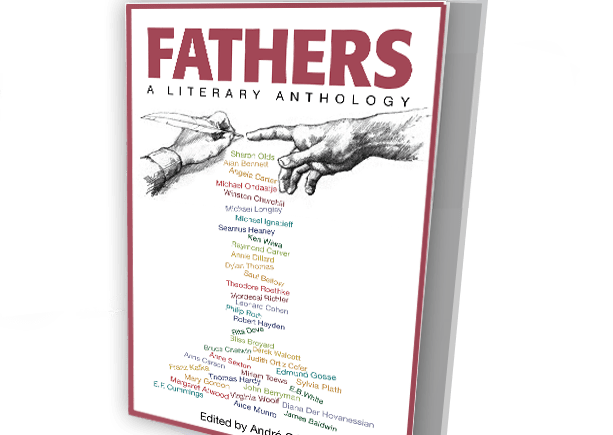
This essay and another by Woolf titled “Edmund Gosse” are included in an anthology well-suited for today. Titled Fathers: A Literary Anthology,” it is edited by André Gérard and includes essays and poems from literary legends about their fathers. It was published by Patremoir Press last year. The work of Alice Munro, Margaret Atwood, Doris Lessing, Alison Bechdel and Sylvia Plath are included, to name just a few.

Read Full Post »

It’s Bloomsday, the day in June on which James Joyce’s novel Ulysses is set. Here are a few items about the day:

Photo provided by Glenn Horowitz Bookseller

Read Full Post »

The Shakespeare’s Sister Company is hosting weekly summer play readings from June 18 through Aug. 13 from 6-8 p.m., and the season kicks off June 18 with English playwright Beth Wright’s Vanessa and Virginia It is based on the eponymous novel written by New York Times best selling author Susan Sellers.

Wright’s play premiered in Europe and tells the story of Virginia Woolf and her sister Vanessa Bell. The evening will end with a few scenes from a play written by Shakespeare’s Sister’s, Kris Lundberg, about the love affair between famed artist, Dante Gabriel Rossetti and his muse and model, Elizabeth Siddal.

The readings will commence in a Lower East Side sultry venue, the DL, located at 95 Delancey St. (at Ludlow) in the second floor Casino.

For more information, contact Kris Lundberg at info@shakespearessister.org or visit the Shakespeare’s Sister Company website.

Formed in 2008, The Shakespeare’s Sister Company (SSC) is a not-for-profit theater organization supporting women in the arts. It is committed to producing established works and new plays by female authors, as well as by Sir William Shakespeare. Its mission is to address global change through the theater, including workshops with the community and literacy for youth.

Read Full Post »

News of the May passing of British Columbia-born academic and writer S. P. Rosenbaum was shared at the Woolf conference in Saskatoon, and Melba Cuddy-Keane offered a moving remembrance of him, according to Vara Neverow. Mr. Rosenbaum died at the age of 83 in Halifax, Nova Scotia.

His credentials are many, but in Woolf circles Mr. Rosenbaum is best known for his work on the literary history of the Bloomsbury Group. Among these works are:

  • Editing The Bloomsbury Group: A Collection of Memoirs, Commentary and Criticism (1975, revised and updated in 1995)
  • Three volumes tracing the literary history of Old Bloomsbury from the 1880s to 1914: Victorian Bloomsbury (1994), Edwardian Bloomsbury (1994) and Georgian Bloomsbury (2003)
  • Aspects of Bloomsbury (1998)
  • The discovery and editing of the manuscript of Virginia Woolf’s A Room of One’s Own (1992)
  • Collecting Woolf’s published and unpublished memoirs in The Platform of Time: Memoirs of Family and Friends (expanded edition, 2008)

Mr. Rosenbaum’s papers are housed at the E.J. Pratt Library.

Read Full Post »

« Newer Posts - Older Posts »