Feeds:
Posts
Comments

Archive for July, 2013

If you are within range of East Sussex, you can still book a seat on the bus to Rodmell for a Saturday, Sept. 21, trip to Monk’s House and Berwick Church sponsored by the Virginia Woolf Society of Great Britain.
Virginia Woolf's writing Lodge at Monk's House

Virginia Woolf’s writing Lodge at Monk’s House

Here are the details:
  • Cost: £12.50, including the coach travel and Berwick Church visit. The price excludes entry to Monk’s House at £4.10 (group rate; or free to National Trust members);  lunch at the Abergavenny Arms in Rodmell; and train travel to Lewes (advance return from London to Lewes costs £10).
  • Seats Available: Thirty places are available.

The arrangements are as follows:

  • Departure: Coach at Lewes station at 11 a.m. (to meet the 9:47 a.m. train from London Victoria); to Monk’s House for a private guided tour
  • Lunch: Approximately 1–2 p.m.
  • Berwick Church: Coach takes guests to Berwick Church for a guided visit to the murals by Anthea Arnold
  • Return: Coach leaves Berwick at 3:30 p.m. for Lewes station (for 4:20pm train to London).
Please note that, because of restricted coach access, there will be a small amount of walking. To secure a place, please email Lindsay Martin at lindsay@lindsaycmartin.co.uk.

Read Full Post »

Four Woolf sightings here.

First, I found this clever three-panel book review of A Room of One’s Own. It’s on the “Classics” tab of the Three Panel Book Review blog whose mission is to “review books in comic strip format.”

Second, Alice Lowe sent along a note about the June 30 NY Times Book Review, which included a review by Hannah Tennant-Moore of Orkney by Amy Sackville:

As in Nightwood, by Djuna Barnes, and The Waves, by Virginia Woolf, the prose in Orkney is so compelling one does not read to find out what happens, but to find out how it will be described.

Third, you can have a “Chat With Virginia Woolf’s Ghost,” a story in Boston’s Metro that publicizes a June fundraising event at Brookline Booksmith featuring local comedians who assume the identities of departed legends of the printed word.”

In the piece, comedienne Jenny Zigrino summons Woolf’s ghost to talk about the event, as well as her feelings about television (she is frantic to watch the final episode of The Office), technology (she bemoans the fact that heaven only has DSL) and who should play her (Scarlett Johansson) and her husband (Vin Disel) in a biographical film.

Fourth, take a look at “Cheese Reads: 10 Amazing Cheeses and Their Literary Counterparts.” In it, Woolf is paired with a Bayley Hazen Blue. The Stitlon-like blue is described as “a mix of narratives – the Mrs. Dalloway of cheeses, if you will…a cheese that will permeate your memory for years.”

Read Full Post »

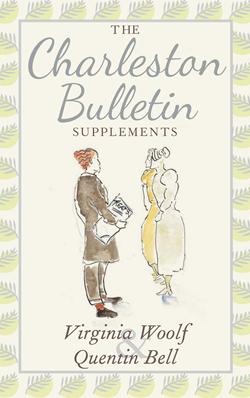
Okay, Woolf lovers, hang on to your hats. Today’s compilation of Woolf sightings includes mention of Virginia and Kim Kardashian in the same sentence (8). It also includes the addition of Woolf to the Love Quotes Library, the assertion that one needs technological space of one’s own just as one needs a room of one’s own (12), film dialogue that includes Woolf (21) and another mention of The Charleston Bulletin Supplements (4).

  1. Love Quotes Library Announces Its LaunchPR Web (press release)
    Love Quotes Library is best known for its daily updates with quotes from a multitude of prominent sources that include Charles Dickens, Edgar Allen Poe, J.R.R. Tolkien, Lao Tzu, Pedro Calderon de la Barca, and Virginia Woolf.
  2. Mozart vs. the BeatlesNew York Times (blog)
    For example, Virginia Woolf’s classic essay — arch, snobbish, and very funny — reserved the appreciation of great art to “highbrows”: those “thoroughbreds of the mind” who combine innate taste with sufficient inherited wealth to sustain a life 
  3. Announcing A New Book Club! Jacob’s Room by Virginia Woolf!The League of Ordinary Gentlemen (blog)
    The year is 1920. The war – the Great War – the War to End All Wars – has been over for almost two years. The men have returned, back to their homes and families, picking up the threads from four long years away. Things have returned to normal but not 
  4. The week in booksSpectator.co.uk (blog)
    ‘The Charleston Bulletin was a family newspaper produced between 1923 and 1927 by the teenaged Quentin Bell and his elder brother Julian — who soon dropped out, leading Quentin to recruit his auntVirginia Woolf. At that time enjoying her most 
  5. Bigger SpenderThe Times (subscription)
    “He talks incessantly and will pan out to be a prodigious bore,” said Virginia Woolf about Stephen Spender. However lacking in graciousness, the remark encapsulated Spender’s formidable capacity to produce words. His known output over the decades 
  6. £15000 prize for next Woolf or Orwell . . .Irish Independent
    Among the writers to whom I return again and again are Montaigne, Johnson, Hazlitt, Virginia Woolf,George Orwell, VS Pritchett, Neville Cardus, Jan Morris, Joan Didion, Ian Hamilton and Clive James – an extremely diverse bunch, I concede, but all 
  7. Walking in Huxley’s GarsingtonThe Oxford Times
    She hosted intellectuals and writers such as D H Lawrence, Virginia Woolf and Huxley, who arrived there in 1916 to do war work after leaving Oxford University. Huxley’s comic novel Crome Yellow, published in 1921, caricatured Lady Ottoline so cruelly 
  8. The leap from Virginia Woolf to Kim Kardashian isn’t as far as it seemsThe Guardian
    So why wouldn’t we attempt to contextualise celebrities, too? We’ve been doing it to authors in the name of academia for hundreds of years, so the leap from Virginia Woolf to Britney Spears really isn’t so far. If you put it in context, of course. But 
  9. Free Classic Literature Newsletter! Sign UpAbout – News & Issues
    I was taking a course on women writers, with reading selections that included Virginia Woolf, Zora Neale Hurston, Charlotte Perkins Gilman, Doris Lessing, and a myriad of other worthy names. But, The Awakening struck me in a different way. Perhaps it 
  10. Mireille Silcoff: Plumbing the depths of my schedule to figure where the time National Post
    This is Virginia Woolf. In 1928, she was asked to give two lectures on women and fiction, which later expanded to become Woolf’s most famous essay, “A Room of One’s Own.” It is in this essay, that Woolf asks, so memorably, how Jane Austen managed to 
  11. Review: Shire, By Ali Smith, with images by Sarah WoodThe Independent
    The epigraph that opens Ali Smith’s new collection of writing is from Virginia Woolf’s A Room of One’s Own, in which she wrote about an imaginary sister of Shakespeare who died young, her talents frustrated: “For great poets do not die; they are 
  12. Is Sharing a Computer With Your Partner Holding You Back?xoJane
    Is Sharing a Computer With Your Partner Holding You Back? I started to think that in a relationship these days, the need for one’s own technological space is similar to the “room of one’s own” espoused by Virginia Woolf. Erica Bourke. 23 Hours Ago 
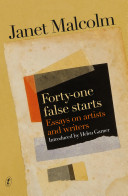
  13. Malcolm shows her usual rigor in ‘Forty-One False Starts’Austin American-Statesman
    She brings us to the Bloomsbury of the early 20th century, where Virginia Woolf and her sister, Vanessa Bell, cultivated their artistic and romantic lives, and to Charleston Farmhouse in Sussex, Bell’s country retreat, where today’s Bloomsbury devotees 
  14. Janet Malcolm: Essays expose critic at work, Macleans.ca
    In another piece, Malcolm writes a veritable Bloomsbury novel in her rich portrait of the social milieu of Virginia Woolf’s friends and family in the early 20th century. The essay “A girl of the zeitgeist,” about the editorial history of the magazine 
  15. Book roundup: BiographiesUSA TODAY
    Who’s afraid of Leonard Woolf? Apparently lots of biographers but not Victoria Glendinning, who turns the spotlight on the husband of novelist Virginia Woolf. (“I’m going to marry … a penniless Jew,” she famously said.) Glendinning is a logical 
  16. Auction of donated books raises £16000 for OxfamFinancial Times
    Published in 1923 by the Hogarth Press, the publisher founded by Virginia Woolf and her husband Leonard, the type was thought to be handset by Virginia herself, and just 460 copies of the book were printed. Other finds which were sold at the auction 
  17. Wasteland first edition fetches thousands for OxfamThe Oxford Times
    The copy of the poem, dating from 1923, was published by the Hogarth Press, a private press founded by Eliot’s friends Leonard and Virginia Woolf. The Waste Land, which had an estimated price tag of £2,000 to £3,000, sold with 26 other items for Oxfam, ..
  18. Oxfam copy of TS Eliot’s The Waste Land sells for £4.5kBBC News
    The book of the modernist poem, dating from 1923, was published by Hogarth Press, founded by Eliot’s friends Leonard and Virginia Woolf. It was given to Oxfam’s Turl Street branch in Oxford and had been expected to sell for between £2,000 and £3,000.
  19. Deap Vally – SistrionixThis Is Fake DIY
    They’ve got the same basic idea at heart, but their absolutely frenetic and slightly terrifying brand of rock makes Virginia Woolf look rather meek in comparison. Playing off the two sparse elements of the band with thrashing aggression, much of this 
  20. Family values: a deliciously readable tale of personal destruction – and the Irish Independent
    Magazine pulls “suicide photoshoot” after being “sick”. Vice pulls ‘breathtakingly tasteless’ fashion shoot glorifying the suicides of famous female authors from Sylvia Plath to Virginia Woolf. Commentators and mental health charities slammed the ‘sick 
  21. Frances Ha reviewDen Of Geek
    Its main characters are New York-based graduates who say things like ‘Do you know what Virginia Woolf book this reminds me of?’ in a heightened, loud version of kookiness that really, really made me want to shave every single one of them bald. And then 

Read Full Post »

Take a living colored look at 1927 London in this video, which I found on the web page for Anne Fernald’s  essay, “Mrs. Dalloway at 88” on The Awl website.

In her essay, Fernald notes that the traffic problem at Piccadilly Circus that Richard Dalloway mutters about under his breath was an ongoing problem of the time, as cars, horse-drawn vehicles, hand-pushed carts and pedestrians “all competed to cross streets at a time when traffic signals still had to be changed manually by a traffic officer.”

This video gives one a sense of the traffic Woolf describes in her 1925 novel. 

Read Full Post »

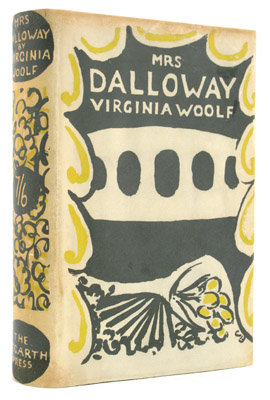
I missed Mrs. Dalloway’s birthday two months ago. May 14 marked 88 years since Woolf’s 1925 novel was published, a fact I noticed when I came across Anne Fernald’s essay, “Mrs. Dalloway at 88” on The Awl website.

Fernald’s essay was also republished on the website of London Fictions.

In her piece, Fernald gives eight compelling reasons why the book still matters today:

  1. Woolf makes us care about a fancy middle-aged lady throwing a party.
  2. The characters have great names that have interesting histories.
  3. It’s a great example of a novel set on a single day.
  4. Woolf deploys allusions to Shakespeare like a master.
  5. It continues to inspire other works of art.
  6. It’s full of London history.
  7. Even the random details are not random.
  8. We still need to remember to take care of veterans and we still don’t do enough.

Fernald, Woolf scholar and passionate feminist, is always worth following.

Read Full Post »

« Newer Posts - Older Posts »