Feeds:
Posts
Comments

Archive for October, 2015

Virginia Woolf and Heritage: The 26th Annual Conference on Virginia Woolf

Location: Leeds Trinity University, UK
Dates: June 16-19, 2016

Virginia Woolf was deeply interested in the past – whether literary, intellectual, cultural, political or social – and herwoolf & heritage writings interrogate it repeatedly. She was also a great tourist and explorer of heritage sites in England and abroad. As the first Annual Virginia Woolf Conference to be hosted in England for 10 years, and located in Yorkshire, an area rich in cultural links for Woolf (not least the Brontë Parsonage at Haworth, the subject of her first published article), this conference will explore how Woolf engaged with heritage, how she understood and represented it, and how she has been represented by the heritage industry.

Papers are invited on topics including (but not limited to):

  • Woolf’s representations and constructions of the past and her responses to her own heritage, such as:
    • intellectual traditions and the history of ideas
    • feminist readings of history
    • queer and lesbian histories
    • the literary past
    • family histories
    • her responses to the Victorian and/or Edwardian eras
    • Englishness and national identity
  • Woolf’s experiences of the heritage industry, for example: her use of libraries, museums, art galleries, authors’ houses, artists’ houses, stately homes, gardens, London’s heritage sites, and tourist sites in Britain and abroad.
  • Ways in which Woolf has been represented and/or appropriated by the heritage industry and the creative and cultural industries, for example in:
    • virtual and physical exhibitions and digital archives
    • libraries, archives and collections
    • plaques, memorials, and statues
    • National Trust properties and other sites, including Monk’s House, Knole, and Talland House
    • film, television, radio, poetry and fiction, theatre, dance, multimedia and performance
  • Woolf’s legacy to future generations in a wide range of cultural settings. This may include approaches from translation studies, reception history, comparative literature, editorial scholarship, pedagogy and literary theory.

For individual papers, send a 250-word proposal. For panels of three or four people, please send a proposed panel title and a 250-word proposal for each paper.

Please e-mail the proposal in a Word document to woolf2016@leedstrinity.ac.uk by 25thJanuary 2016. Proposals should be anonymous, but please provide names, affiliations and contact details for speaker(s) in the e-mail message.

View the call for papers on the conference website: Virginia Woolf and Heritage, which is now updated to include accommodations information and more.

Read Full Post »

Here’s a must-read: An interesting mash-up of Amy Schumer and Virginia Woolf.

//platform.twitter.com/widgets.js

Read Full Post »

The electronic version of Spring/Summer 2015 Virginia Woolf Miscellany is now available to view online or download and print, says Editor Vara Neverow.

Edited and with an introduction by Erica Delsandro, the issue includes fascinating essays on Woolf in the context of the 1930s, diverse articles and a review of the performance of Septimus and Clarissa from the Twenty Fifth Annual Conference on Virginia Woolf. A section of the issue is also devoted to heartfelt remembrances of Shari Benstock and Jane Marcus.

The issue also includes seven book reviews, important information about upcoming Woolf conferences, and information about various Woolf societies. The issue, as always, concludes with the Society Column, written this time by the International Virginia Woolf Society’s President, Kristin Czarnecki.

Read Full Post »

I’m skeptical of so-called biofiction, novels that fictionalize real people, put words into their mouths, recreate scenes from their lives, sometimes inaccurately—its fiction, so literary license runs rampant. They leave readers, at least this reader, wondering what’s true and what’s been exaggerated or made up.

With novels about Virginia Woolf and the Bloomsberries, there’s also that tendency among Woolfians to be protective of “our” Virginia. We read them because we have to know what’s out there in case we’re called upon to defend her.

When Virginia Woolf in Manhattan came out last year, my interest was tweaked. Clearly it wasn’t going to be the same old rehashed and reimagined life and times. I put it on my list but hadn’t gotten to it in June when I went to the Woolf conference in Pennsylvania.

Maggie Gee reads a passage from “Virginia Woolf in Manhattan” at the 25th Annual International Conference on Virginia Woolf: Virginia Woolf and Her Female Contemporaries, held in June at Bloomsburg University.

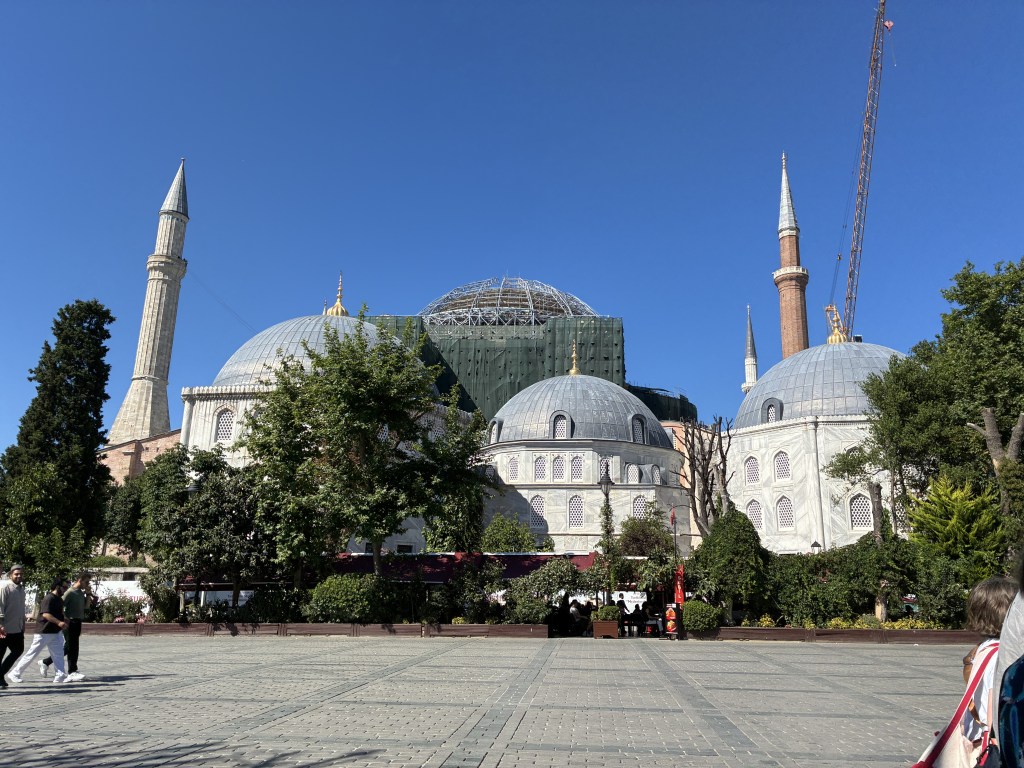
Maggie Gee, the author, was there and read a key scene from early in the novel. I was fascinated by her protagonist, Angela Lamb, a novelist and sometimes scholar who goes to New York to do research in the New York Public Library’s Berg Collection for a paper she will be presenting at a Woolf conference in Turkey. She’s in the throes of the place’s aura when she senses a presence behind her. It’s Virginia Woolf, in the flesh, and just as shocked and confused to be there as Angela is to see her.

In 1990, when I was discovering Woolf and traipsing the streets of Bloomsbury for the first time, I had a story idea. I’m in a tea shop in Gordon Square, standing in line at the counter. I hear a cultured female voice behind me. It’s Virginia Woolf, and she’s talking as if she knows me. We have tea together and … that’s as far as I got. I never wrote the story, never will, but I’ve recalled it from time to time. I suppose many of us have imagined a similar scene, but Maggie Gee has acted on it with glee.

I bought and read the book as soon as I got home. It took me a while to relax my inhibitions and drop into it. You have to suspend disbelief—this is pure fun, lively and loony. “What a lark,” Virginia might say were she to read it. There’s no halo around this Virginia—we see her as a flesh and blood person, back from the dead and dropped into a strange time and place. Gee relates Woolf’s disorientation believably. Angela takes charge of her, and their relationship is a prickly one. Woolf is at times demanding, difficult and bitchy. And funny and charming. So is Angela. They do Manhattan and then they go to Istanbul where adventures abound, some pretty far-fetched.

Virginia Woolf in Manhattan has been out for more than a year (and in paperback since this summer), and it’s received its share of press. The Telegraph called it “A writer’s sparkling fictional love letter to her literary heroine,” and The Independent ran an interesting interview with Maggie Gee. The Guardian raked it over the coals, and the U.S. press pretty much ignored it.

So this isn’t a review, just a reminder that there are a lot of laughs (and a few smirks, groans and eyerolls) to be had from Virginia Woolf in Manhattan. Summer’s over, but a good “beach read” is always in order.

Read Full Post »

Here is the loveliest of posts from interns at Charlestown. In it, they share their walk across the Sussex Downs to Monk’s House, where they encounter a reading of “Between the Acts” on the lawn. Bliss!

Read Full Post »

« Newer Posts - Older Posts »