Feeds:
Posts
Comments

Archive for the ‘21st century Woolf’ Category

Mark Hussey sent out an alert on the Woolf list-serv that the children’s book, Anastasia at This Address (1991), by Lois Lowry, has a character in it named Septimus Smith.

I checked it out at the library and read it with pleasure, while engaging in some nostalgia as I thought back on some of the books I read in my “tween” years. I wish I’d had the Anastasia Krupnik series—she’s a bright and adventurous role model for girls.

As for my Woolf quest, there was no clue to any other identity for this Septimus, also known as Tim, a well-to-do New York bachelor who places a singles ad to which Anastasia responds. I contacted Lois Lowry through her Web site, and she responded that there are no other Woolf references in the series, but in one of the earlier books – Anastasia Again! (1981) – there’s a Gertrude Stein. She explained her motivation when writing the books:

“I remember taking a certain amount of private pleasure in inserting references that kids wouldn’t notice—or care about if they did—but which from time to time, adults pick up on. Of course a 12 or 13 year old girl won’t get that. But they read right past it. And maybe sometime years later they will encounter Gertrude Stein, or Septimus Smith … and a little light bulb will illuminate.”

Read Full Post »

News blogs and Web sites are busy publishing ruminations about books and writing. Here are links to a few with connections to my favorite author. Virginia Woolf, of course.

  • In the Wall Street Journal, Rebecca Stott names Woolf’s Orlando as number two in a list of the top five works of historical fiction.
  • A Seattle Post-Intelligencer reader blog, written by a local librarian named Ann G., is “Looking back at reading by the decade.” In the post, Ann picks her favorite book by decade. For the 1930s, her choice is The Years. The novel, Woolf’s last published in her lifetime, was praised by the New York Times as her “richest novel” when it came out in 1937. It became a best seller in the United States that year. As a result, Woolf was featured on the April 12, 1937, cover of Time magazine. The cover story compared Woolf to Margaret Mitchell, whose Gone With the Wind was a 1936 best seller.
  • In an ode to diaries on The Guardian’s Web site, writer Gyles Brandreth pays homage to an edited volume of Woolf’s diary entries. Brandreth praises the volume, titled A Moment’s Liberty: The Shorter Diary of Virginia Woolf, for including “a gem on every page.” Anne Olivier Bell is the editor.
  • Margaret Drabble opines about the unique genre of the short story on The Guardian Web site. In her piece, she says Woolf tried to emulate her rival Katherine Mansfield’s short story style. But Drabble finds Woolf’s style “less accomplished, and sometimes embarrassingly whimsical.”
  • The New York Times 100 Notable Books of 2009 includes at least two by authors who read Woolf. They include
    • Family Album by Penelope Lively, whose City of the Mind is clearly influenced by Mrs. Dalloway, and
    • A Paradise Built in Hell: The Extraordinary Communities That Arise in Disaster by Rebecca Solnit, plenary speaker at this year’s Woolf and the City, the 19th Annual International Conference on Virginia Woolf.

Read Full Post »

ipod-touch

Being able to download Virginia Woolf novels to Apple’s sleek little iPod means we can now carry her words with us anywhere we go.  Because so far, I haven’t found a pocket that the gizmo — stocked with Woolf novels — doesn’t fit in.

Here’s my story. I bought an IPod touch a few weeks ago. Since then, I have spent way too much time searching for and downloading fun, interesting and useful iPod Apps.

I won’t bore you Woolfians with my love for the AP Stylebook App that set me back $29 but is worth every penny. Nor will I discuss the free Italian lessons I’m taking on my iPod or the Rachel Maddow shows I’m watching or the multiple Twitter accounts I’m following via TweetDeck.

But I will gladly tell you about the Apps I found that are related to Virginia:

  • The Virginia Woolf Collection – Nine of Woolf’s novels. Cost: $2.99
  • “Who’s Afraid of Virginia Woolf?” Study Guide and Quiz. Cost: 99 cents
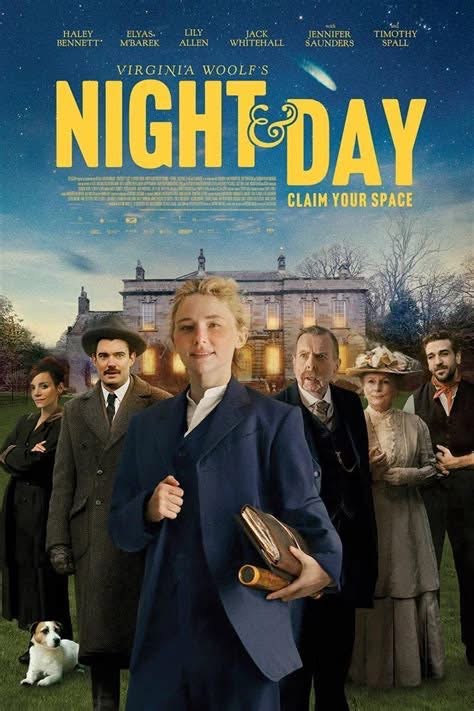
  • Three versions of Night and Day at a cost of 99 cents each
  • Mrs. Dalloway. Cost: $17.99
  • Vanessa and Virginia by Susan Sellers. Cost: $9.99
  • Orlando Study Guide and Quiz. Cost: 99 cents
  • To the Lighthouse Study Guide and Quiz. Cost: 99 cents

The best news is that if you want to get Woolf novels for free, and you have an iPod touch or an iPhone, you can. Here’s how:

  1. Download the free Kindle App for the iPod touch and the iPhone from the App Store.
  2. Visit Amazon.com’s Kindle store. Search for Virginia Wolf. Sort your search by price so you can easily spot the free downloads.
  3. Download The Voyage Out, Jacob’s Room and Night and Day for free.
  4. Relax in the knowledge that no matter where you travel, you can always have Virginia in your pocket.

More of Woolf’s published work is available as Kindle e-books for under $2, including Monday and Tuesday and The Early Works of Virginia Woolf.

Read Full Post »

white gardenAmy, a blogger at On Size Fits All, e-mailed me to recommend the Stephanie Barron mystery novel just out last month titled The White Garden: A Novel of Virginia Woolf.

I have to thank her — and Google news — for the reminder. The novel had slipped from my mind after I posted about it in August. Now it’s out in print and back at the top of my must-read list.

I only found two reviews of the novel, and those were mixed.

The L.A. Times called it “intriguing” and said it “highlights not only Barron’s ability to alchemize historical fact into fiction but also her ability to present absorbing details of Sissinghurst’s gardens, history and the surrounding Kentish countryside. But reviewer Paula A. Woods also complained that the plot and characters are formulaic.

January magazine’s mini-review  says the novel is “a clever tapestry of past and present.”

I am anxious to read it and decide for myself.

Read Full Post »

9780712305938Last night I spoke about walking in Virginia Woolf’s footsteps when I traveled to England several years ago. The occasion was a meeting of the Medina County Branch of AAUW.

As I talked about the sights and sounds of London, Sussex, Kent and Cornwall that connect to Virginia’s life and work, several thoughts struck me.

Since AAUW is an organization that promotes equity for women in girls in both the workplace and in educational settings, I felt compelled to remark on Virginia’s lack of opportunity for formal education.

And since I spoke about meeting Cecil Woolf and Dr. Ruth Gruber at Woolf conferences — two people who had known or met Virginia — I got to thinking about how special it is to have seen and heard her in person.

Those experiences are impossible for us today. But a two-disc CD set from the British Library allows us to experience Virginia and other members of the Bloomsbury group in another way.

“The Spoken Word: The Bloomsbury Group” came out this month. Producers searched  the BBC archives to present 24 recordings of the group’s major figures talking in their own words. Many of them are rare and previously unreleased.

According to the London Review Bookshop‘s Web site, “Highlights include Virginia Woolf talking about the importance of language, Leonard Woolf’s who’s who of the Bloomsburys, Duncan Grant discussing the infamous ‘Dreadnought’ hoax and Elizabeth Bowen describing legendary Bloomsbury parties.” You can get the full list here.

Woolf’s voice, along with those of other great writers of the 20th century, can also be heard on a three-disc set of CDs produced by the British Library called “The Spoken Word: British Writers.” Read more.

Read Full Post »

« Newer Posts - Older Posts »