Feeds:
Posts
Comments

Archive for the ‘Hogarth Press’ Category

Ben Majchrowicz with his original 1923 Hogarth Press edition of “To a Proud Phantom.”

When I sat next to Ben Majchrowicz at the 34th Annual International Conference on Virginia Woolf, he showed me a treasure.

Untucking it from below his seat and unwrapping it tenderly, he revealed his recently purchased copy of a Hogarth Press edition of To a Proud Phantom, a book of poetry by Ena Limebeer.

This 1923 edition, handset and printed by Virginia and Leonard Woolf, was his most recent purchase for his notable collection of Hogarth Press originals.

Ben’s collection of such treasures is now part of a world premiere exhibition, sponsored by the Gordon Square Society, called “Letter by Letter (From the Woolfs’ Hands): Handprinted Books by Virginia & Leonard Woolf.” The exhibit is the first to present several titles with their variant covers.

About the exhibit

For the first time in Belgium, this public exhibition brings together all 34 books hand-set, printed, bound and published in limited editions by Virginia and Leonard Woolf themselves under their Hogarth Press imprint.

These rarities in the literary and bibliophile world with their original covers and illustrations designed by Bloomsbury artists come from the collections of  Ben, co-founder of the Gordon Square Society, as well as Pierre and Marie-Madeleine Coumans.

Vanessa Bell, Duncan Grant, Dora Carrington and Roger Fry are just some of the artists who created the cover designs for the highly sought after volumes.

The exhibition is complemented by the first “Bloomsbury” book and all the books published by The Omega Workshops.

Who: Sponsored by the Gordon Square Society
What:
“Letter by Letter (From the Woolfs’ Hands): Handprinted Books by Virginia & Leonard Woolf” Exhibit
When:
Nov. 30 and Dec. 4,5,6,7,11,12, 18, and 19
Where: The Splendid Nottebohm Room of the Hendrik Conscience Heritage Library – H. Conscienceplein 4, 2000 Antwerp
Tickets: Check to see if any dates are available.

Follow Ben on Instagram @benmajchrowicz.

Title page of Ben Majchrowicz’s copy of the Hogarth Press “To a Proud Phantom.”

Read Full Post »

Recent talk on the VWoolf Listserv and a post here on Blogging Woolf involved Virginia Woolf and recent news about her use of purple ink. Both raised further comments — and questions.

Here is the background

Craft workshop participant at a Woolf conference using a manual typewriter but no purple ink.

The news was that Virginia’s writing in her trademark purple pen had been discovered by Esther Folkersma, a research internist for the digital Modernist Archives Publishing Project. Virginia used purple ink when writing on the stock cards of the Hogarth Press archives up to February 1940, Folkersma found.

That news raised the following questions — and probably more I haven’t yet heard.

The questions raised

  1. Is Virginia the only one who wrote in purple ink on Hogarth Press documents?
  2. Did Virginia ever use a purple typewriter ribbon?

All Woolf writers using purple ink please stand up

Is Virginia the only one who wrote in purple ink on Hogarth Press documents?

Blogging Woolf reader and Woolf scholar Matthew Holliday contributed this comment to the post “Virginia Woolf, the Hogarth Press and the color purple — as in ink“:

This is fascinating, but there is one small hiccup—much of that writing in purple ink is in Leonard’s hand. – Matthew Holliday

I would like to have more details about that claim, so I invite any one who knows more about Leonard’s use of purple ink to please chime in by posting a comment below.

What I do know is that Esther Folkersma’s post on the MAPP blog clearly states that she has identified the handwriting in purple ink that she found as Virginia’s.

Virginia’s purple typewriter ribbon

Did Virginia ever use a purple typewriter ribbon?

That question was posed to the list, and Bryony Randall, professor of modernist literature at Glasgow University, provided this information in reply:

Many of Woolf’s short stories – or early drafts thereof – were typed in purple ink, from as early as ‘[A Dialogue Upon Mount Pentelicus]’ to as late as what we previously knew as ‘Gypsy, the Mongrel’, but thanks to Stuart Clarke we now know was published as ‘The Little Dog Laughed’. So certainly a favourite colour in any writing medium! I’ve been able to verify the type colour of those typescripts held in the Monk’s House Papers, but not (yet) those at the NYPL, pending a research trip. – Bryony Randall

Catherine Hollis of UC Berkeley added this information:

“Friendship’s Gallery” (1907-8) was typed in violet ink and bound in violet leather (via Matthew Clarke’s recent essay “My Poor Intimate: Virginia Woolf and Violet Dickinson”).
Feel free to add to this discussion in the comments section below.

Read Full Post »

I have written about Virginia Woolf and fountain pens and her ink preferences before. But today I learned of a new discovery that links Woolf even more strongly to the everyday work of the Hogarth Press, thanks to her use of purple ink.

First page of The Hours notebook 2 (purple ink). Courtesy of SP Books

Nicola Wilson of the University of Reading and the Modernist Archives Publishing Project, a digital project that debuted at the 2017 Woolf Conference and focuses on the Hogarth Press, posted this note to the VWoolf Listserv:

We have recently found evidence of Woolf’s purple pen in the Hogarth Press archives up to Feb 1940 – on the stock cards! Taking account of the figures? This is very exciting as it gives a real indication of Woolf’s presence at the Press and corroborates the kind of information on figures she tracks in the diaries.

Purple ink and the Hogarth Press

Esther Folkersma made the discovery while working with Danni Corfield to clean, sort, and organize the Hogarth Press stock cards as part of her research internship with MAPP.  The Hogarth Press stock cards indicate where the stock of a specific book was being held, when the entity received the stock and how many copies they received, how many copies were issued, the number of copies printed at what date, the number of bound copies, and the balance in sheets.

“As more and more purple appeared under our sponges, brushes, and scalpels, and as the colours became more pronounced, Woolf’s presence in these cards grew,” Folkersma wrote in a post on the MAPP blog.

“The scale of Woolf’s handwriting in these stock cards surprised me, as her presence in the press, at least in a material sense, is often difficult to find, even though the significance of her role in the press has always been undeniable, especially as seen through her own diary entries.”

Folkersma explains that “the abundance of Virginia Woolf’s purple ink readily found on a majority of the Stock Value Cards illustrates her involvement in the press to an extent beyond what I had even gathered from her diaries. These very utilitarian cards show how involved Woolf was in the more administrative operations behind the scenes.”

Purple ink and The Hours (Mrs. Dalloway)

According to Mark Hussey, Bloomsbury scholar and author, “most of The Hours (‘Mrs Dalloway‘) holograph is in Woolf’s favored purple ink, with some in black and a little in blue. Her corrections on the American proof are also in purple ink.”

In 2019, SP Books published a gorgeous edition of the handwritten manuscript of what would become Woolf’s famous 1925 novel, allowing anyone who could obtain a copy to see that many of the pages were written in purple ink. I did and wrote a post about it.

Purple ink a chapter, a letter, and a diary entry

Folkersma also recommends reading Ted Bishop’s chapter “Getting a Hold on Haddock: Virginia Woolf?s Inks” from Virginia Woolf and the World of Books (2018), the selected papers from the 2017 conference.

And she mentions two Woolf quotes — one from a letter and one from a diary

This ink is Waterman?s fountain pen ink. Cheap, violet, indelible. (Which sounds as if I were paid to write their advertisements). – from a 1923 letter to Dorothy Brett

The degradation of steel pens is such that after doing my best to clip & file one into shape, I have to take to a Waterman, profoundly though I distrust them, & disbelieve in the capacity to convey the nobler & profounder thoughts.” – from a 1918 Diary entry

Roundtable participants at the 2017 Annual International Conference on Virginia Woolf sit below a screen showing a digitized ledger sheet from the Hogarth Press. Note the purple ink.

Read Full Post »

Today I share a Facebook post from the Virginia Woolf Society of Great Britain:

“On this day in 1922 Virginia Woolf’s third novel, Jacob’s Room, was first published by the Hogarth Press. Approximately 1,200 copies were printed, priced at 7s 6d.

It was the first of Woolf’s novels to be published by her own company; from then on, all her works were published under its imprint. The printer was R. & R. Clark of Edinburgh.

Woolf’s Diary entry of Monday 26 January 1920 – the day after her 38th birthday – reveals her first thoughts about ‘a new form for a new novel’:

Suppose one thing should open out of another – as in An Unwritten Novel – only not for 10 pages but 200 or so – doesn’t that give the looseness & lightness I want: doesnt that get closer & yet keep form & speed, & enclose everything, everything? . . . I figure that the approach will be entirely different this time: no scaffolding; scarcely a brick to be seen; all crepuscular, but the heart, the passion, humour, everything as bright as fire in the mist. . . . conceive mark on the wall, K. G. & unwritten novel taking hands & dancing in unity. – Virginia Woolf, Diary 2, pp. 13–14. B. J. Kirkpatrick and Stuart N. Clarke, A Bibliography of Virginia Woolf, 4th edition, 1997, pp. 27–8.

Read Full Post »

A new study shows that Penguin Books’ publication of low-cost paperback editions of Virginia Woolf’s work helped her reach a mass market.

In “Virginia Woolf, Penguin Paperbacks, and Mass Publishing in Mid-Century Britain,” published in Vol. 25, No. 1 of Book History, Martina Vike Plock explores how Penguin negotiated financial, logistical, and ideological transactions with Leonard Woolf that re-packaged Virginia as a mass-market Penguin author (238-68).

Penguin, which had started to publish mass-produced, cheap paperbacks in the mid-1930s, began publishing Virginia’s non-fiction in 1938. In the 1950s and 1960s, Leonard went on to negotiate deals with Penguin that allowed them to publish most of her major works of fiction.

Meanwhile, Leonard continued to publish Virginia’s books under their Hogarth Press imprint.

Digging into the correspondence

Vike Plock, a professor at the University of Exeter, analyzed correspondence between Leonard and Penguin’s Alan Lane that  shows Leonard’s priority as the financial health of the Hogarth Press. Thus, sales figures of Virginia’s works were his main concern when dealing with Penguin.

Leonard refused to lease rights of Virginia’s work that were still selling well as Hogarth Press editions. As a result, only Woolf’s lesser-known titles, her essays and non-fiction, were initially signed over to Penguin Books.

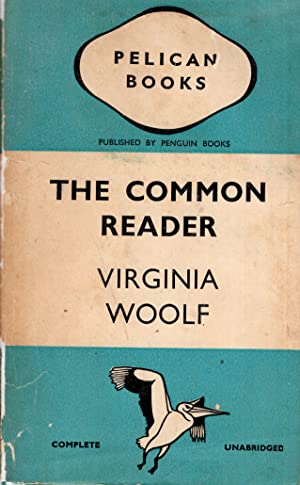
The first was Virginia collection of essays, The Common Reader. First published by the Hogarth Press in 1925, it appeared as a Pelican paperback in October of 1938. Penguin Books printed 50,000 copies, sold them for 6d, and paid the Hogarth Press an advance of £150 for the paperback rights, according to a story on the University of Exeter’s website. By the end of 1965, six Woolf novels were available as Penguins.

The arrangement turned out to be mutually beneficial for both Penguin and the Woolfs, particularly since Leonard was interested in making Virginia’s work available to a wide audience.

To come up with her conclusions, Vike Plock used archival resources held at the University of Bristol. Her article takes note of the different stages, key actors, and main considerations that contributed to Virginia’s gradual assimilation into Britain’s paperback industry.

Adding a feminist perspective

However, Vike Plock explores more than the financial considerations of the deals between Penguin and Leonard. She also explores them from a feminist perspective.

The materials in the Penguin archive work in support of critical narratives arguing that Woolf’s works were posthumously seized by a patriarchal, institutional culture she had repeatedly and vociferously criticized,” she states in the abstract for her article.

Read Full Post »

Older Posts »