Feeds:
Posts
Comments

Archive for the ‘To the Lighthouse’ Category

The two Lilys have been on my mind for a while, and after rereading To the Lighthouse and House of Mirth, I’ve begun a trail of comparisons and contrasts to which I plan to add some personal reflections and who knows what else for a future essay.

Virginia Woolf reviewed House of Mirth and regarded Lily Bart with sympathy, as having “many of the faults of her surroundings” but also “a capacity for better things which is never to be exercised.” I also found a paper by a Wharton scholar that compares Lily Bart and Clarissa Dalloway, but I don’t think the Lilys have been broached together.

Just to be sure, I googled and found just one reference, to a passage that unites them in a 1990 novel by Roberta Silman, Beginning the World Again: A Novel of Los Alamos. I got the book right away, of course, and soon found myself embroiled in a well-researched account, based on actual events and real as well as fictional characters, of the secret mission to build the atomic bomb in the New Mexico hills during World War II.                

The protagonist is Lily Failka, the wife of a nuclear physicist on the team. This is her story about her time there, her marriage, the families, the project, the secrecy. Before accompanying her new husband to Los Alamos, Lily had been a graduate student in literature and was writing a thesis on Melville. Classic novels come up frequently in her thinking and in analogies she makes. When she has an affair with one of the other scientists, she introduces him to literature. Years later, looking back:

There were often months, then years when I scarcely thought about Jacob, and when I did, I was so detached that I was another person, another Lily—“Lily Bart, Lily Briscoe, Joyce’s Lily in ‘The Dead,’ Lily of the Field?” I could hear Jacob’s low voice asking me. All those Lilys I had told him about. No, none of those, but someone still within me whom I scarcely knew anymore.

I sought out and had an email exchange with Roberta Silman, who proudly claims Grace Paley as her mentor and friend. Her context for the reference was Lily Failka’s introducing her physicist lover to her favorite literature, but Roberta noted characteristics that perhaps all the Lilys share, providing food for thought for my own project. Roberta also took pleasure in casting her Lily in the company of the memorable Lily Bart and Lily Briscoe.


Read Full Post »

Literature Cambridge presents “Reading To the Lighthouse,” a study day on Stapleford poster Woolf 2016 jpg
Woolf’s much-loved novel of love, art, yearning, and loss, on Saturday, Sept. 17.

Cambridge academics Frances Spalding, Trudi Tate and Dame Gillian Beer will lecture on different aspects of the book. Each lecture will be followed by a discussion.

Cost: The cost is £90 for the day, which will run from 10:30 a.m. to 5 p.m. At the end of the day, participants are welcome to stay on for drinks and informal discussion. You can book it online.

Location: The venue is the Stapleford Granary, an old granary transformed into a beautiful
lecture and concert hall, just outside Cambridge. It’s easy to reach by train
from London or Cambridge. Or come by bus or bike from Cambridge. Some
parking available.

Refreshments: Light refreshments will be provided; please bring a packed lunch

Stapleford Granary

Read Full Post »

Produced by BBC TV, this 1970 documentary, Virginia Woolf: A Night’s Darkness, A Day’s Sail, was unavailable for years but is now posted on YouTube.

It is a gem, including footage of Talland House, the Stephen family’s summer home, and Godrevy Lighthouse. It also includes interviews with Leonard Woolf (from 1967), Angelica Garnett, Quentin Bell, George Rylands, Elizabeth Bowen, Duncan Grant, Benedict Nicolson, Lord David Cecil, Dame Janet Vaughn, Raymond Mortimer, and Louie Mayer (the Woolfs’ cook at Monk’s House). They talk about Woolf’s character traits, as well as her genius, her writing habits and her love of London. And they discuss the Bloomsbury Group.

Portions of Mrs. Dalloway (1925), To the Lighthouse (1927) and A Room of One’s Own (1929) are also read on camera. And you’ll see the actual Hogarth press.

She always asked everybody, ‘What did you have for breakfast.’ – Angelica Garnett


Read Full Post »

I love punctuation; I’m a nut about it. I read it as carefully as I do words, measuring  flow and rhythm, looking for meaning between the dots and dashes.

So a recent blog post got my attention—the author wanted to see if novels could be distinguished by their punctuation. A kindred spirit, he believes punctuation is a fundamental part of writing.

Adam J. Calhoun compares Faulkner’s Absolom, Absolom! with Cormac McCarthy’s Blood Meridian. The differences are visible and as striking as one would expect. Blood Meridian consists mostly of short, crisp sentences—seen as several consecutive periods with no intervening marks, breaks of an occasional comma, a dash here and there, more periods. The punctuation in Absalom, Absalom! looks the way Faulkner reads: he uses everything he can get his hands on, with lots of commas and far fewer periods. The author of this study calls it “statements within statements within statements.”

He adds other novels to his discussion. Surely, I thought, he’ll include Woolf! But no, he mentions Ulysses, Pride & Prejudice, A Farewell to Arms, and a few others. I couldn’t leave it there. A few years ago I wrote an essay about punctuation and drew from To the Lighthouse to demonstrate Woolf’s creative use of punctuation; I had some data to add to the picture.

To his visual comparisons of Faulkner’s and McCarthy’s textless text, I add a brief example from To the Lighthouse:

”   ,   ,   ,   ”   .   ”   ,   ”   .    ,   ,   ,   ,   ,   ,   ,   .   ,   ,

,   ,   ,   ,   ,   ,   ,   ,   ,   .   .   ,   ,   ,   ,   ,   ,   —   ,   ,

,   ,   ,   ,   ,   ,   .   ”   ,   ”  ,   ,   ”   .   ”   ,   ,   ,   ,   .

;   ,   ,   ,   ,   ,   ,   ( )   ,   .   .   .   ;   ;   ,   ,   ,   ,   ;   ;

This is just the first few paragraphs (I did several pages) but you get the idea. Woolf’s sentences skip and dance and weave with runs of commas; there are eleven of them in a 100-word sentence on the first page. You rarely see two periods (simple sentences) in a row. She peppers her prose (more evident in a more extensive sampling) with semicolons, dashes, parentheses, exclamation marks and ellipses.

Blood Meridian averages 15 words per sentence, Absalom 40, Lighthouse (in my sampling) 34, Farewell to Arms 10. Ursula LeGuin says of Hemingway: “He had many guns, several spouses, and a beard. He wrote short sentences.”

Read Full Post »

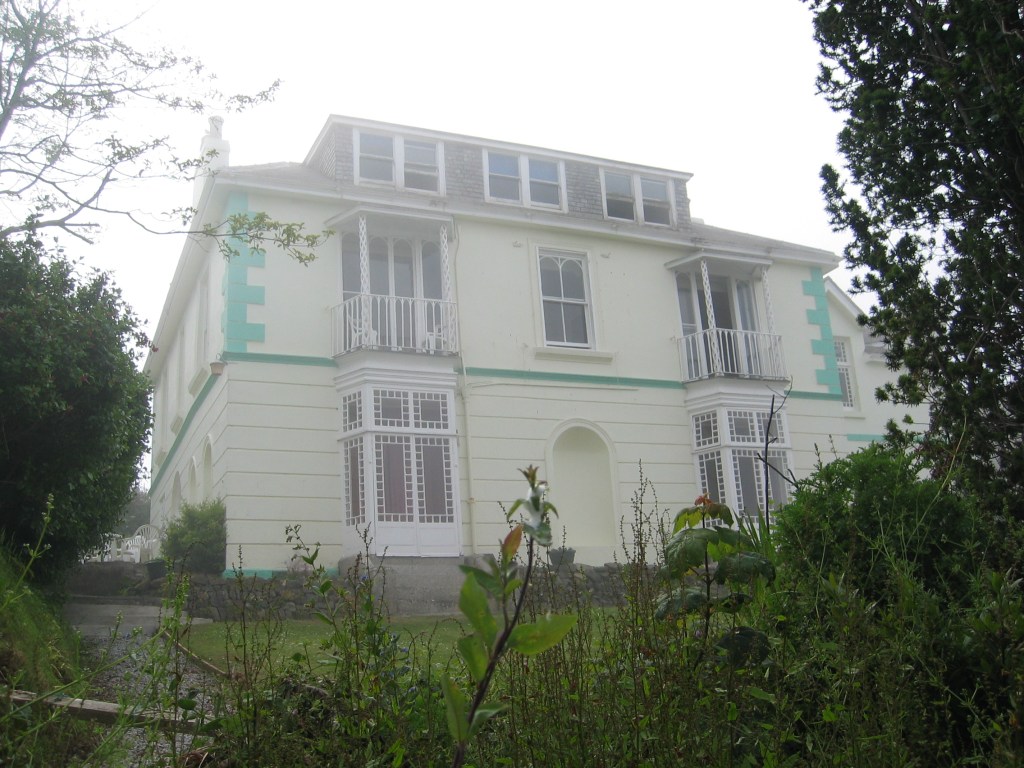
Despite opposition from Woolfians worldwide, the destruction of Virginia Woolf’s view of Godrevy Lighthouse from Talland House is set to move forward, according to a Nov. 7, 2015, story in The Independent.

The proposed multi-story development of six flats and a car park will be built, thanks to a decision by Cornwall County Council that the development can move forward once Porthminster Beach View Ltd. pays £136,000 for not having to provide any “affordable housing.”

The move comes after Woolf scholars and common readers from around the globe raised an outcry last summer, using email, social media and the Web. Their efforts generated media coverage that included the BBC and resulted in the Cornwall Council Planning Committee postponing its decision on the project.

The construction project was further stalled in early August when the English High Court threw out 2014 legislation that said developments of 10 or less could avoid paying an affordable-housing levy or offering any such housing in their development.  The August ruling meant that the developer of the St. Ives project must rethink the economic viability of the project and resubmit it — or pay £136,000.

With the Cornwall County Council decision that the development can take place once the fee is paid, it is unlikely the project can be stopped, despite an outcry from Woolf readers and scholars, as well as her family members.

This appears to be the case despite an email from English Heritage saying legislation includes a provision to “avoid harm to the setting of a listed building if it contributes to the significance of the building.” Talland House is considered Grade II, which means it is “nationally important and of special interest.  The St. Ives resident cited National Planning Framework Section 12 paras. 128,9,132 and noted that he would add this information to the planning comments page for the project, PA15/04337.

Woolf and her family summered at Talland House for the first 12 years of her life. The lighthouse she could see from her summer home plays an integral role in her famous novel To the Lighthouse (1927).

This is a short-sighted move by St Ives and Cornwall’s planners, who seem unaware of the legions of Woolf’s admirers who make the pilgrimage to the town lured by the special, untouched atmosphere captured in my great-aunt’s visionary novel To the Lighthouse – the view of which should remain unobscured for generations to come. – Virginia Nicholson, Woolf’s great-niece

Links to more about the view

Read Full Post »

« Newer Posts - Older Posts »