Feeds:
Posts
Comments

Archive for the ‘Woolf’s short fiction’ Category

The Woolf Salon is back,after a seven-month hiatus. Woolf Salon No. 26: Faces and Voices is set for Friday, Feb. 23, 2-4 p.m. ET.

The details

Event: Woolf Salon No. 26: Faces and Voices
Hosts: Salon Conspirators
Day: Friday, Feb. 23
Time: 2–4 p.m. ET (New York)
Where: On Zoom
How: Contact woolfsalonproject@gmail.com to sign up for the email list and receive the Zoom link.

The readings

To cover the topic “Faces and Voices,” participants will spend some time with Woolf and that (in)substantial territory between prose and poem and prose poem and sketch and draft and experimental collaboration.

Intrigued? Join in for a discussion of “Portraits,” “Uncle Vanya,” and “Ode WrittenPartly in Prose on Seeing the Name of Cutbush Above a Butcher Shop in Pentonville.”

You can find all three selections in The Complete Shorter Fiction of Virginia Woolf, 2nd ed. (pp. 237–47, with Susan Dick’s notes on 307–08). (If you don’t have a copy, you may find this link helpful.)

How to join the Salon

Anyone can join the group, which meets via Zoom and focuses on a single topic or text. Just contact woolfsalonproject@gmail.com to sign up for the email list and receive the Zoom link.

Future Salons planned

  • Friday, April 19, at 2 p.m. ET – Woolf Salon No. 27: The Miscellany at Issue 100
  • Friday, July 26, at 2 p.m. ET – Woolf Salon No. 28: TBA

The last Woolf Salon, Woolf Salon No. 25: Party Time, was held July 28.

Background on the Salon

The Salon Conspirators — Benjamin Hagen, Shilo McGiff, Amy Smith, and Drew Shannon — began the Woolf Salon Project in July 2020 to provide opportunities for conversation and conviviality among Woolf-interested scholars, students, and common readers during and beyond the COVID-19 pandemic.


Read Full Post »

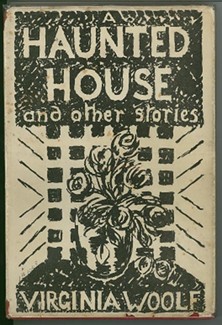
It’s the time of year to lift the veil, take a stroll, stalk the moors, revisit a place you used to live and maybe meet yourself there. Bring a friend, a fiend, a presence, a shade, a ghostly cavalcade to a meeting of uncanny minds as you join Virginia Woolf readers online for Woolf Salon No. 14: Hauntings. The discussion will feature five short stories from five tale tellers, including Woolf’s “A Haunted House.”

Details

What: Woolf Salon No. 14: Hauntings
Hosts: Salon Conspirators
Day: Friday, Oct. 29
Time: 3–5 p.m. ET / Noon –2 p.m  PT / 4 – 6 p.m. Brasilia / 8 – 10 p.m. BST / 9 – 11 p.m. CEST

Five short tales. Five tale tellers

  1. Elizabeth Bowen’s ”The Demon Lover”
  2. Elizabeth Gaskell’s “The Old Nurse’s Story
  3. Jean Rhys’s “I Used to Live Here Once
  4. May Sinclair’s “If the Dead Knew
  5. Virginia Woolf’s “A Haunted House

How to join The Woolf Salon

Anyone can join the group, which meets on the third or fourth Friday of each month via Zoom and focuses on a single topic or text. Just contact woolfsalonproject@gmail.com to sign up for the email list and receive the Zoom link.

Read Full Post »

In June, Rohan Maitzen, senior editor at Open Letters Monthly, approached Blogging Woolf. She was seeking someone to review a new biography of Virginia Woolf.

Zoe Wolstenholme, who joined Blogging Woolf as a contributing writer just this year, readily agreed to review the work by biographer and critic Ira Nadel. Titled Virginia Woolf, it is part of Reaktion Books’ “Critical Lives” series and is included in the University of Chicago Press catalog.

Wolstenholme’s review, “The bowl that one fills and fills,” was published online Oct. 1.

Open Letters Monthly is a monthly arts and literature review with a readership of more than 30,000. The online publication is linked to regularly by Arts & Letters Daily and 3 Quarks Daily, among other sites.

this is truly a Critical Life; the biography focuses on Woolf’s writing and its relationship with both her own and others’ critical thought – Zoe Wolstenholme, “The bowl that one fills and fills,” Open Letters Monthly, Oct. 1, 2016.

Other new tomes

Also included in the current University of Chicago Press Literature and Criticism Catalog are:

Read Full Post »

Read here on the Royal Botanic Gardens, Kew’s Library Art and Archives blog about the evolution of Virginia Woolf’s iconic short story Kew Gardens from its first edition with Vanessa Bell woodcut prints through the 1927 publication hand illustrated by Bell and on to RBG Kew’s new edition published in 2015 with contemporary illustrations by Livi Mills.

1927 edition of Kew Gardens held in RBG, Kew’s LAA collection


Read Full Post »

We all know that Woolf’s works are notably challenging to read and teach because of her unconventional themes and plots, innovative structures, non-traditional narrative forms, historical and literary allusions, and avant-garde techniques.

As a community college teacher of literature, one technique I have found to combat the challenges of teaching Woolf is to review, at the start of each semester, some of the pedagogical guides that help teachers of Woolf bring our students closer to the author, such as Approaches to Teaching Woolf’s Mrs. Dalloway (2009, edited by Eileen Barrett and Ruth O. Saxton).

But at the start of this fall semester I found myself in a new position in my department and my new office brought new duties, new expectations and new stresses. In my past visions, sitting in my office on my first day as a full-time instructor would feel warm, shiny and successful. I would be hopeful. I would be energetic. I would bring Woolf into every class.

Instead, on the first day of school I sat in the academic room of my own and stared at the photo of Woolf that I taped to my wall and then at the calendar filled with meetings, conferences and due dates. I didn’t feel shiny and hopeful; I felt overwhelmed and exhausted. I didn’t need a new teaching technique this semester. I needed a new inspirational technique.

I chose to not review pedagogical guides on Woolf. Instead, I turned to my past students’ responses to “Kew Gardens”. My students’ positive reactions to Woolf reminded me of why we work so hard to bring her words to readers, to challenge our students with unconventional literature and to stimulate students’ imaginations; of why we sometimes dedicate a whole class to discussing beauty; of why we go home felling like failures when some don’t seem to “get it.”

Reading the reactions my community college students in Las Vegas had upon their first encounter with Woolf revived my passion for teaching this challenging author:

I think Woolf is a beautiful writer. Her work is filled with passion, love, beauty and the depth seems to draw in hungry intelligent minds. I appreciate any writer who challenges her readers to think outside of the mundane society around them and see the beauty in their surroundings. -Erica

Virginia Woolf’s writing is so unconventional and brave. It is admirable that she had the courage to break out of formal conventions. All the while, she managed to capture the assortment of everyday interactions in one short story. -Ian

I quite like Kew Gardens! The unconventional plot and intimate look into each character’s conversations not only makes for an interesting read, but made me ponder as to what one might hear if they were to listen in on any one of my personal conversations at any given time. Additionally, while reading Kew Garden’s I couldn’t help but imagine that the brief glimpses of narration must be something like what God hears as he checks in on our lives. –Sara

Where does your passion for Woolf come from?

Read Full Post »

Older Posts »