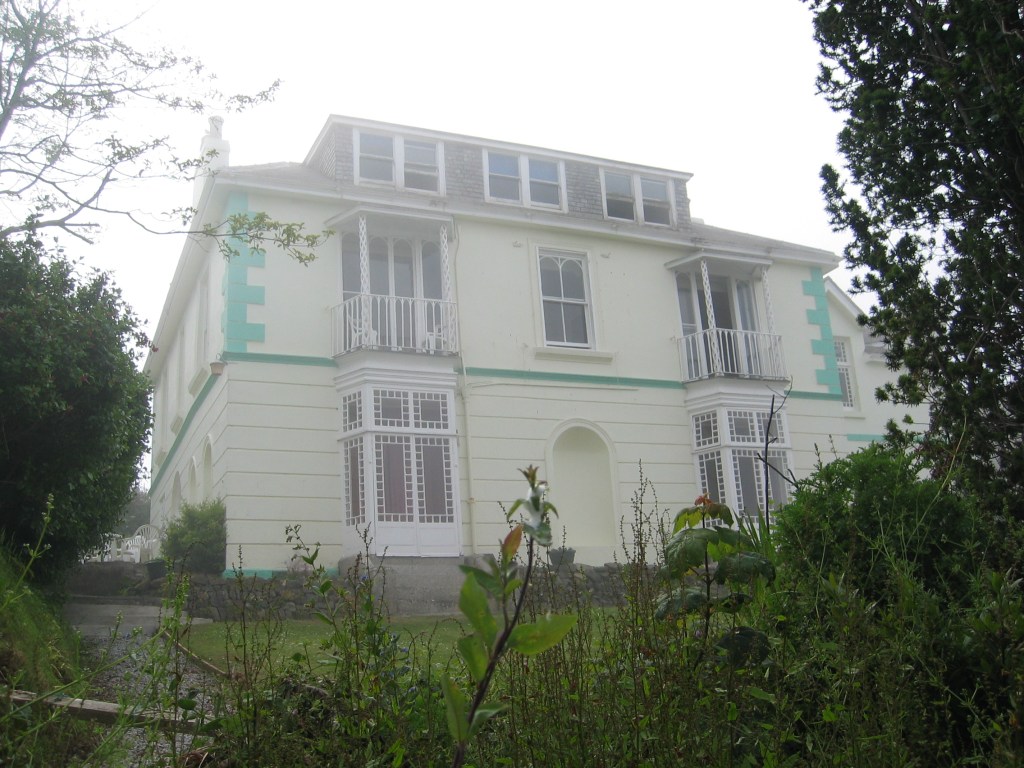
The Virginia Woolf Society of Turkey will host a talk by Maggie Humm titled “The Bloomsbury Photographs” from noon-2 p.m. EST and from 5-7 p.m. BST on Wednesday, June 11.
As the final talk of the society’s Woolf season, Humm will discuss her latest book, The Bloomsbury Photographs (Yale UP, 2024). She will explore the relationships, friendships and stories of the Bloomsbury group, offering a unique visual and historical perspective.
About Humm
Maggie Humm
Humm is an Emeritus Professor University of East London and Vice-Chair of the Virginia Woolf Society of Great Britain. She has written and edited numerous books about Woolf and Bloomsbury, including a novel, Talland House, based on Woolf’s To the Lighthouse.
Those of us who live in the USA and are anxious to get our hands on a copy of Mark Hussey’s new Mrs Dalloway: Biography of a Novel, can now order it at from Blackwell’s in London — at the discounted price of $22.54, which includes shipping.
Hussey’s book, published by Manchester University Press, is the first in a new series from the press called “Biography of a novel.” It offers a compelling account of Virginia Woolf’s masterpiece and marks the 50th anniversary of the publication of Mrs. Dalloway.
Background on the novel
Woolf’s fourth novel, set on a single day in the middle of June in 1923, elicited a variety of responses after its publication.
As Hussey explains in Virginia Woolf A to Z (1995), the novel has not only held the attention of critics over the years, but “with To the Lighthouse, has probably generated more commentary than any other of Woolf’s fictions” (175).
Lauded for its use of interior monologue, as well as its poetic language, Mrs. Dalloway (1925) is a reader favorite. It is certainly one I have picked up and read at various stages of my life during the last 50 years, always finding some new insight into Clarissa, along with some new connections between Clarissa’s thoughts and life and my own.
“Mrs Dalloway: Biography of a novel provides readers with a wealth of information about the novel’s writing, publication and reception. It follows Woolf’s process from the first stirrings in her diary through her struggles to create what was quickly recognised as a major advance in prose fiction. It then traces the novel’s remarkable legacy to the present day,” according to Blackwell’s website.
Hussey will speak about his new book in person at 7 p.m. on July 17 at the Mark Twain House and Museum in Hartford, Conn., USA. Omar Acevedo, the museum’s literary programs coordinator, will moderate. Get more details and register on the museum’s website.
The Distinguished Professor of English Emeritus at Pace University in New York is also the founding editor of Woolf Studies Annual. As the general editor of the Harcourt Annotated Edition of the Works of Virginia Woolf, he edited To the Lighthouse. His recent publications include Clive Bell and the Making of Modernism (2022).
This is a screenshot from Mark Hussey’s video on Instagram that shows him happily unpacking the first copies of his new book.
In a world where few things are free, you can read Woolf and Ethics: Selected Papers from the 31st Annual International Conference on Virginia Woolf at no cost. In this open-access volume, 25 papers address the theme from a range of perspectives.
Amy C. Smith and Paola Brinkley co-edited the volume, and Benjamin Hagen edits the series. The late Suzanne Bellamy created and donated the volume’s art.
What’s in the volume
Here are just a few of the 25 articles in the volume of selected papers from the 34th conference, held remotely June 9-12, 2023, at Lamar University in Beaumont, Texas:
“The Ethics of Representation: Woolf Writing Working Women” by Aili Petterson Peeker
“The Ethics of Wonder(ing) in To the Lighthouse by Eret Talviste
“Virginia Woolf, Jacques Derrida, Mysticism, and Ethics by Angela Harris
“’Floating Incidents’: The Ethics of the Essay as a Life-Writing Form in ‘A Sketch of the Past’ by Julia Dalloway
“Time & Tide, Form & Fold” by Benjamin Hagen, Shilo McGiff, Laci Mattison
“‘Daddy’s Girl’: Fathers, Daughters, and Female Resistance in Virginia Woolf’s Three Guineas and Valerie Solanas’s SCUM Manifesto” by Kimberly Coates
“’Thinking Peace into Existence’: Teaching the World War II–Era Work of Virginia Woolf, Jessica Dismorr, and Elizabeth Bowen” by Emily M. Hinnov
“’The World Is a Work of Art’: The Weaving of Fact and Fiction in Between the Acts” by Lucas Leita Borba
“On the Ethics of Teaching: Virginia Woolf’s Essays” by Beth Rigel Daugherty
“Translation as Reading: Jacob’s Room by Maria Rita Drumond Viana
View a list of the most popular papers in the volume.
Background on the series
Virginia Woolf: Selected Papers (VWSP) is an open-access publication funded by the International Virginia Woolf Society and edited by organizers of the Annual Conference on Virginia Woolf (ACVW).
The open-access annual publication continues the Selected Papers/Proceedings of the Annual Conference on Virginia Woolf, a series that began in 1992 with the publication of its first volume, Virginia Woolf Miscellanies, which collected papers presented at the first annual conference on Woolf at Pace University in 1991.
The final print volume in the Selected Papers series was volume one and volume two of Virginia Woolf, Europe, and Peace, a collection of chapters that expand presentations given at the 28th annual conference at the University of Kent in 2018.
The open-access volumes of the VWSP will feature original scholarly papers delivered at Woolf conferences by international researchers, scholars, students, and common readers.
“I am made and remade continually. Different people draw different words from me.” – Virginia Woolf, The Waves (1931)
Each keynote at the 2024 Woolf conference offered powerfully insightful reflections on modernity and technology in Woolf studies. Our most heartfelt thanks again to Sonita Sarker, Jane Goldman, Paul Saint-Amour, and Emelia Raczkowska for sharing their wisdom with us across the four days of the conference.
This last post in our four-part series is an attempt to immortalize the keynote speeches that have inspired us immensely. It is also a record of our responses to the keynotes with which we hope to substantiate the interactive nature of such sharing.
Keynotes
Keynote with Sonita Sarker: “Teks, Technê, Technology: Woolf as Modernist Icon”
By Serena Wong, Ph.D. Candidate, University of Glasgow
Sonita Sarker delivers her keynote presentation, “Teks, Technê, Technology: Woolf as Modernist Icon,” at the 33rd Annual International Conference on Virginia Woolf. Photo courtesy of Cody Vela.
In approaching Sonita Sarker’s keynote presentation, “Teks, Technê, Technology: Woolf as Modernist Icon,” my review of her talk is essentially a response to one of the deliberations that frame her inquiry on Woolf as a cypher in the 21st century:
I wonder how our young ones read Woolf; in what forms and associations does modernism appear to them in relation to Woolf?
As a self-proclaimed “young one” – indeed, young in terms of both age and career stage in the world of academia – I position myself thus in the conditions that would have shaped my understanding of Woolf, modernity, and modernism.
Peering into the intangibles
This include peering into the “invisible parentheses,” as Sarker has dubbed those intangible elements that should infuse across one’s contemplations about these topics, which would have informed my positionality. For even if we are able to step outside the artificial notion of “modernism” for a moment and read Woolf as an early twentieth century writer, we are unable to step outside of her author persona as a (white Englishwoman).
And the word (modernism), moreover, although unnamed in this year’s conference title, “Woolf, Modernity, Technology,” still seems to emerge as a contingent category to its discussions. In my thinking about the narratives that have directed Woolfians to use modernism as a categorizing idea, I must hence confront Woolf, the (white Englishwoman), from my perspective as a (yellow Chinese woman). The terms in these parentheses are considered less as racializing qualities and more as vocabularies that encapsulate the political dynamics underlying such racial positions.
In any case, Sarker has been careful to note that the current age in which we read Woolf from is an aggravated version of colonial modernity produced through globalization; a continuing consequence of the process that with its own technologies has exacerbated historically entrenched inequities.
Shown on the screen, Sonita Sarker delivers her keynote presentation to a full house. Photo courtesy of Cody Vela.
Triptych style
Sarker’s pre-recorded keynote was formatted in a triptych structure that mirrored and reflected the multidirectional negotiations of the three words in this year’s conference title. Making the most of modern technology, Sarker recorded herself giving the keynote in three positions – standing at a desk, sitting in a chair, and sitting on the ground. These positions also became the themes to the three distinct but connecting sections of her speech. Sarker’s anthropocentric interest in literary discourses, which forms part of her research as Professor of Women’s, Gender, and Sexuality Studies and English at Macalester College, shines through in her interpretation of the conference’s titular topic.
The three positions
Position One, “Standing at a Desk,” explores Woolf’s writing as a method for the author to stand among her ancestors and peers. It recognizes the human body and technologies as co-constructed; establishing the technology of words as a technology of knowing the self, Sarker then determined that Woolf’s words, inevitably, are intertwined with the imperial civilization that marks her modernity.
Position Two, “Sitting in a Chair,” continues the previous discussion on the co-constructed concepts of civilization and savagery into Sarker’s reading of Woolf’s essay “The Cinema” (1926). The chair in which the body sits, whether in the cinema or on the throne, is identified as an artifact of elevated status across eras of modernities. Following the logic of Woolf’s claims in the essay, which paints the cinema-goers of her time as “the savages of the twentieth century watching the pictures,” this section investigated the ways in which the body’s experiences of time and sensations are revolutionized by technological innovations.
Position Three, “Sitting on the Ground,” served in this final section a line of connection extending from the other postures. It returned to the interlocking relationship between the inorganic and organic, with an emphasis on the human body as one’s central medium of understanding the world. Sarker expounded on the argument with an excerpt in Woolf’s essay “On Being Ill” (1926): “Foreigners, to whom the tongue is strange, have us at a disadvantage. The Chinese must know the sound of Antony and Cleopatra better than we do.”
As Woolf attempts to translate here the technology of words into sensations of the body, she offers a possible experience in which meaning does not overwhelm sound, and sound remains in all its magic felt sense. New technologies, such as the cinema, hence emerge as primeval, sensing creatures in the technique of Woolf’s writing and in the texture of her text.
Woolf as modernist icon
Returning to the question on which Sarker builds her observations, the keynote was therefore centrally concerned with Woolf’s significance as a modernist icon to her 21st century readers. To rephrase from Sarker’s discussion, although the human Woolf is referred to in the conversational everyday, she has in fact long existed as a cipher for our technologies of subjective capture.
Sarker’s project is one that meditates on our reconstituting of Woolf in post-modern, post-human, neoliberal capitalist conditions. It is thus in another new era of modernity – in which technologies of teaching and translation have made the sound of Antony and Cleopatra less strange to Chinese ears – that I proceed to consider my relationship with Woolf and her modernity. Sarker’s keynote is a witness to this era. The modern-day scholar can receive her brilliant sharing through a screen from any part of the world.
And so as I muse on the wonders of technology in stretching communication, I also ponder this context that my practice has been born into. Sarker is right to foreground the self in her contemplation on Woolf, technology, modernity (and modernism). Our thinking is inevitably constrained by the place and time that we exist in, as well as the body that in part shapes our identity.
Our creating of Woolf as a “modernist” icon, then, is always reflective of a desire to find relevance in the author’s experiences with that of ours. In an era where technologies have made possible the spreading of Woolf’s works to audiences far beyond her intention, the (yellow Chinese woman), among others, is hence tasked with extra barriers in her own meaning-making of Woolf and Woolf’s modernity.
Nevertheless, such practices continue because Woolf’s discourse on the human experience remains relevant even in today’s changed conditions. With technologies that make richer and more extensive the communication of Woolf studies, perhaps it is when we pinpoint the commonalities of our being that we can better embrace the diversifying positions engaged with the practice.
Keynote with Jane Goldman: “‘To the Tool House:’ Woolf and the Ancient Technology of Poetry”
By Serena Wong, Ph.D. Candidate, University of Glasgow
Jane Goldman delivers her keynote presentation, “‘To the Toolhouse’: Virginia Woolf and the Ancient Technology of Poetry,” at the 33rd Annual International Conference on Virginia Woolf. Photo courtesy of Cody Vela.
“Woolf’s only known mention of California” begins Jane Goldman to a hushed audience, “occurs in her most well known and most rare venture into poetry with line breaks: ‘Ode written partly in prose on seeing the name of Cutbush above a butcher’s shop in Pentonville’ (composed October 1934, published posthumously).”
Goldman’s keynote, in itself a poetic performance, took as a point of departure Woolf’s poetic prose that includes the lines “the long waves lies iridescent on the shores of California.” On the night of 7 June 2024 in Fresno, California, then, within the walls of the Resnick Student Union, Woolfians gathered to mull over the ancient technology of poetry in which “words give out their scent.”
As a reader in Avant-garde Poetics & Creative Writing at the University of Glasgow, Goldman’s many research interests include the poetry and poetics that emerge from Woolf’s writing. Her keynote presentation, “‘To the Toolhouse:” Virginia Woolf and the Ancient Technology of Poetry,’” was a creative display of her expertise in three parts.
A poetic lecture in three parts
Part One begs Woolf’s crucial question in ‘Cutbush’ – ‘florist/or butcher’ – the scent of flowers or the smell of blood, or both? Woolf’s inquiry applies politically to the ode’s composition date in October 1934 as it does now (to kiss or cut?).
Virginia Woolf’s Writing Lodge at Monk’s House in Sussex
Part Two dedicates itself to Woolf’s ‘tool house’, the converted garden shed at Monk’s House, Rodmell, in which she reads and writes. Goldman’s delivery in this section is accompanied by the (digital) presence of a brick that her friend salvaged from the Woolfs’ pathway between the house and the tool house. Continuing the inspection into Woolf’s use of prose and poetic forms in Part One, the brick becomes in Goldman’s part prose and part poetic lecture a gesture to the writing tools in Woolf’s ‘tool house sentences.’
Part Three wrapped up the keynote with three original pieces by Goldman that echo Ane Thon Knutsen’s installation of “Kew Gardens” at the conference and pays tribute to Woolf’s short fiction. Goldman’s collaborative approach to her pieces of poetry – by employing the diastic method of Jackson Mac Low; by mimicking the Fibonacci sequence identified in organic spiral forms by D’Arcy Wentworth Thompson, with a nod to the works of Kabe Wilson, Judith Allen, and Elisa Kay Sparks; and by constructing with a digital dada robot from the mixed words of “Kew Gardens” and the Fresno Woolf conference program – closed her reading with a bow back to the community that forms the foundational support to her practice.
Jane Goldman holds up the poetry booklet for her keynote presentation. Photo courtesy of Cody Vela.
I have long been a fan of Goldman’s work. Truth be told, Goldman is one of my two supervisors at Glasgow, and I heard her excitedly talk about the keynote materials even before the conference. Her attention to the formal structures of Woolf’s writing, as well as her poetic approach to the investigation, have in fact inspired my own methods of reading Woolf as I mature in my research career.
For example, Goldman’s mapping of the oeuvre around word clusters, which her poem “To the Toolhouse” demonstrates, has led to my development of the method in studying Woolf’s discourse on Chineseness. Her keynote was therefore one of my most anticipated events at the conference.
A performance in prose and poetry
Her read-aloud performance in prose and poetry proved to be a different experience than those I had when reading her work on paper. I found myself contemplating the value of public creative practices while relaxing at the sound of her voice, a response that I later recognize as connected to my recent crafting exercises, which the previous posts have laid out.
And it is clear that most of the audience ultimately interacted with Goldman’s keynote in their own personal ways. Many attendees had pointed afterwards to words in Goldman’s final poem that would have been extracted from their presentation titles. I had chimed in these discussions by gesturing, too, to her use of the word ‘chinaware’ in stanza two.
L-R: Serena Wong and Jane Goldman on the post-conference excursion at Grant’s Grove. Photo by Serena Wong.
It is with fond memories of the event as I write up my review that I hope we – the audience – made Goldman’s night special, as she did for us. Her keynote took place on the night of her birthday. This information, which she only made known during the Q&A session, added an extra layer to the celebration of Woolf and life that her keynote effected.
Goldman’s keynote’s presentation ended with the song “Happy Birthday” ringing around the lecture hall. Our singing to her is another expression of the community’s bond that finds joy in words and poetry, lyrics and song.
Keynote with Paul Saint-Amour: “Techniques of the Interwar Land Observer: Maltwood, Crawford, Watkins, and Woolf”
By Leanne Oden, Ph.D. Student, University of Rhode Island
Paul Saint-Amour delivers his keynote presentation, “Techniques of the Interwar Land Observer: Maltwood, Crawford, Watkins, and Woolf,” at the 33rd Annual International Conference on Virginia Woolf. Photo courtesy of Cody Vela.
Paul Saint-Amour works on 19th and 20th century British literature with a special interest in the novel, law, trauma, visual culture, sound studios, and the environmental humanities.
His academic credentials are many. He received his B.A. from Yale and his Ph.D. from Stanford. Saint-Amour has been a Fellow at the Stanford Humanities Center, The American Council of Learned Societies, The Center for the Humanities at Cornell, The Guggenheim Foundation, The Howard Foundation, and the National Humanities Center.
His book, The Copywrights: Intellectual Property and the Literary Imagination (Cornell University Press, 2003), won the MLA prize for First Book and his most recent book, Tense Future: Modernism, Total War, Encyclopedic Form (Oxford University Press, 2015), won the Modernist Studies Association’s Book Prize.
Rural areas and the interwar years
Saint-Amour’s keynote presentation, “Techniques of the Interwar Land Observer: Maltwood, Crawford, Watkins, and Woolf,” aimed to “place Virginia Woolf in a generative new constellation of interwar land observers.” This research leads Saint-Amour to investigate rural life in the country. In doing so, Saint-Amour presented that the interwar years in Britain saw “such an energetic rediscovery and retheorization of its rural lands and landscapes.”
Some factors that led to this growing interest in the countryside during the interwar years include an “emphasis on rural santoria for recuperating war veterans” and a burgeoning fascination for “open air recreation.”
The focus of his presentation involved forms of interwar land observation that “aimed to look back in time—often to prehistory—seeking the past in present landforms, as Woolf’s writings sometimes do.” The land observers in his discussion, Maltwood, Crawford, and Watkins, “read land as a text on which the deep past had written” with the assistance of technologies such as the ruler, the theodolite, the map, the airplane, and the camera.
The variability and volatility of prehistory claims
Woven into his presentation was a discussion on rhetorical technologies and the “aesthetic and political ends that they serve” in which he sought to emphasize how “variable and volatile” prehistory claims can be. Specifically, Saint-Amour opened the questions of “how claims about the same phenomena and even the same claims about the same phenomena may bend variously toward dead serious aestheticism and ludic mysticism, aesthetic free play, a a cult doctrine, xenophobic nativism, and a stabilizing attachment to an adoptive home.”
Paul Saint-Amour at his keynote presentation. Photo courtesy of Cody Vela.
He named the “topos of epiphany” as one such rhetorical technology central to the interwar land observers, including Woolf, noting that “the prehistoric past becomes legible in the land, not through years of grinding calculation or the accumulation of slow study, but in a moment of radiant clarity.” Saint-Amour suggests that this “narrative of a truth suddenly revealed is powerfully, perilously, self-consecrating in any context,” noting that it “comes trailing a massive complex of religious and cultural associations.”
Keynote with Emilia Raczkowska: “The Whirlpool and the Undertow – On Reading Virginia Woolf and Karin Stephen”
By Leanne Oden, Ph.D. Student, University of Rhode Island
Emilia Raczkowska delivers her keynote presentation, “The Whirlpool and the Undertow—On Reading Virginia Woolf and Karin Stephen,” at the 33rd Annual International Conference on Virginia Woolf. Photo courtesy of Cody Vela.
Emilia Raczkowska leads the Freud Museum London’s education and outreach department. She is experienced in teaching psychoanalysis and psychodynamic psychology at the museum and online.
Raczkowska has lectured at leading universities and colleges around the world. Additionally, she has edited and reviewed papers, books, and dissertations which engage with psychoanalysis and regularly shares her expertise with researchers globally.
The angle through which Raczkowska related her research on psychoanalysis in this presentation came from her understanding of psychoanalysis as a “technology that entered brutally into the world of the Bloomsbury group at a certain point in their history.”
Woolf and psychoanalysis
The focus of her presentation aimed to contextualize Virginia Woolf’s resistance or early skepticism towards psychoanalysis. In order to closely examine this resistance, Raczkowska looked at Woolf’s relationship with her brother, Adrian Stephen, a distinguished psychoanalyst who contributed to the way that psychoanalysis has since been practiced by the British Psychoanalyst Society. Raczkowska investigated this relationship alongside that of Adrian Stephen’s relationship with Karin Stephen, his wife and the sister-in-law of Virginia Woolf.
Benjamin Hagen asks a thought-provoking question about Karin Stephen’s philosophical contributions in her publication, “Misuse of Mind: A Study of Bergson’s Attack on Intellectualism” (1922), during the Q&A at Raczkowska’s panel. Photo courtesy of Cody Vela.
Karin was a distinguished psychoanalyst whose publication, The Wish to Fall Ill (1933), has been of growing interest to scholars. According to Raczkowska, Karin embodied psychoanalysis on a theoretical level and on a political level “and she entered Virginia’s life at a very particular time.”
In her presentation, Raczkowska focused on the differences in how Virginia and Karin engaged with psychoanalysis—as a new technology—ultimately, as a way of practicing modernity or being “a modern woman at the time.”
Furthermore, Raczkowska proposed the “triangularity” of Virginia’s relationship to psychoanalysis: her relationship to her brother, and Karin’s relationship to her husband. In doing so, Raczkowska suggested that there is an evolution in Virginia’s attitude toward psychoanalysis. Specifically, she pointed to three moments in Virginia’s life to support this claim: the entry of Karin Stephen into her life and that of the Bloomsbury group, the publication of “On Being Ill” in 1926, and on her meeting with Sigmund Freud in 1939.
Closing Thoughts
In this conclusion of our collaborative project, we want to take an opportunity to voice our appreciation for all those individuals who have made our efforts to reflect on the 33rd Annual International Conference on Virginia Woolf possible. The unique perspective that we each bring to Woolf studies is a testament to the enduring and multifaceted nature of Woolf’s legacy.
Thank you to Paula Maggio for her unwavering encouragement and support of our vision for this series of posts and for her warm welcome of two early-career Woolf scholars into her esteemed blog.
Thank you to J. Ashley Foster and her team of graduate students for organizing the successful conference and for facilitating the high caliber exchange of knowledge on which the reputation of the international Woolf conferences rests.
Additional thanks to Cody Vela, the conference photographer, for so generously sharing the moments that he captured through his camera lens and for providing conference attendees and non-attendees alike with an opportunity to feel the magic of this experience.
Reflections from Leanne
As I conclude my contributions to our conference reflections, I find myself at a full-circle moment of clarity. In the not-so-distant past, Blogging Woolf was a lifeline to me and connected me with the events, news, and latest thinking on Woolf at a time when I felt like an outsider to academia.
Blogging Woolf continues to be a beacon of light and an essential resource for my research as I progress through my graduate school journey. It is, in part, this bridge between established scholars and “common readers” that makes the Woolf community such a rich environment with a robust readership.
As I organize my thoughts and record these words, I am struck with gratitude for the opportunity to share my voice on this platform and to connect with Woolfians from all walks of life. You are the heart of this community and there is a special place for you here.
Reflections from Serena
I remember first reading the posts on Blogging Woolf as a fresh postgraduate student; it was and still is a platform for me to keep up with the latest in the Woolf community. As I close this four-part reflection series as a contributor, therefore, I am all the more delighted to find myself giving back to the resource that has supported me for a large duration of my research program.
My deep gratitude, too, to all the people who have sustained spaces of communication and care for the nurturing of Woolf studies. The beauty of Blogging Woolf lies in its inclusive readership. It is thus my wish that the contribution will continue to encourage readers of Woolf as much as I have been.
Leanne Oden is a first-year Ph.D. student and an Instructor of Record in the English Department at the University of Rhode Island. In her forthcoming research, Leanne is interested in questioning the closure narrative of the illness versus health binary as challenged through Woolf’s writing among other modernists. In her role as an educator for the University of Rhode Island, she regularly teaches ENG 110: Introduction to Literature and WRT 106: Introduction to Research Writing.
Serena Wong
Serena Wong is a Ph.D. Candidate in English Literature at the University of Glasgow. Her doctoral study situates itself at the crossroads of British modernisms and Chinese modernity, with a focus on the orientalism in Virginia Woolf’s stylistic and formal representations of China. Her research also looks at theoretical and creative studies of ornamentation, which she positions as an important dimension of orientalist thought.
“Communication is health; communication is truth; communication is happiness. ”—Virginia Woolf, “Montaigne”, The Common Reader (1925)
The 2024 Woolf conference hosted a total of 29 panels across its four-day program. These panels, all brilliant, demonstrate in various methods a review of Woolf studies under the theme of technological innovation.
The two panels discussed in this post were respectively attended by the authors who also presented in them. Leanne reports on the panel “Offline Anxieties, Online Woolf’,” which is interested in the contextualizing and de-contextualizing of Woolf on public platforms in processes of reading.
Serena writes on the panel “An Examination of Craft, Technê & Aestheticism,” which engages with the relationship between crafting and reading in aesthetic approaches to Woolf’s work. Both accounts find solace – and new ideas – in their own clusters of research.
Panels
“Offline Anxieties, Online Woolf”
By Leanne Oden, Ph.D. Student, University of Rhode Island
L-R: panelists of “Offline Anxieties, Online Woolf” include Adriana Varga, Lisa Tyler, Judith Allen, Leanne Oden, and panel chair, Anne MacMaster. Photo courtesy of Amanda Golden.
The panel that I was selected to present in, alongside Lisa Tyler (Sinclair Community College), Judith Allen (Kelly Writers House), and Adriana Varga (Nevada State University), moderated by our panel chair, Anne MacMaster (Millsaps College), engaged with Woolf by rethinking the ways in which we contextualize and decontextualize her work.
From memes to politics
Lisa Tyler’s presentation, “‘Very Beautiful and Very Frightening:’ Interpreting Virginia Woolf-Related Memes,” investigates the circulation of Virginia Woolf’s images and quotations from her public and private writings on social media. She defines memes in her research as “cultural units—ideas, tunes, catchphrases, or images—that arise and propagate themselves through imitation.”
In her presentation, “Virginia Woolf, Three Guineas, and ‘the Manufacture of Consent,’” Judith Allen examines the political insights of Virginia Woolf alongside that of Walter Lippmann, who coined the term “manufacturing consent” in 1922.
Allen’s research leads her to question agents of power and their relationship to censorship, urging the audience to consider “which person, corporation, or government official controls the narrative — or at times, ‘purchases’ the narrative — and what might happen if we take risks, opposing the ‘official story’, the acceptable opinion.” In her concluding thoughts, Allen left the audience with a quote by Dr. Martin Luther King, Jr.: “And so, difficult as it may be: ‘We must speak out!’ In Martin Luther King’s words: ‘Silence is betrayal.’”
Culture, audience and responses to AROO
The presentation that I gave centers on the dynamic relationship between culture and audience as explored in Woolf’s final novel, Between the Acts (1941), as a shared experience between the characters within and the readers outside of the text. In this research, I examine the culture-audience relationship as a striking historically specific example of human-agent interaction (HAI), particularly through the literary representations of artifacts like the paintings and the newspaper.
My paper investigates the ways in which Woolf models a kind of cultural engagement that reflects new subjective modalities made possible through technology and modernity. Many thanks to Alice Wood, as well as my mentor and dear friend, Stephen Barber, for their brilliant research which has so inspired me and pushed my thinking.
Our final panelist, Adriana Varga, delivered her presentation, “‘A Room of One’s Own:’ Reevaluations,” in which she examines several 20th and 21st century responses to Virginia Woolf’s 1929 essay, A Room of One’s Own, in order to understand how different authors have interpreted and responded to it and why it continues to be a source of inspiration.
The Q&A session asked our panel of presenters to consider “where does Woolf go when decontextualized?” This sophisticated question inspired us to think across all of our presentations and the ways in which we contextualize and decontextualize her life and works.
By Serena Wong, Ph.D. Candidate, University of Glasgow
I presented on the third day of the conference with fellow panelists Brenna Barks (Fresno State University) and Melissa Johnson (Illinois State University), in a panel with the theme of the interlocking connections between reading, aesthetics, and craft.
Clothing, Orlando, and the intersections of craft and art
L-R: Panelists of “An Examination of Craft, Technê & Aestheticism” include Melissa Johnson, Brenna Barks, Serena Wong, and panel Chair, Marcia James. Photo courtesy of Jane Goldman.
Barks’ paper explored how clothing is used in Woolf’s 1928 novel, Orlando, and its film and play adaptions in 1992 and 2022/23 respectively.
As a fashion and art historian and material culturist, Barks is eager to define and simultaneously question gender, history, and the self in her study of these renditions regarding the making and theorizing of costumes.
Johnson, who hosted the aforementioned craft workshop, is a professor of Art History & Visual Culture at Illinois State University.
With a research focus on the histories of craft and its intersections with modern and contemporary art, Johnson examined the resonances of text and textile between Woolf’s writing and the work of artist Ann Hamilton.
In a panel that foregrounds the value of creative practice to interpretations of literature, I gladly noticed that the scholars’ discussions, as did my own, emphasized sensory experiences as a crucial tool of artistic exploration. Moreover, from our individual presentations rose an implied agreement that crafting is a political act.
Pottery as resistance
My paper, entitled “Strange Stories on a Willow Pattern Plate: Virginia Woolf, P’ou Song-Lin, and the Chinaware of Bloomsbury,” puts forward the aesthetic and orientalist tensions in Woolf’s 1913 review of Pu Songling’s short story collection Strange Stories from the Lodge of Leisure.
My creative practice with pottery painting had led me to create with artist friend Joanne Ning a chinoiserie-style plate, which found its inspiration in the depictions of this review. The plate not only serves as a visualization of the review but is more importantly offered as a project of resistance against the orientalist narratives that surround its form.
I extend my thanks to Barks and Johnson for brilliant conversions on our panel papers, and to the audience who during the Q&A impressed on my mind the blurred boundaries between aesthetic seduction and sedation.
Leanne Oden is a first-year Ph.D. student and an Instructor of Record in the English Department at the University of Rhode Island. In her forthcoming research, Leanne is interested in questioning the closure narrative of the illness versus health binary as challenged through Woolf’s writing among other modernists. In her role as an educator for the University of Rhode Island, she regularly teaches ENG 110: Introduction to Literature and WRT 106: Introduction to Research Writing.
Serena Wong
Serena Wong is a Ph.D. Candidate in English Literature at the University of Glasgow. Her doctoral study situates itself at the crossroads of British modernisms and Chinese modernity, with a focus on the orientalism in Virginia Woolf’s stylistic and formal representations of China. Her research also looks at theoretical and creative studies of ornamentation, which she positions as an important dimension of orientalist thought.