Feeds:
Posts
Comments

Posts Tagged ‘Woolf conferences’

Editor’s Note: The deadline for abstracts for conference paper proposals has been extended to Jan. 15.

The website for the 35th Annual International Conference on Virginia Woolf: Virginia Woolf and Sound is now live, and the call for proposals is out, with abstracts due Dec. 20 (now extended to Jan. 15).

Where and when

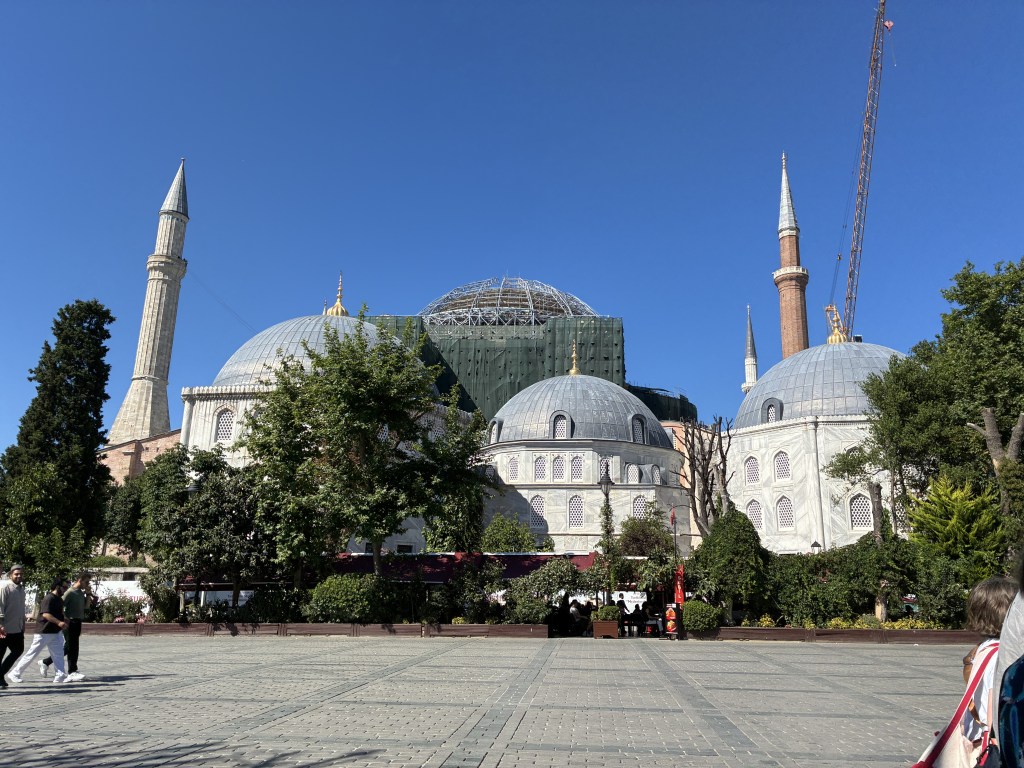
The conference will be held 24-28 June, 2026 at İstanbul Bilgi University in İstanbul,Turkey.

About the theme

I always think of my books as music before I write them – Virginia Woolf to Elizabeth Trevelyan, The Letters of Virginia Woolf, Vol. 6, Sept. 4, 1940.

The organizers of the 35th Annual International Virginia Woolf Conference warmly invite proposals for individual papers, panels, workshops, and exhibitions that engage with the theme “Virginia Woolf and Sound.” This year’s conference seeks to explore the rich and varied dimensions of sound in Woolf’s writing, her historical and cultural milieu, and the broader literary and artistic landscapes that shaped and were shaped by her work.

Woolf and sound studies

As sound studies continues to expand the boundaries of how we understand sensory experience, media, and cultural production, its intersection with Virginia Woolf studies offers rich terrain for rethinking literary form and perception.

From the rhythmic structures of her prose to her representations of listening, voice, and acoustic space, Woolf’s work engages with sound, not only as aesthetic texture, but as a means of exploring subjectivity, embodiment, and social experience.

Her experimental prose resonates with the concerns of sound studies: the politics of listening, the materiality of voice, and the acoustic dimensions of space and time.

Engaging Woolf through the lens of sound studies not only deepens our understanding of her modernist aesthetics but also opens new interdisciplinary pathways for exploring how literature listens, performs, and constructs meaning through sonic texture.

Possible areas of inquiry include, but are not limited to:

  • Virginia Woolf’s engagement with classical music and musicians
  • The idea of books as musical compositions
  • Music in Woolf’s social and emotional life
  • Politics of music and sound
  • Music and gender
  • Woolf as a performer, listener and music critic
  • Representations of different musical genres in Woolf’s fiction and essays
  • Intersections between poetry and music
  • Nationalist and pacifist discourse and music
  • The role of rhythm and cadence in Woolf’s prose style
  • The soundscapes of nature in Woolf’s works
  • The influence of emerging sound technologies, such as the gramophone and the radio
  • Listening to the infrastructure: the auditory experience of urban life and the sound of the modern city (street music, church bells, etc.)
  • Virginia Woolf’s musical legacies
  • Silence
  • Noise and sound parasites in Woolf
  • Animal sounds
  • Biosounds
  • Sound and affect
  • Deadly sounds: war and sound
  • Sound properties of the written word
  • The act of listening

This list of suggested topics is intended as a starting point rather than a limitation. Organizers encourage interdisciplinary approaches and welcome contributions from scholars, artists, performers, and practitioners working across literature, musicology, sound studies, media studies, and related fields.

Organizers invite submissions that explore how sound—whether musical, environmental, technological, or textual—resonates throughout the work of Virginia Woolf and the Bloomsbury group.

They encourage contributions from scholars at all career stages, independent researchers, students, artists, and readers with a deep interest in Woolf’s work.

The conference will also feature 90-minute interactive workshops, and proposals in non-traditional formats that engage participants in creative or experimental ways are welcome.

Formats for proposals

Proposals are welcome for panels, roundtables, workshops, and exhibitions that take innovative, interdisciplinary, transhistorical, or collaborative approaches to the theme of “Virginia Woolf and Sound.”

Submissions in the following formats will be accepted:

  • Individual papers (abstract of 250 words)
  • Panels or roundtables (abstract of 500 words for the entire panel or roundtable)
  • Interactive workshops (abstract of 500 words)
  • Digital/material exhibition or posters (abstract of 250 words)
  • Non-traditional or experimental forms of presentation—including dissident, performative, or hybrid formats (abstract of 250-500 words)

We encourage creative and boundary-pushing proposals that challenge conventional academic formats and open new ways of engaging with Woolf’s work and legacy.

Proposal submission deadline: Extended abstract submission deadline: 15 January 2026

How to submit: Please submit inquiries and abstracts to woolf2026@bilgi.edu.tr

Read Full Post »

Editor’s Note: As an introduction to the upcoming 34th  Annual International Conference on Virginia Woolf: “Woolf and Dissidence,” set for July 4-8 at King’s College London and the University of Sussex, England, we offer the third in a series of four posts in which Leanne Oden and Serena Wong reflect on their encounters with Virginia Woolf and with Woolf scholars — dubbed Woolfians — that they met at the 33rd Annual International Conference on Virginia Woolf: Woolf, Modernity, Technology, held June 6-9, 2024, at Fresno State University.

“Communication is health; communication is truth; communication is happiness. ”—Virginia Woolf, “Montaigne”, The Common Reader (1925)

The 2024 Woolf conference hosted a total of 29 panels across its four-day program. These panels, all brilliant, demonstrate in various methods a review of Woolf studies under the theme of technological innovation.

The two panels discussed in this post were respectively attended by the authors who also presented in them. Leanne reports on the panel “Offline Anxieties, Online Woolf’,” which is interested in the contextualizing and de-contextualizing of Woolf on public platforms in processes of reading.

Serena writes on the panel “An Examination of Craft, Technê & Aestheticism,” which engages with the relationship between crafting and reading in aesthetic approaches to Woolf’s work. Both accounts find solace – and new ideas – in their own clusters of research.

Panels

“Offline Anxieties, Online Woolf”

By Leanne Oden, Ph.D. Student, University of Rhode Island

L-R: panelists of “Offline Anxieties, Online Woolf” include Adriana Varga, Lisa Tyler, Judith Allen, Leanne Oden, and panel chair, Anne MacMaster. Photo courtesy of Amanda Golden.

The panel that I was selected to present in, alongside Lisa Tyler (Sinclair Community College), Judith Allen (Kelly Writers House), and Adriana Varga (Nevada State University), moderated by our panel chair, Anne MacMaster (Millsaps College), engaged with Woolf by rethinking the ways in which we contextualize and decontextualize her work.

From memes to politics

Lisa Tyler’s presentation, “‘Very Beautiful and Very Frightening:’ Interpreting Virginia Woolf-Related Memes,” investigates the circulation of Virginia Woolf’s images and quotations from her public and private writings on social media. She defines memes in her research as “cultural units—ideas, tunes, catchphrases, or images—that arise and propagate themselves through imitation.”

In her presentation, “Virginia Woolf, Three Guineas, and ‘the Manufacture of Consent,’” Judith Allen examines the political insights of Virginia Woolf alongside that of Walter Lippmann, who coined the term “manufacturing consent” in 1922.

Allen’s research leads her to question agents of power and their relationship to censorship, urging the audience to consider “which person, corporation, or government official controls the narrative — or at times, ‘purchases’ the narrative — and what might happen if we take risks, opposing the ‘official story’, the acceptable opinion.” In her concluding thoughts, Allen left the audience with a quote by Dr. Martin Luther King, Jr.: “And so, difficult as it may be: ‘We must speak out!’ In Martin Luther King’s words: ‘Silence is betrayal.’”

Culture, audience and responses to AROO

The presentation that I gave centers on the dynamic relationship between culture and audience as explored in Woolf’s final novel, Between the Acts (1941), as a shared experience between the characters within and the readers outside of the text. In this research, I examine the culture-audience relationship as a striking historically specific example of human-agent interaction (HAI), particularly through the literary representations of artifacts like the paintings and the newspaper.

My paper investigates the ways in which Woolf models a kind of cultural engagement that reflects new subjective modalities made possible through technology and modernity. Many thanks to Alice Wood, as well as my mentor and dear friend, Stephen Barber, for their brilliant research which has so inspired me and pushed my thinking.

Our final panelist, Adriana Varga, delivered her presentation, “‘A Room of One’s Own:’ Reevaluations,” in which she examines several 20th and 21st century responses to Virginia Woolf’s 1929 essay, A Room of One’s Own, in order to understand how different authors have interpreted and responded to it and why it continues to be a source of inspiration.

The Q&A session asked our panel of presenters to consider “where does Woolf go when decontextualized?” This sophisticated question inspired us to think across all of our presentations and the ways in which we contextualize and decontextualize her life and works.

A heartfelt thank you to my fellow panelists for their insightful research. Additional thanks to the University of Rhode Island Center for the Humanities and the International Virginia Woolf Society’s Suzanne Bellamy travel fund for their contributions to my trip to Fresno, making it possible for me to present my research. It has been a great honor to be among Woolfians and to see Woolf through their eyes.

“An Examination of Craft, Technê & Aestheticism”

By Serena Wong, Ph.D. Candidate, University of Glasgow

I presented on the third day of the conference with fellow panelists Brenna Barks (Fresno State University) and Melissa Johnson (Illinois State University), in a panel with the theme of the interlocking connections between reading, aesthetics, and craft.

Clothing, Orlando, and the intersections of craft and art

L-R: Panelists of “An Examination of Craft, Technê & Aestheticism” include Melissa Johnson, Brenna Barks, Serena Wong, and panel Chair, Marcia James. Photo courtesy of Jane Goldman.

Barks’ paper explored how clothing is used in Woolf’s 1928 novel, Orlando, and its film and play adaptions in 1992 and 2022/23 respectively.

As a fashion and art historian and material culturist, Barks is eager to define and simultaneously question gender, history, and the self in her study of these renditions regarding the making and theorizing of costumes.

Johnson, who hosted the aforementioned craft workshop, is a professor of Art History & Visual Culture at Illinois State University.

With a research focus on the histories of craft and its intersections with modern and contemporary art, Johnson examined the resonances of text and textile between Woolf’s writing and the work of artist Ann Hamilton.

In a panel that foregrounds the value of creative practice to interpretations of literature, I gladly noticed that the scholars’ discussions, as did my own, emphasized sensory experiences as a crucial tool of artistic exploration. Moreover, from our individual presentations rose an implied agreement that crafting is a political act.

Pottery as resistance

My paper, entitled “Strange Stories on a Willow Pattern Plate: Virginia Woolf, P’ou Song-Lin, and the Chinaware of Bloomsbury,” puts forward the aesthetic and orientalist tensions in Woolf’s 1913 review of Pu Songling’s short story collection Strange Stories from the Lodge of Leisure.

My creative practice with pottery painting had led me to create with artist friend Joanne Ning a chinoiserie-style plate, which found its inspiration in the depictions of this review. The plate not only serves as a visualization of the review but is more importantly offered as a project of resistance against the orientalist narratives that surround its form.

I extend my thanks to Barks and Johnson for brilliant conversions on our panel papers, and to the audience who during the Q&A impressed on my mind the blurred boundaries between aesthetic seduction and sedation.

Read past posts in this four-part series

  1. Many Paths of Crossing: Newcomers share their Woolf encounters at conference #33
  2. Many Paths of Crossing: Workshops at Woolf Conference #33

About the authors

Leanne Oden

Leanne Oden is a first-year Ph.D. student and an Instructor of Record in the English Department at the University of Rhode Island. In her forthcoming research, Leanne is interested in questioning the closure narrative of the illness versus health binary as challenged through Woolf’s writing among other modernists. In her role as an educator for the University of Rhode Island, she regularly teaches ENG 110: Introduction to Literature and WRT 106: Introduction to Research Writing.

Serena Wong

Serena Wong is a Ph.D. Candidate in English Literature at the University of Glasgow. Her doctoral study situates itself at the crossroads of British modernisms and Chinese modernity, with a focus on the orientalism in Virginia Woolf’s stylistic and formal representations of China. Her research also looks at theoretical and creative studies of ornamentation, which she positions as an important dimension of orientalist thought.

Read Full Post »

I’m guessing that many Virginia Woolf common readers and scholars will be traveling to London this year and next, since the 2016 and 2017 Annual International Conferences on Virginia Woolf will be held in England — this year in Leeds and next year in Reading.

No doubt they’ll be looking for Woolf’s London, including all of the places she lived and the streets Clarissa Dalloway walked.

So now is a good time to share a few fun resources that will help visitors eat, sleep and shop as Virginia Woolf and the Bloomsbury Group did.

For more tips on traveling in the steps of Virginia Woolf, visit In Her Steps. This page includes travel tips for London and beyond. It also includes links to Woolf tours, both audio and in-person.

Read Full Post »

Since 2010, scholars of Virginia Woolf from Japan and Korea have held joint conferences on Woolf, exchanging thoughts and sharing friendship. Now, in an effort to increase participation, the 2016 conference is expanding its reach to Woolf scholars in all nations.

The 3rd Korea-Japan Virginia Woolf Conference 2016, Virginia Woolf and Her Legacy in the Age of Globalization, will be held Aug. 25-26, 2016,at Kookmin University, in Seoul, Korea. The two-day conference will focus on critical issues related to Woolf’s legacy in the age of globalization.

Call for Papers

Papers from scholars in any country are welcome. Possible topics might include:

  • Virginia Woolf studies in Asia
  • Woolf and Victorianism
  • Woolf and modernism
  • Woolf and life-writing
  • Woolf and post-humanism
  • Woolf in the age of postConference Conference -feminism.
  • Papers on any other topics that will refresh our perspectives on Woolf’s works and widen the horizon of Woolf studies are also welcome.

Please send 250-word abstracts in English and a one-page CV to the office of the Virginia Woolf Society of Korea at woolfkorea@gmail.com by Jan. 15, 2016. You will receive the official notification of acceptance by March 15, 2016.

Conference Registration

Regular Fee: 50 USD

Fee for Graduate Students: 25 USD

Important Dates

Abstracts/Papers Submission Date: Jan. 15, 2016

Notification of Acceptance (by Email): March 15, 2016

Final Papers for Conference Proceedings: July 15, 2016

Read Full Post »

Here is the basic information about next year’s Virginia Woolf conference, the 26th Annual International Conference on Virginia Woolf: Woolf and Heritage, which will be held June 16-19, 2016, at Leeds Trinity University in Leeds, England.

According to the conference website:

“This conference will investigate how Woolf engaged with heritage, and how she understood and represented it. One strand will look at her experience of the heritage industry, for example: libraries, museums, art galleries, authors’ houses, artists’ houses, stately homes, London’s heritage sites, and tourist sites in Britain and abroad.

“Alternatively, the topic encompasses Woolf’s constructions of heritage, including literary heritage, intellectual heritage, the history of women and the history of lesbians. The conference will also consider ways in which Woolf has been represented and even appropriated by the heritage industry, for example in virtual and physical exhibitions; libraries, archives and collections; plaques, memorials, and statues; and at National Trust or other properties such as Monk’s House and Knole.”

Location: Leeds Trinity University, Brownberrie Lane LS18 5HD, Leeds, England.
Dates: Thursday, June 16 – Sunday, June 19, 2016
Email: Woolf2016@leedstrinity.ac.uk.
Facebook page: https://www.facebook.com/virginiawoolf2016/timeline
Facebook event: https://www.facebook.com/events/385532108295455/

Read Full Post »

Older Posts »