Feeds:
Posts
Comments

More on Bloomsbury West

As Paula observed, I’m always on the lookout for references to Woolf in contemporary fiction and so honed right in on Benjamin Roesch’s story,  “Bloomsbury Heads West,” from a list of 49 sightings in one of the December Woolf sightings.

Of course it wasn’t enough for me to enjoy this provocative story; I wanted to know more. I wanted to know about the author’s interest in Woolf and why he wrote this story as well as to express my admiration. I contacted Benjamin Roesch through his blog and posed my questions; he was kind enough to respond as follows:

“Thanks so much for reaching out and I’m honored that you enjoyed the story and that it was mentioned on the Virginia Woolf blog. My interest in Virginia Woolf goes back to my mother, who was a Bloomsbury fanatic for a time and become particularly intrigued not only Woolf, but especially with Dora Carrington.

Then, in college, I encountered Mrs. Dalloway, which I adored, and later read letters and journals and developed my own fascination with Virginia Woolf, who I saw as a both triumphant and tragic figure. I can also remember seeing and loving ‘The Hours,’ which broadened my sense of her. I can also credit a colleague of mine who is a Woolf fanatic.

Benjamin Roesch

“The idea to have a rural farm wife turn into the great Victorian just came to me one day and seemed like it might make a wild premise for a story that, if executed right, might work. Initially, I saw it as a humorous conceit–the contrast between the American farmer and the proper Victorian–but in revision the story took on a life of its own and began showing me other things it wanted to say. I had a blast working on it.”

It’s always fascinating to see what draws people to Woolf, and for me, what prompts writers to use her in their fiction, whether by a single obscure allusion or, in this case, a story that draws from her life.
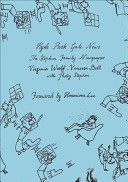
The most notable offering among this group of Woolf sightings is the date May 11. It marks the British Library exhibition on “British literature and place” that will include an issue of Hyde Park Gate News, the childhood newspaper written by Virginia Woolf describing a summer visit to a lighthouse. Scroll down to #10 for the link.

If you can’t make the exhibit, you can still read issues of the Stephen family newspaper. They are available in book form, edited by Gill Lowe with a foreward by Hermione Lee.

  1. Free at lastIndian Express
    On January 1, 2012, the works of James Joyce, Marina Tsvetaeva, Virginia Woolf, Rabindranath Tagore and Sherwood Anderson, among others, entered the public domain (except in certain jurisdictions). In other words, they can be freely read, …
  2. Canadians: tell Parliament to preserve Canada’s public domain!Boing Boing
     Year’s Day this year by welcoming the likes of Ernest Hemingway and Carl Jung into the public domain just as European countries were celebrating the arrival of James Joyce and Virginia Woolf, 20 years after both entered the Canadian public domain. …
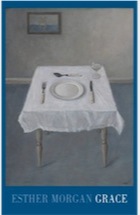
  3. Grace by Esther Morgan – reviewThe Guardian
    Setting in motion a kind of archaeological excavation of the charged moment, this poetry can call to mind Elizabeth Bishop and the prose of Virginia Woolf – though, oddly, there can be an absence of detail in Morgan’s writing. …
  4. 12 for ’12: The Most Anticipated Books of the YearNational Post
    A debut novel from a former nominee for the Bronwen Wallace Award for Emerging Writers and one of Knopf’s New Faces of Fiction, Magnified World starts with a nod to Virginia Woolf, as a mother fills her pockets with stones and drowns herself in the Don …
  5. The Death of the Heart (Modern Library #84)Reluctant Habits
    There’s some truth to the notion that Elizabeth Bowen may very well be the missing link between Virginia Woolf’s stream-of-consciousness and Iris Murdoch’s masterful fusing of behavioral study and philosophy. Yet as I’ve intimated above, …
  6. ‘Iron Lady’ star Meryl Streep has a way of forging her pathLong Beach Press-Telegram
    In “Adaptation,” she’s the fantasy version of a deranged screenwriter, and in “The Hours” she’s a woman whose life is affected by Virginia Woolf’s novel “Mrs. Dalloway.” ANGELS IN AMERICA: In the 2003 HBO miniseries based on the play by Tony Kushner, …
  7. Movie makeovers help actresses capture the magicUSA TODAY
    An unrecognizable Nicole Kidman bagged an Oscar for playing Virginia Woolf in 2002’s The Hours. A year later, an equally transformed Charlize Theron won the same award for playing an unsightly killer in Monster. And let’s not forget sparkly Marion …
  8. Six Actors Who Actually Look Like the Famous People They PortrayedPW-Philadelphia Weekly
    Erin Brockovich doesn’t look like Julia Roberts, Virginia Woolf didn’t look like Nicole Kidman and Salvador Dalí looked nothing like Robert Pattison. That said, apply the right makeup to Meryl Streep and she’ll look like Margaret Thatcher, …
  9. A New Chapter begins for Le Cordon Bleu London School of Culinary Arts at PR Web (press release)
    Several members of the group lived in the area in the early decades of the 20th century, including biographer Lytton Strachey and novelist Virginia Woolf. The building features state-of-the-art kitchen and classroom facilities offering students the…
  10. Literary events in 2012The Guardian
    … JG Ballard’s handwritten manuscripts; the “suppressed” chapter from Wind in the Willows; a childhood newspaper written by Virginia Stephen (Woolf) describing a summer visit to a lighthouse and manuscripts of the Brontës, including Jane Eyre. …
  11. Gigantic summer movie quizHerald Sun
    Which Australian played the ill-fated novelist Virginia Woolf in the 2003 movie The Hours? 2. In which 2004 movie did Harry Potter discover that a dangerous wizard named Sirius Black had escaped from Azkaban prison? 3. Which 1944 movie, based on an …
  12. Alexis M. Smith finds a Portland publisher for her Portland novelOregonLive.com
    Smith is a huge fan of Virginia Woolf’s “Mrs. Dalloway” and was influenced by Woolf’s use of the present as a point of reference for the past. “It’s very poetic,” Montgomery says. “Alexis is such an elegant writer. She’s really got the soul of a poet….
  13. Because they have a VoiceIndian Express
    Virginia Woolf’s unforgettable words, “For most of history, Anonymous was a woman”, became directional for Polish theatre director Marta Górnicka. They echoed cultural stereotypes about femininity. “There doesn’t exist a language which belongs to women …
  14. Kate Bolick: why modern women don’t marryTelegraph.co.uk
    Her flat is softly feminine, with floor-to-ceiling bookshelves stuffed with novels, including authors such as Virginia Woolf and Rousseau. A well-worn copy of Eleanor Roosevelt’s On My Own sits on a side table. I ask her why she thinks her article has…
  15. Louise Doughty novelIran Book News Agency
    Ghojaloo is the translator of well-known works such as Virginia Woolf’s “Woman in the Mirror” and “Orlando”, Malcolm Bradbury’s books on novel, and Susan Sontag’s “Alice in Bed”. “Stone Cradle” penned by Louise Doughty is converted into Persian by…
  16. Tilda Swinton on Virginia Woolf’s OrlandoTelegraph.co.uk
    When Tilda Swinton first discovered Virginia Woolf’s ‘Orlando’, she embraced it as a practical guide to living. Fifteen years later she played the gender-hopping hero on screen. Now, as a new edition is published, the actress maps the obsessions behind…
  17. Parallel Points of Light Ricochet Across TimeNew York Times
    They represent what Virginia Woolf called “moments of being,” in this case in the unremarkable existences of William Rivington and Caroline Carpenter, two people who never knew each other but appear to have resided in the same corner of England at ...
  18. Beverly Ford Food for thoughtFrederick News Post (subscription)
    If one believes, as the English novelist Virginia Woolf did, that “One cannot think well, love well, sleep well, if one has not dined well,” what one eats may be an important area of resolve for 2012. Beverly Ford of Walkersville is a retiree and …
  19. I Was a Teenage Samuel Beckett: Or, My Literary Biography ProblemTIME
    I became obsessed with biographies of Sylvia Plath, and then Virginia Woolf, and then Evelyn Waugh. These were serious scholarly works, but to me they were porn for a wannabe novelist. (Plath’s life is pure incandescent ecstasy and agony. …
  20. Denis O’Hare and Lisa Peterson to Lead AN ILIAD at New York Theatre WorkshopBroadway World
    At NYTW Lisa Peterson has directed numerous productions, including Light Shining in Buckinghamshire for which she won an OBIE award, and The Waves, which she adapted from Virginia Woolf’s novel of the same title with David Bucknam and which received …
  21. The infamous C-wordOUPblog (blog)
    The protagonist in Virginia Woolf’s Orlando fainted at seeing a woman’s ankle. Keep reading and don’t faint. Words for the genitals and sexual activities have always been tabooed, but not necessarily out of prudery. Throughout history people have …
  22. My First Job: Toy SalesmanSo So Gay
    What I’d really wanted to do was mooch around Waterstone’s all summer, binge-reading Virginia Woolf and flicking my fringe at customers, but my mum wanted me out of the house and had sold a fitted kitchen to the toy store manager so ultimately I was …

Next month, Penguin Books will publish A Small Circus, Hans Fallada‘s dark but humorous account of summer in a small German town in 1929.

Virginia and Leonard Woolf visited Germany that same year. They traveled by boat and spent Jan. 17 -21 in Berlin. The impetus for the trip was Vita Sackville-West’s 10-week stay in Berlin, where her husband was Counsellor at the British Embassy. The Woolfs were joined by Vanessa and Quentin Bell and Duncan Grant who were touring galleries in Germany and Austria (D3 218).

Woolf collapsed when she got home, writing to Sackville-West on Jan. 27 that “[t]hat blessed sea sick drug of Nessa’s somehow went wrong and I had to be hauled along like a sack” out of the ship’s berth (L4 7-8). She spent three weeks in bed “& then could not write; perhaps for another three” (D3 218).

Leonard Woolf and Virginia’s physician blamed her “rackety life in Berlin” for her physical state during the weeks following the couple’s Berlin sojourn.

Woolf had mixed feelings about that city. The positive ones are connected with seeing Sackville-West, while the negative are about Berlin itself.

According to Jan Morris in Travels With Virginia Woolf, Woolf wrote in her diary that she would “never again” visit Berlin, as she thought it “the ugliest town in the world” (152). It took me a few minutes of page turning to track down Morris’s references, finally locating them in the fourth volume of Woolf’s letters.

On the positive side, Woolf writes the following in her Jan. 27 letter to Sackville-West, “I’m much better today. Berlin was quite worth it anyhow” (L4 8). And a day later she reiterates that sentiment by writing, “Well anyhow it was worth the week with you” (L4 8).

Here are more of her thoughts about Germany — and the Germans:

  • “But Lord! what a horror Berlin and diplomacy are!” (L4 9).
  • “There were two Germans in the carriage — fat, greasy, the woman with broken nails. The man peeled an orange for her. She squeezed his hand. It was repulsive” (L4 12).
  • “Berlin glamour seems only that of Woolworths and Lyons Corner House — its immeasurable mediocrity still affects me” (L4 13).
  • “Berlin was great fun in many ways — humans and pictures. Never again though” (L4 15).
  • “Berlin was very exhausting; very large; very cold; lots of music” (L4 19).
  • “I suppose Berlin, which is the ugliest of cities, did me in somehow” (L4 21).

The Woolfs also spent three days motoring through Germany in 1935, traveling with their marmoset Mitz. Coming as it did during Hitler’s reign, this trip was less pleasant. They were troubled by swastikas, anti-Semitic banners, a 10-minute delay at customs and crowds lining the street to salute a Nazi official.

In her diary, Woolf complained of their own “obsequiousness gradually turning to anger. Nerves rather frayed. A sense of stupid mass feeling masked by good temper” (D4 311).

Fallada’s book, first published in 1931, was written as the Weimar Republic was collapsing. Penguin’s version is the first English translation of that work. His 1947 novel about German resistance against the Nazis, Alone in Berlin, became a best-seller in the UK in 2010.

Note: Read Virginia Woolf’s Trip Through Nazi Germany, a post dated March 8, 2012, and Virginia Woolf and Hitler’s Black List, dated Jan. 22, 2012. Both are posted on ‘s The Virginia Woolf Blog. (Posted Jan. 31, 2013)

Read the reviews on Mantex

Roy Johnson of the Mantex website is kind enough to keep Blogging Woolf posted about updates to its information about Virginia Woolf and the Bloomsbury Group.

Here are links to recent Woolf-related book reviews:

Read more about author Harris and her work:


Virginia Woolf Is My Pen Pal note card

Last week, when Alice Lowe wrote a piece about finding a note card featuring a Virginia Woolf quote at a Trader Joe’s checkout, I felt the urge to look for more Woolf cards.

A Google search later, I had found these cards:

Woolf is one author featured in the card game.

Oh, and don’t forget the Notable Novelist Card Game with artwork by Andy Ward. Woolf included.

This shaped card comes with a sticker sheet of Woolf quotes.