NPG 5933. Virginia Woolf (née Stephen) by Vanessa Bell (née Stephen), 1912. Oil on board, 15 3⁄4 x 13 3⁄8 inches (400 x 340 mm). National Portrait Gallery, London
If I paid more attention to painting details, I would have known that Virginia Woolf was a knitter.
In it, the writer cites Vanessa Bell’s small portrait of her sister, painted while Virginia was working on the draft of The Voyage Out, published in 1915. In the portrait, pictured at right. Virginia is knitting.
Also mentioned are:
Dame Edith Sitwell’s reminiscence about Virginia: “I enjoyed talking to her, but thought nothing of her writing. I considered her ‘a beautiful little knitter.'”
Virginia’s 1912 pronouncement to Leonard: “Knitting is the saving of life.”
Addendum: This bit of news has generated discussion on the VWoolf Listserv. Steve Posin contributed this tidbit: While reading the Vita Sackville West biography, he learned that Vita supplied Virginia with knitting wool as late as 1941 from sheep raised at Sissinghurst.
Dr. Elisa Kay Sparks of Clemson University is celebrating her first Virginia Woolf Seminar by creating a new website, one that generously shares her original images, notes and presentations.
The clean-looking well-designed site is illustrated with her woodcuts and other prints. It includes updated links, including those to her teaching materials, illustrated PowerPoints, and extensive, partially annotated bibliographies for everything she teaches in the class. Resources will be added as the term goes on.
Sparks says she intends the site to be a collection point for her Woolf resources — and as such, “a giant gift to the Woolf community.”
What a wonderful gift it is.
For more about Sparks and her work, visit her other sites:
“Proust knew the importance of fashion; his books are littered with references to clothing and the sartorial zeitgeist. So did Virginia Woolf, in whose prose clothes take on a life of their own.”
So writes Harriet Walker in “It doesn’t take a genius to admire a Balenciaga coat” on the Belfast Telegraph website. In the piece, she makes the case that having an interest in fashion doesn’t make one a dunce.
Woolf, of course, was anything but. And as many scholars have documented, she had a definite interest in fashion, as well as massive insecurities about it. Catherine Gregg covers the topic in Virginia Woolf and ‘Dress Mania’: ‘the eternal and insoluble question of clothes’, published this year by Cecil Woolf Publishers.
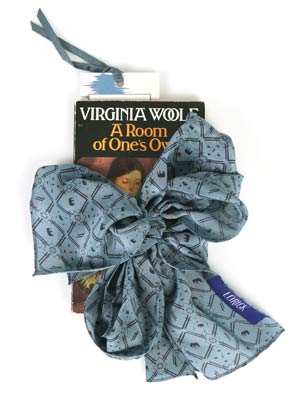
And fashion designers, as well as others, have not been slow to make a connection between their own designs and Woolf. One New York style newcomer even tied a silk scarf around a worn copy of Woolf’s A Room of One’s Own and sent it as a stylish invitation to her fall 2008 fashion show.
For examples of other designers who used Woolf as inspiration, take a look at the following posts on Blogging Woolf:
Several months ago I read a couple of tempting reviews of a new novel, The Postmistress by Sarah Blake. The story about three American women during the early years of World War II, before U.S. participation, piqued my interest. I put my name on the queue at my local library and forgot about it until it came in last week.
Then I read it almost non-stop for the next few days. Like the reviewers, I found it to be a well-written, well-constructed and moving story in spite of the fact that some of the contrivances and coincidences are a bit of a stretch (as in many novels, including great ones).
The title character (who says, “There’s no such thing as a postmistress. Man or woman. It’s postmaster”) and the doctor’s young wife in Franklin, Mass., a small town at the tip of Cape Cod, have their stories, but they orbit around Frankie Bard, a radio journalist with Edward R. Murrow in London during the Blitz. Her reports are broadcast to the U.S., and her stirring accounts play their part in the lives of the folks of Franklin.
Frankie grapples with the need to portray what she sees in a way that will get Americans to pay attention, yet at the same time to maintain her objectivity as a journalist. Her model and mentor is Martha Gellhorn, and a quote from The Face of War is the novel’s epigram: “War happens to people, one by one. That is really all I have to say, and it seems to me I have been saying it forever.”
In spite of my ongoing fascination with references to Virginia Woolf in contemporary fiction, I wasn’t looking for her here. Yes, Woolf and London, London and the Blitz, her horror at war itself and this war in particular, but I was still taken by surprise when she appeared, so organically woven into Frankie’s narrative. And I thought, of course!
In the section “Winter 1941,” Frankie (or the narrator) observes the dilemma: “It was nearly impossible now to look away from what was clearly happening in Europe. And the patrician habit of deflecting strong passion or insight first into calmer waters, to reflect, to take stock, belonged to her mother’s generation. Fine for Mrs. Dalloway, impossible for Mrs. Woolf. A writer, a real writer, in possession of a story headed straight for its rapids, eyes on the water, paddling fast for the middle in order to see as well, as closely as could be” (114).
In “Spring 1941,” she emerges from a shelter to a “soft blue morning” after a night of bombing. “No matter what happened, spring behaved as it always had. It was still just one morning in late May in London. On her bed under the eaves at school, these would have been the words that called to mind tea parties and strawberries and Henry James, when all civilization could be contained within the blue borders of an English sky. Except for the smoking buildings and the stink of burning rubber and metal, one might almost imagine Dorian Gray, flushed and gorgeous behind one of those windows, and Mrs. Dalloway coming out on to the square.” (160).
Clarissa Dalloway’s between-the-wars London was idyllic, her “moment of June,” a world away from the bombs and the devastation, as are, comparatively, London and New York today. The contrasts jolt readers and dramatize the fear and passion, sadness and hopelessness.
I find myself struck by the thoughtfulness of these allusions, in their relevance to both the setting and mood, in the way they illuminate perception. It strengthens my conviction that Virginia Woolf’s life and work are timeless and that writers today evoking her words and her world are doing much more than paying lip service to an icon.
Editor’s Note: For more on Woolf and contemporary fiction, read Alice Lowe’s Beyond the Icon: Virginia Woolf in Contemporary Fiction, No. 58 in Cecil Woolf Publisher‘s Bloomsbury Heritage Series.
Oct. 19, 4 p.m. – Jean Mills, “Goddesses and Ghosts: Virginia Woolf and Jane Ellen Harrison In Conversation”
Oct. 20, 4 p.m. – Isaac Gerwirtz, “When Is a Printed Book as Good as a Manuscript?: The Proof Copy of A Room of One’s Own“
Oct. 21, 4 p.m. – Anne Fernald, “On Traffic Lights and Full Stops: Editing Mrs. Dalloway
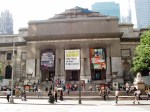
Mills and Fernald are scholars in residence at the New York Public Library’s Wertheim Study. Gerwirtz is curator of the library’s Henry W. and Albert A. Berg Collection of English and American Literature.
All three lectures will be held in the South Court Auditorium of the Stephen A. Schwarzman Building at 42nd Street and Fifth Avenue.
The New York Public Library maintains two study centers in the Stephen A. Schwarzman Building: the Frederick Lewis Allen Room and the Wertheim Study. Both are for qualified scholars needing intensive and long-term use of the collections of the library.