Feeds:
Posts
Comments

Last summer I studied Virginia Woolf in person in Cambridge. This summer, I’m studying her from Cambridge, but I’m at home on my laptop via Zoom.

Trudi Tate and Karina Jacubowicz are just two of the lecturers in Literature Cambridge’s online courses on Virginia Woolf and other authors via Zoom.

Last July, I flew to England to study Virginia Woolf as part of the Literature Cambridge course on Virginia Woolf’s Gardens. This year, the program cancelled its in-person courses due to the coronavirus pandemic.

Studying Woolf online and in person

So I, along with dozens of scholars and common readers from around the world, am studying Woolf remotely as part of Literature Cambridge’s sessions on Woolf through its reasonably priced Online Study Sessions. Once held in person at the University of Cambridge, they are now held online via Zoom. And I am enjoying every minute of the delightful, informative lectures, as well as the accompanying question and answer sessions.

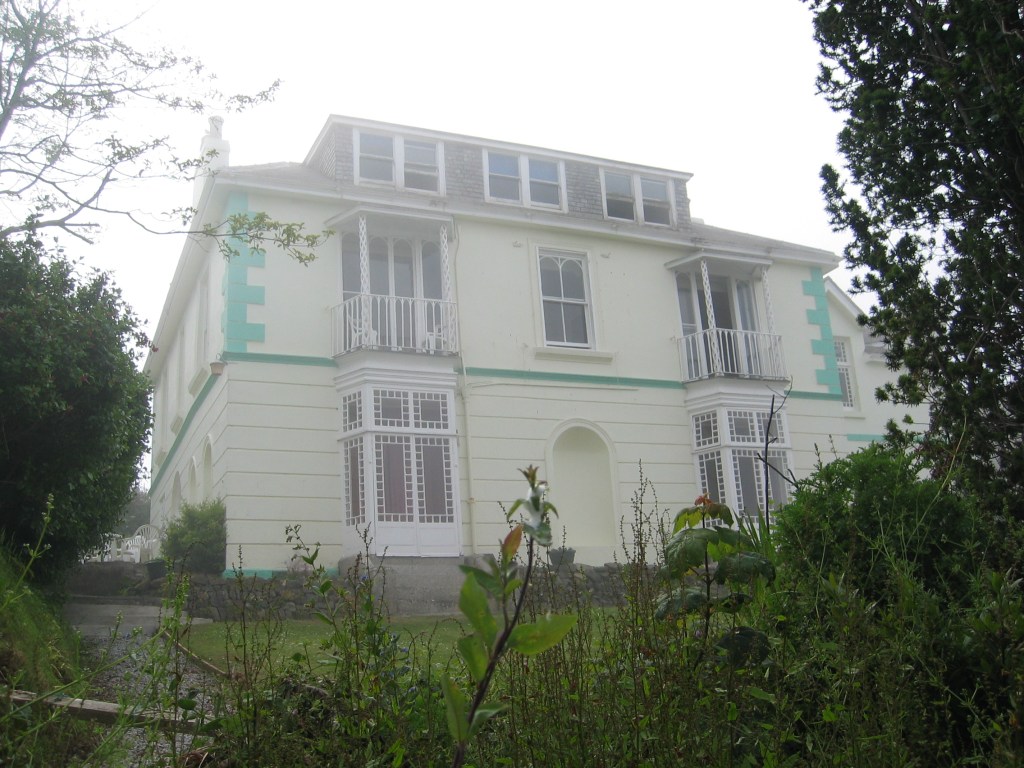
Dadie Ryland’s room behind the second floor window shown here inspired the first chapter of Woolf’s A Room of One’s Own.

Last July, in Lit Cambridge’s course on Woolf’s Gardens, we visited Newnham College, the site where Virginia Woolf gave her October 1928 talk on women and fiction that, along with one given at Girton College, became A Room of One’s Own (1929). We toured the gardens of King’s College, saw the window of a room that was the setting for a scene in Woolf’s classic polemic, held Woolf’s manuscript of Room at the Fitzwilliam Museum, admired the flora of Cambridge Botanic Garden, and much more.

I miss those field trips but I appreciate reuniting with the lecturers and students I met at Literature Cambridge and other Woolf encounters.

So far this year, I have attended lectures by Trudi Tate and Karina Jacubowicz on A Room of One’s Own and the Great War, Mrs. Dalloway, and A Room of Own and Space. I have several more on my calendar.

Upcoming study sessions and the Virginia Woolf Season

Online Study Sessions on Woolf and other writers continue through the summer. Here is just part of the upcoming schedule, with all times in British Summer Time:

25 July, 6 p.m. Between the Acts and Gardens
1 August, 6 p.m. Orlando 1 : Property
2 August, 10 a.m. Orlando 1: Property
8 August, 6 p.m. Night and Day
15 August, 6 pm. The Voyage Out

Literature Cambridge will kick off its Virginia Woolf Season in October in which students will discuss 12 major Woolf books in order of publication. Follow its Facebook page for updates.

The Newnham College dining hall where Virginia Woolf gave her famous talk on women and fiction in 1928.

From the Virginia Woolf Society of Great Britain comes these resources: links to two short videos of an exchange of letters between Vita Sackville-West and Virginia Woolf. Both were recorded for Amnesty International and LGBTI+.

  • Vita’s letter to Virginia, read by Jodie Comer
  • Virginia letter replying to Vita, read by Nicola Coughlan

Literature Cambridge has created a popular Virginia Woolf Podcast, a series designed to discover her impact on art, philosophy, and politics in the present day.

In each episode, Literature Cambridge interviews an artist, writer, or academic who has been influenced by Virginia Woolf.

Questions asked include:

  • Why is Woolf such an important figure to you?
  • How has Woolf affected your career?

So far, two podcasts are available online. In the first, “Woolf and Shakespeare: Varsha Panjwani,” Dr. Karina Jakubowicz talks with Dr. Varsha Panjwani about Woolf’s complicated relationship with William Shakespeare. The podcast attracted more than 800 listeners in the first few months alone.

In the second, “Caroline Zoob: Virginia Woolf’s Garden,” Jakubowicz talks with Caroline and Jonathon Zoob about the 10 years they spent looking after Monk’s House and restoring the garden in the spirit of the Woolfs.

Give them a listen.

Garden at Monk’s House, Lewes, Sussex

In 2009 I posted a review of Stephanie Barron’s The White Garden, and a year later about discovering Virginia Woolf’s socks (on Julian Bell) in bed with infamous spy Anthony Blunt. In exploring spy connections, I’d somehow  overlooked—until now—the 1983 novel by Ellen Hawkes and Peter Manso, The Shadow of the Moth: A Novel of Espionage with Virginia Woolf.

It’s 1917, mid-World War I, and Woolf’s curiosity is aroused by the report of a young Belgian woman’s suicide. One thing leads to another, as Woolf and an American journalist uncover a clandestine attempt to pass English military secrets to the Germans. Spies and double agents, aristocrats and industrial magnates, MI5 and Scotland yard—all the greedy, power-hungry men; even Maynard Keynes and Clive Bell; even Leonard Woolf by his overprotectiveness of Virginia.

At the end she realizes that “The war might alter everyone’s values but her personal fight had to be on her own terms. She wouldn’t wage it by adopting men’s ways.” Back at work on her novel in progress, what would become Night and Day, she creates the character of Mary Datchet, a spirited, determined, independent woman, to balance the conventional Katharine Hilbery.

I enjoyed this portrait of a spirited, determined, and independent Virginia, but most striking was the authors’ epilogue:

“In 1937, with war once again threatening Europe, Virginia Woolf wrote Three Guineas, her indictment of masculine aggression, German fascism and incipient totalitarianism at home. Four years later, in 1941, her body was found in the river Ouse behind Monk’s House, her home in Sussex. To this day, her death is commonly believed to have been a suicide.”

Here, as in The White Garden, is the supposition that there were other possibilities. In an email exchange, I asked Stephanie Barron (real name Francine Mathews) how she came to question the cause of Woolf’s death. She said her research uncovered what for her were surprises: Leonard announcing Virginia’s death the day after she disappeared; the lack of a full-blown police investigation; Leonard’s identification of her remains alone; the swiftness of cremation; his burial of the ashes by himself.

“It all seemed highly irregular, almost furtive. It smacked of a cover-up. Probably that was due to the stigma of mental illness and suicide. But if one chooses to write speculative fiction, it’s rife with possibilities.”

Woolf scholars have accepted the seemingly incontrovertible evidence of her suicide. Still—and not to succumb to the current fetish for conspiracy theories—it’s hard not to wonder….

Not everyone can say they spent the 4th of July with Virginia Woolf. But Kathleen Donnelly and I can.

Three years ago, on July 4, 2017, Kathleen and I spent a day together in London. While there we visited a life-sized wax figure of Woolf on display in the foyer of the Virginia Woolf Building at 22 Kingsway at King’s College. It was installed Oct. 21, 2015, by artist Eleanor Crook.

Gaining entry

We were not able to walk right in, however, as entry to the building is secure. However, a kind security guard allowed us inside after noticing us standing out front with our noses pressed against the window. There, we were able to look around and take photos of the wax figure and the exhibit that surrounds it.

The location is significant, as Woolf was a student at the former King’s Ladies’ Department where she took classes in Greek, Latin, history and German between 1897 and 1902.

The Virginia Woolf display in the Virginia Woolf Building at King’s College, London, is straight up this set of stairs on the left.

The life-size wax figure of Virginia Woolf in a wardrobe of her own installed in the foyer of the Virginia Woolf Building at King’s College, London.

The Woolf figure holds a copy of “A Room of One’s Own” with a Vanessa Bell cover.

A quote on a panel in the Woolf display in the foyer of the Virginia Woolf Building, King’s College, London