The group invites proposals for critical papers on any topic concerning Virginia Woolf’s work. A specific panel theme may be decided upon depending on the proposals received.
Please submit by email a cover page with name, email address, mailing address, phone number, professional affiliation, and title of paper, and a second anonymous page containing a 250-word paper proposal, with title, to Kristin Czarnecki, kristin_czarnecki@georgetowncollege.edu, by Monday, August 31,2020.
Charleston, a treasure trove of Bloomsbury art and culture, is in dire need. Can you help?
Charleston
The longtime home of Vanessa Bell and Duncan Grant and the country refuge for the Bloomsbury group, along with its garden, galleries, shop and café, are temporarily closed due to the coronavirus pandemic.
That means the charity that receives no public funding is bereft of income from visitor admissions, as well as its main fundraising event. The Charleston Festival, scheduled for May, is cancelled.
As a result, Charleston has issued an emergency appeal for donations from those who appreciate this unique venue, no matter what side of the pond they live on.
You can find out more, including how to make a donation — whether you are a UK citizen or not — here.
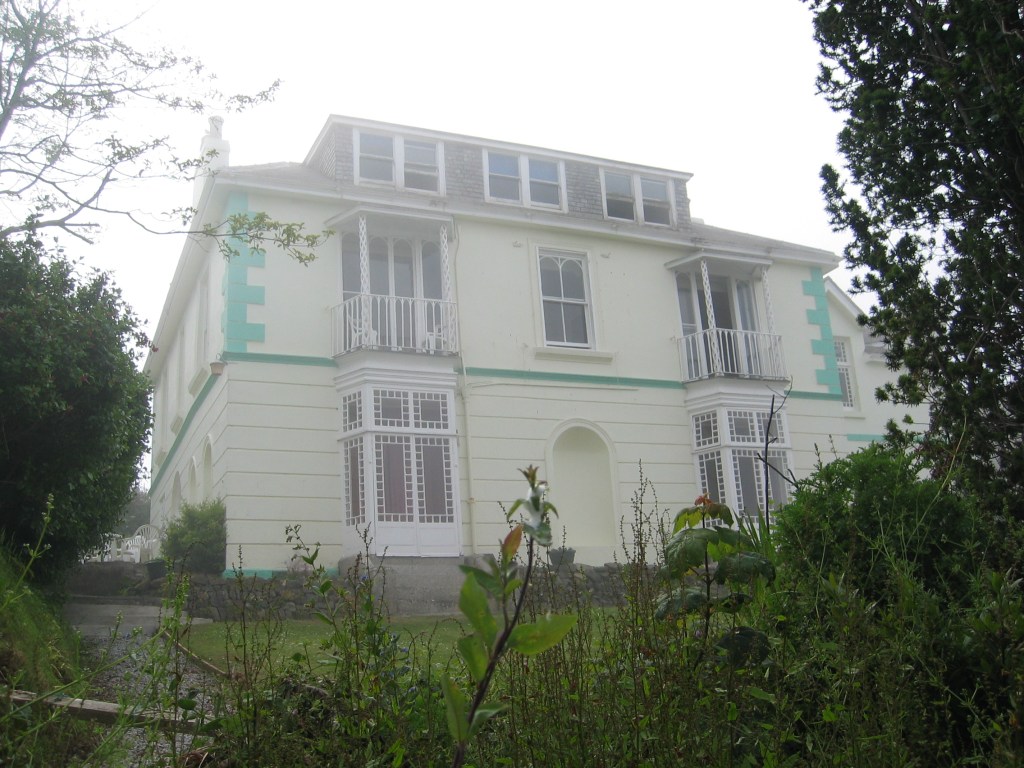
Charleston as seen from the farm track to the home. The gravel, the lawn, bushes, and the facade of the house are the same as in the time of Vanessa Bell and Duncan Grant.
The Charleston garden
The Famous Women Dinner Service painted by Vanessa Bell and Duncan Grant between 1932 and 1934 has been on display in the Outer Studio at Charleston.
The New York Timesreports that about half the world is in lockdown, due to COVID-19. So is now the time to read Proust? Some say yes. Others say no.
Drew Shannon’s Modern Library set of Proust
One naysayer is Suzanne Moore of The Guardian. She writes, “I never managed Proust in pre-virus days, so don’t saddle me with him now, for God’s sake.”
Others say yes. In fact, a Facebook group formed by Elisa Kay Sparks and dubbed “The Woolf Pack Reads Proust” has taken on Proust as a pandemic reading project. It has 29 members from around the globe.
Woolf on Proust
Woolf herself read Proust. Here’s what she had to say about him:
Last night I started on Vol 2 [Jeunes Filles en Fleurs] of him (the novel) and propose to sink myself in it all day. [. . . ] But Proust so titillates my own desire for expression that I can hardly set out the sentence. Oh if I could write like that! I cry. And at the moment such is the astonishing vibration and saturation and intensification that he procures?theres something sexual in it?that I feel I can write like that, and seize my pen and then I can’t write like that. Scarcely anyone so stimulates the nerves of language in me: it becomes an obsession. But I must return to Swann” – Letter to Roger Fry, 6 May 1922 (Letters II 525)
My great adventure is really Proust. Well–what remains to be written after that? I’m only in the first volume, and there are, I suppose, faults to be found, but I am in a state of amazement; as if a miracle were being done before my eyes. How, at last, has someone solidified what has always escaped–and made it too into this beautiful and perfectly enduring substance? One has to put the book down and gasp. The pleasure becomes physical–like sun and wine and grapes and perfect serenity and intense vitality combined. Far otherwise is it with Ulysses. – Letter to Roger Fry, 3 October 1922 (Letters II 565-6)
A year-long Reading Proust (2020-2021) schedule, with page numbers that correspond to the most recent seven-volume Modern Library editions translated by Terence Kilmartin, C.K. Scott Moncrieff and Andreas Mayor and revised by D.J. Enright.
Hagen, assistant professor of 20th-Century British and Anglophone literature at the University of South Dakota, also posted this drawing and comment to the group page on April 6. He is also blogging about his experience.
Me [Ben Hagen] trying (with not too much success) to map out connections between topics / themes from last week’s reading.
Focusing — or not — on Proust
Hagen has made much more progress than I have, bless him. I must confess that the farthest I have gotten with reading Proust is locating the first volume on my bookshelf and dropping it on my desk. There it sits, unopened and unread.
The inability to focus on the task at hand is common at this time, no matter what we are doing. Here’s a quote shared to the group Facebook page by Gill Lowe, who said of her own reading of Proust: “I started. But I just can’t concentrate…”.
Proust on illness
It is illness that makes us recognise that we do not live in isolation but are chained to a being from a different realm, worlds apart from us and by whom it is impossible to make ourselves understood: our body. – The Guermantes Way by Marcel Proust
Virginia Woolf readers and scholars around the globe are coming up with creative ways to fill the time as they shelter at home during the current coronavirus pandemic.
Members and followers of the Italian Virginia Woolf Society are posting photos of themselves reading Woolf and reading her letters aloud via video.
And now, the Virginia Woolf Society of Great Britain is sending its members 100 questions about Virginia Woolf and Bloomsbury — a few at a time. “There’s no prize, just a sense of satisfaction, perhaps even smugness, if you get them all right,” states the society’s email.
The first five brain teasers from the Big VW Quiz
Play along by answering these questions:
1) When was Virginia’s play Freshwater first performed?
(a) April 1933
(b) November 1934
(c) January 1935
d) December 1936
2) Where was it performed?
3) What year did Virginia first meet Vita Sackville-West?
4) What was Virginia’s first piece of published shorter fiction (as defined by Susan Dick in “Complete Shorter Fiction”)?
5) In which years were the first and second Post Impressionist exhibitions?
Join up
If you’d like to join the society to get the remaining 95 questions, you can find out more on the VWSGB website’s membership page.
I had let many intriguing posts from friend Elisa Bolchi — and former society president — slip through my Facebook feed. So I finally clicked over to her page and on to the Italian Society’s page. There I found some comfort and some inspiration from those whose country is one of the hardest hit during the current pandemic.
Inspiration from Italy
On its page, the society, formed in 2017, has posted inspirational messages from its president, Nadia Fusini, along with those from its founding partners, and another from beloved bookseller Raffaella Musicò.
It has also shared a video of Federica Leuci reading aloud letters from Woolf to various friends like Vita Sackville-West and Clive Bell.
In addition, the society has issued a photo challenge we can meet while staying at home and reading Woolf.
The #Woolfincasa #Woolfathome photo challenge
The challenge posted on Facebook reads: “At this time the right thing to do is stay in the house. What better opportunity to (re)-read a Virginia Woolf book? Take a picture of yourself reading a Woolf book on the couch, the chair, table, bed… wherever you want, as long as you’re home! Then post it and tag us and add the hashtag #Woolfincasa and #Woolfathome, we’ll create the album “The Rooms of Woolf” with all your photos. Good morning 💜 #iorestoacasa#sharingbeauty
A number of followers posted photos of themselves reading Woolf. A few are shown in the screenshot below of the Italian Virginia Woolf Society’s Facebook page. You might want to post yours on social media as well.
I took mine today when I just happened to be wearing the “Italia” sweatshirt I bought from a street vendor in Rome five years ago. Elisa Bolchi was kind enough to post it for me.
#Woolfincasa and #Woolfathome with Blogging Woolf in Ohio