Feeds:
Posts
Comments

Posts Tagged ‘31st Annual International Conference on Virginia Woolf’

In a world where few things are free, you can read Woolf and Ethics: Selected Papers from the 31st Annual International Conference on Virginia Woolf at no cost. In this open-access volume, 25 papers address the theme from a range of perspectives.

Amy C. Smith and Paola Brinkley co-edited the volume, and Benjamin Hagen edits the series. The late Suzanne Bellamy created and donated the volume’s art.

What’s in the volume

Here are just a few of the 25 articles in the volume of selected papers from the 34th conference, held remotely June 9-12, 2023, at Lamar University in Beaumont, Texas:

  • “The Ethics of Representation: Woolf Writing Working Women” by Aili Petterson Peeker
  • “The Ethics of Wonder(ing) in To the Lighthouse by Eret Talviste
  • “Virginia Woolf, Jacques Derrida, Mysticism, and Ethics by Angela Harris
  • “’Floating Incidents’: The Ethics of the Essay as a Life-Writing Form in ‘A Sketch of the Past’ by Julia Dalloway
  • “Time & Tide, Form & Fold” by Benjamin Hagen, Shilo McGiff, Laci Mattison
  •  “‘Daddy’s Girl’: Fathers, Daughters, and Female Resistance in Virginia Woolf’s Three Guineas and Valerie Solanas’s SCUM Manifestoby Kimberly Coates
  • “’Thinking Peace into Existence’: Teaching the World War II–Era Work of Virginia Woolf, Jessica Dismorr, and Elizabeth Bowen” by Emily M. Hinnov
  • “’The World Is a Work of Art’: The Weaving of Fact and Fiction in Between the Acts” by Lucas Leita Borba
  • “On the Ethics of Teaching: Virginia Woolf’s Essays” by Beth Rigel Daugherty
  • “Translation as Reading: Jacob’s Room by Maria Rita Drumond Viana

View a list of the most popular papers in the volume.

Background on the series

Virginia Woolf: Selected Papers (VWSP) is an open-access publication funded by the International Virginia Woolf Society and edited by organizers of the Annual Conference on Virginia Woolf (ACVW).

The open-access annual publication continues the Selected Papers/Proceedings of the Annual Conference on Virginia Woolf, a series that began in 1992 with the publication of its first volume, Virginia Woolf Miscellanies, which collected papers presented at the first annual conference on Woolf at Pace University in 1991.

The final print volume in the Selected Papers series was volume one and volume two of Virginia Woolf, Europe, and Peace, a collection of chapters that expand presentations given at the 28th annual conference at the University of Kent in 2018.

The open-access volumes of the VWSP will feature original scholarly papers delivered at Woolf conferences by international researchers, scholars, students, and common readers.
Read Full Post »

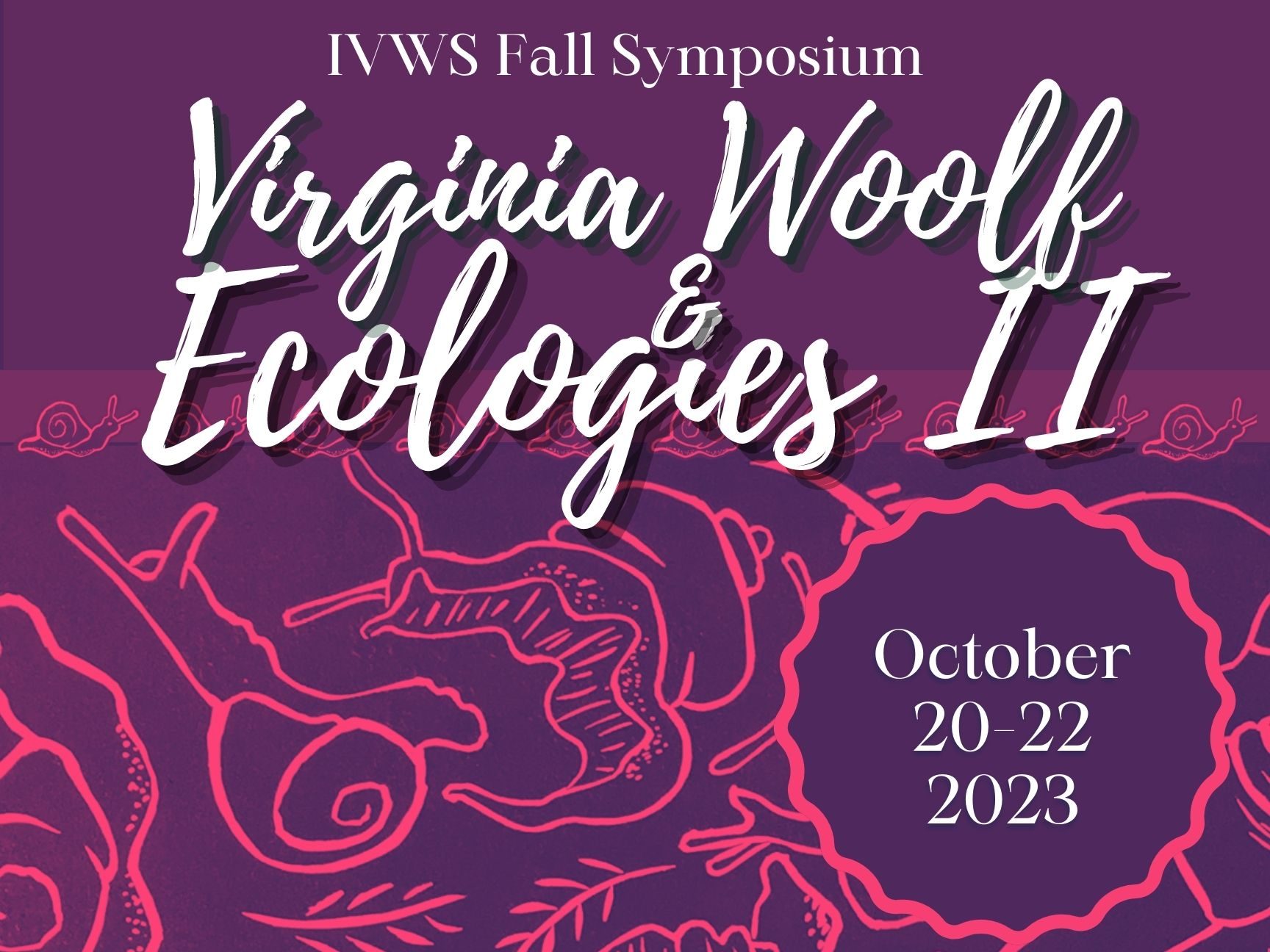
Get ready for Woolf and Ecologies II! This virtual Fall Symposium will be held on Zoom Oct 20-22 to give those who did not have the opportunity to travel to Ft. Myers, Fla., for the in-person conference the chance to present their work.

It will be hosted by the International Virginia Woolf Society in conjunction with its annual Fall Lecture and in collaboration with the organizers of the 2023 Woolf Conference that took place at Florida Gulf Coast University June 8-11.

The Fall Symposium will extend the theme of the 32nd Annual International Conference on Virginia Woolf: Woolf and Ecologies. Derek Ryan will deliver the 2023 IVWS Fall Lecture, which will double as the symposium’s plenary address.

Call for papers

Those who did not present at the in-person conference in June are invited to submit a 250-word abstract to the Fall Symposium by July 31. Organizers welcome proposals from scholars, students, artists, and common readers of all backgrounds and disciplines.

The Fall Symposium seeks to foster conversations about a wide range of ecologically relevant topics. Proposals may address ecological concerns in or illuminated by Woolf’s work, but they might alternately explore artistic, social, political, economic, racial, de-colonial, anti-ableist, and/or queer ecologies, among others, in or alongside Woolf’s novels, essays, letters, or diaries.

Papers on members of the Bloomsbury Group and other associates of Virginia Woolf in relation to the conference theme are also encouraged.

Questions?

Please send inquiries to Laci Mattison and Shilo McGiff at woolfecologies@gmail.com.

Note: this virtual event is planned to increase access for those unable to travel for/present their work at the in-person conference at Florida Gulf Coast University earlier this month. Those who presented at this month’s conference, are urged to support their colleagues by attending the symposium on Zoom.

Submit for publication

As in previous years, presenters will have the opportunity to submit their work for publication in the selected papers series. Send queries to Shilo McGiff and Laci Mattison at  woolfecologies@gmail.com.

Read Full Post »

A roundtable on “Biography, Biofiction and Ethics” was a highlight for me at the June 9-12 Annual International Conference on Virginia Woolf. The panelists, all knowledgeable on the topic, included two authors of Woolf biofiction who defended the genre.

Two views of Keynes

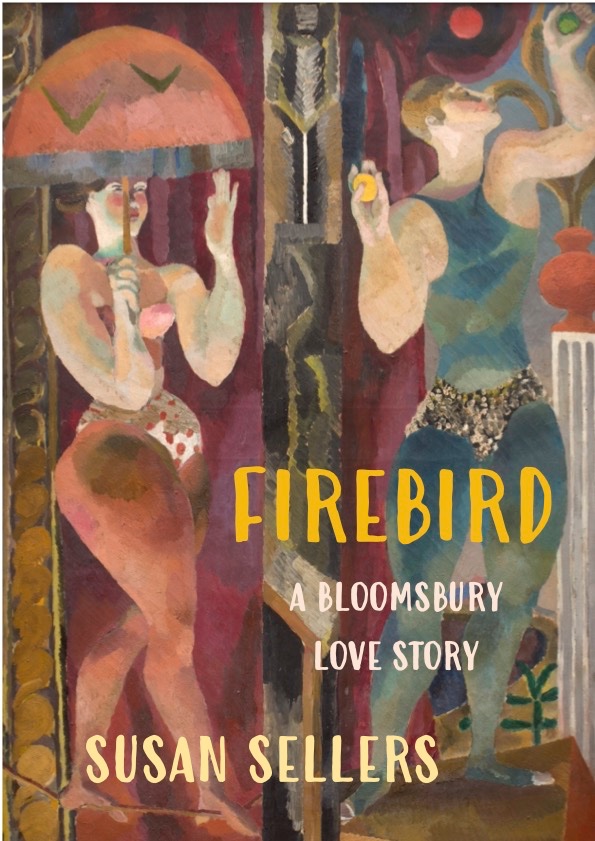
Susan Sellers, author of the 2008 Vanessa and Virginia and the recently released Firebird: A Bloomsbury Love Story (about Maynard Keynes and Lydia Lopokova), pronounced fiction as “the ideal medium for exploring the tangle of personal history” and “an ethical arena in which to speculate and imagine in the gaps of what the historical record can tell us.”

Emma Barnes also chose Maynard Keynes as the subject of her 2020 novel, Mr. Keynes’ Revolution. She said: “Fiction is a lie, by definition. But it’s also a lie in pursuit of some essential truths, or should be. If we recognize the practical and aesthetic constraints imposed on us as writers, we can try to write fiction about real people with integrity.”

The devil’s advocate on the panel was Mark Hussey, Woolf scholar extraordinaire and author of the recent biography, Clive Bell and the Making of Modernism. For Mark, a novelist’s changing facts raises an ethical red flag: “The shift of emphasis from the biographical subject of a biofiction to the writer of that biofiction’s own ‘vision of life and the world’ strikes me as a bit of rhetorical sleight of hand.”

A view from the fence and more

As a selective and skeptical reader of biofiction, I’m on the fence. What’s fact and what’s fiction? Should I care? (I do.) Can and should a novelist distort the facts to embellish the fiction?

For the reader, perhaps it’s a case of caveat emptor: she knows she’s reading fiction and she can enjoy it as such, consult factual sources to verify facts. I’ve read biofiction that the author appends with a list of references and comments about her fictionalizations. That works for me.

In addition to those mentioned above, other biofiction novels mentioned or referenced include:

The Hours by Michael Cunningham, 1998

Mitz: The Marmoset of Bloomsbury by Sigrid Nunez, 1998

But Nobody Lives in Bloomsbury, Gillian Freeman, 2006

Vanessa and Her Sister, Priya Parmar, 2014

Virginia Woolf in Manhattan, Maggie Gee, 2014

Adeline: A Novel of Virginia Woolf, Norah Vincent, 2015


Read Full Post »

Inspiring. Insightful. Intimate. Those are three words I could use to describe the four days of Virginia Woolf and Ethics, the 31st Annual International Conference on Virginia Woolf, which ran from June 9-12.

Held remotely on Zoom for the second year in a row and hosted by Lamar University in Beaumont, Texas, with Amy Smith as organizer, the conference brought together around 270 Woolf scholars from around the globe, including Brazil, the Netherlands, Norway, Candada, the UK, and the US.

Links to share

I took lots of notes. Sadly, I don’t have the time or the energy to share them all. Instead, I’ll list just a few online resources that some of the presenters and participants shared with us. Readers, feel free to add yours in the comments section below.

Here goes.

Favorite quote and rave reviews

And here is one of my favorite quotes from the conference. There were many more, but this is the only one I managed to get down on paper verbatim.

It comes from Ane Thon Knutsen, of the Oslo National Academy of the Arts in Norway, who presented “On Being Ill – A letterpress printed Covid-19 diary.”

You have no control over what happens when you read books. And it’s magical. – Ane Thon Knutsen

Ane, along with many other presenters, got rave reviews. One was Beth Rigel Daugherty, whose brilliant and heartfelt final plenary, “On the Ethics of Teaching: Virginia Woolf’s Essays,” awed participants and brought them to tears.

Below is just one of the many information-rich PowerPoint slides Beth shared in her talk. It lists some of the Woolf essays that informed her 36 years of teaching at Otterbein University and warned her against preaching to her students, a caveat she took to heart.

Recently retired, Beth’s latest project is a book for Edinburgh University Press — Virginia Woolf’s Apprenticeship: Becoming an Essayist (2022).

Read Full Post »

Virginia Woolf and Ethics, the 31st Annual International Conference on Virginia Woolf, begins tomorrow, June 9, and runs through Sunday, June 12. And while it is hosted by Lamar University in Beaumont, Texas, it is taking place completely online, giving the conference the ability to draw in a wide variety of participants from around the globe.

You can still register and Zoom in to four days of multidisciplinary conversation about Woolf and ethics.

Important conference links

  • The program for the four-day virtual event
  • Registration for attendees who are not presenting. Four-day ($40) and single-day ($20) registrations are available.
  • Plenary details, including
    • Gretchen Holbrook Gerzina, “Rethinking Bloomsbury and Race in the Wake of BLM”
    • Peter Stansky, “How the World Turns: Two Examples: Virginia Woolf and the Dreadnought Hoax; The Life of Julian Bell”
    • Beth Rigel Daugherty, “On the Ethics of Teaching: Virginia Woolf’s Essays”
    • Elsa Högberg, “Virginia Woolf’s Reparative Ethics”
  • Theater performance by Ellen McLaughlin and Kathleen Chalfant who have collaborated on “Life Stand Still Here,” which is based on Woolf’s diaries and Lily Briscoe’s painting in To the Lighthouse.

Virtual conferences include more global perspectives on Woolf

The idea that organizers of the annual Woolf conferences should work to include more global perspectives on Woolf studies was strongly articulated at the 29th annual Woolf conference in 2019. As the most recent in-person Woolf conference, it was held at Mount St. Joseph University in Cincinnati, Ohio, on the theme of Woolf and Social Justice.

The Covid-19 pandemic, which made virtual conferences a necessity, helped move that idea forward, making attendance easier and more economical for both presenters and participants.

Profession and Performance, the 30th annual Woolf conference, scheduled for 2020 at the University of South Dakota, was postponed until 2021 and was the first Woolf conference to be held virtually, on June 10-13, 2021. This year’s is the second.

Global perspectives on the last live Woolf conference

After the 2019 conference, the 29th, young scholars from Brazil, Czechoslovakia, Italy, and Canada shared their views on that conference. Below are links to their stories.

Read Full Post »

Older Posts »