Feeds:
Posts
Comments

Posts Tagged ‘A Room of One’s Own’

If you have ever wanted to study all of Virginia Woolf’s major works in consecutive order, now is your chance — no matter where you live.

Literature Cambridge has planned a “Virginia Woolf Season” that will run from Oct. 24 of this year through June 5, 2021 — and each of 18 study sessions will be available online via Zoom.

This unique eight-month season of Woolf study will cover her 12 major books in order of publication, from The Voyage Out (1915) to Between the Acts (1941). Each session includes a live, newly commissioned online lecture and seminar via Zoom. A few topics are repeated to accommodate different schedules.

Tickets per session

£26 full price
£22 students and CAMcard holders
Book them online.

Schedule of all-new lectures from leading scholars

  1. Saturday, 24 October 2020, 6 p.m. The Voyage Out (1915), with Alison Hennegan

    Karina Jacubowicz

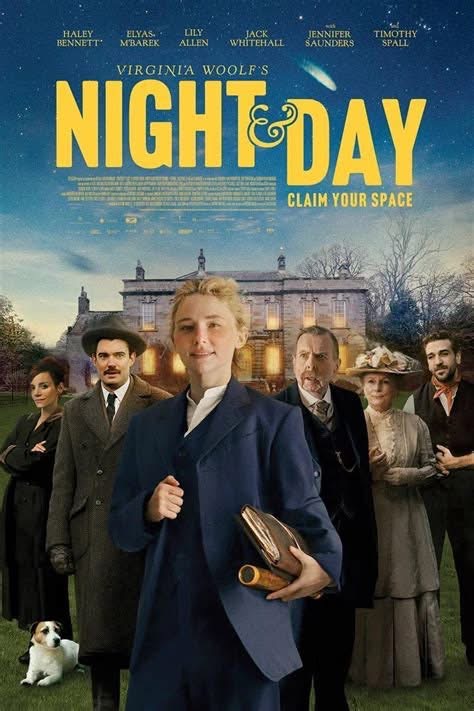
  2. Saturday, 21 November 2020, 6 p.m. Night and Day (1919), with Ellie Mitchell
  3. Saturday, 12 December 2020, 10 a.m. Jacob’s Room (1922), with Alison Hennegan
  4. Saturday, 9 January 2021, 6 p.m. Mrs. Dalloway (1925) 1: Women in Mrs. Dalloway, with Trudi Tate
  5. Sunday, 10 January 2021, 10 a.m. Mrs. Dalloway (1925) 1: Women in Mrs. Dalloway, with Trudi Tate
  6. Saturday, 30 January 2021, 6 p.m. Mrs. Dalloway (1925) 2: Dressing Mrs. Dalloway, with Claire Nicholson
  7. Saturday, 13 February 2021, 6 p.m. To the Lighthouse (1927) 1: Art, with Claudia Tobin
  8. Sunday, 14 February 2021, 10 a.m. To the Lighthouse (1927) 2: Gardens, with Trudi Tate
  9. Sunday, 21 February 2021, 6 p.m. To the Lighthouse (1927) 2: Gardens, with Trudi Tate
  10. Saturday, 27 February 2021, 6 p.m. Orlando (1928): Writing Vita, Writing Life, with Karina Jakubowicz
  11. Saturday, 6 March 2021, 6 p.m. A Room of One’s Own (1929) 1: Androgyny, with Alison Hennegan
  12. Sunday, 14 March 2021, 10 a.m. A Room of One’s Own (1929) 2: Women
  13. Saturday, 3 April 2021, 6 p.m. The Waves (1931) 1: with Ellie Mitchell
  14. Sunday, 4 April 2021, 10 a.m. The Waves (1931) 2: Friendship with Trudi Tate
  15. Saturday, 10 April 2021 6 p.m. Flush: A Biography (1933), with Alison Hennegan
  16. Sunday, 2 May 2021, 6 p.m. The Years (1937), with Anna Snaith
  17. Saturday, 8 May 2021, 6 p.m. Three Guineas (1938) and Music, with Claire Davison
  18. Saturday, 5 June 2021, 10 a.m. Between the Acts (1941): Dispersed are We, with Karina Jakubowicz

Trudi Tate (center) welcomes students to the Virginia Woolf’s Gardens course at Wolfson College at the University of Cambridge in July 2019.

Read Full Post »

A beautifully crafted staff-student book that is part of a collaborative project at the University of Reading is now available.

A Room of Our Own: The Virginia Woolf Learning Journals presents witty, inventive, and deeply felt learning journal entries from more than 20 final year students in the Department of English Literature at the University of Reading. Appropriately enough, the university was the site of the 27th Annual International Conference on Virginia Woolf: Virginia Woolf and the World of Books,

Content of the book

The entries are 500-word pieces of critical and creative writing responding to Woolf’s novels and essays.

The 64 contributions are organized into 10 chapters. The texts discussed in the collection are The Voyage Out, Jacob’s Room, Mrs. Dalloway, A Room of One’s Own, Three Guineas, ‘Street Haunting’, ‘Modern Novels’, ‘Mr. Bennett and Mrs. Brown’, ‘Professions for Women’ and ‘Memories of a Working Women’s Guild’.

Madeleine Davies’ introduction to the book explains the genesis of the project and its links to diversifying assessment practice, student engagement, and the ability of graduates to find employment.

Look of the book

Designer Katy Smith studied Woolf’s handwritten letters so she could create a hand drawn typeface in a similar style in a shade of purple, Woolf’s ink preference for her own writing. She also designed special icons representative of each chapter.

Smith worked with Davies and three student editors from the English Literature Department — Libby Bushill, Zoë Kyle and Maddie Bazin — on the project.

An award winner

The project has won two University of Reading collaborative excellence awards, has been the basis of a Times Higher Education shortlisting (2019) for Most Innovative Teaching, and is the university’s nomination for this year’s HE Advanced CATE Award.

Get a copy

A Room of One’s Own is available as an e-book and as a paperback. You can follow the project on Twitter at @RoomofOurOwnUOR.

https://platform.twitter.com/widgets.js

Read Full Post »

“Shakespeare’s Sisters” is an essay in Rachel Cusk’s 2019 collection, Coventry (and the first one I turned to, for obvious reasons). She begins by asking, “Can we, in the twenty-first century, identify something that could be called ‘women’s writing’?”

In that context she discusses The Second Sex by Simone de Beauvoir and Virginia Woolf’s A Room of One’s Own. “Between them,” she says, “they shaped the discourse of twentieth-century women’s writing,”

War vs. feelings

Eighty years later, as Cusk sees it, “a book about war is still judged more important than a book about ‘the feelings of women.’ Most significantly, when a woman writes a book about war she is lauded: she has eschewed the vast unlit chamber and the serpentine caves; there is the sense that she has made proper use of her room and her money, her new rights of property.

The woman writer who confines herself to her female ‘reality’ is by the same token often criticized. She appears to have squandered her room, her money.”

Just another women’s novel

Men have always written about the female experience–Madame Bovary and Anna Karenina come immediately to mind, as well as a number of novels by contemporary authors. I’ve seen some of these works praised to the skies, touted as the latest incarnation of the great American novel. Yet, still, too frequently, the women creating these novels are dismissed as writing just another woman’s novel.

Read Full Post »

The road to the ERA leads to Virginia, including Virginia Woolf. For although it was the state of Virginia that today became the 38th state to ratify the Equal Rights Amendment, Virginia Woolf would surely approve.

When I read that news less than an hour ago, tears came to my eyes. If I hadn’t been at work, I probably would have let them fall. But I restrained myself and took to social media and this blog instead.

What happened today has been a long time coming. The ERA has a long history. It was nearly 100 years ago that Alice Paul crafted the amendment, which was first introduced in Congress in 1923 and subsequently reintroduced in every congressional session for half a century.

And the fight is not yet over. A Facebook friend who is also an attorney explained,

Now the legal battles begin. An opposing group has already filed for an injunction to prevent presentation to Congress based on the deadline. They will also say it is just plain too late, that the whole thing must start over. Proponents argue that the deadline was arbitrary, singular and an unconstitutional part of the process, inserted separately after the body of the Amendment was passed in an effort to scuttle it, and that a different Amendment (27) was ratified after 200 years of dormancy. Several red states that voted to rescind their ratification will also challenge, but there is no mention in the Constitution of a rescission process, only reversal as happened with Prohibition, plus, wouldn’t it be too late for that, too? (There are efforts in Congress to remove the deadline retroactively but, doubtful that will happen with this Congress. ) WHEW! I hope I am around to see a successful conclusion to an issue I have worked on for so long. And maybe even a woman President.

Meanwhile, thanks to the state of Virginia, Alice Paul, and all who came after her, including Virginia Woolf, whose feminist polemic A Room of One’s Own (1928) is part of the canon that propels us forward toward full equality.

Read Full Post »

Cecil Woolf pauses in front of Persephone Books, Lamb’s Conduit Street, London, in June 2016.

Tucked away on Lamb’s Conduit Street in Bloomsbury, Persephone Books has been my favorite London bookstore since I first visited it — twice — during my 2016 trip.

That’s not just because it is located on the same street where Jacob Flanders of Virginia Woolf’s Jacob’s Room had his very own room. It is also because the shop reprints neglected fiction and non-fiction by mid-20th century (mostly) women writers. It is, in short, a treasure.

A stack of gray dust covers

Every time I visit, I cannot resist purchasing as many as I can carry of Persephone’s 135 books. From Marghanita Laski’s To Bed With Grand Music to Barbara Euphan Todd’s Miss Ranskill Comes Home, each is unique. And none has disappointed.

A stack of Persephone Books, each with its gray dust cover and colorful endpaper with matching bookmark, is eternally in my TBR pile, including the three I bought this year: They Were Sisters by Dorothy Whipple; Tory Heaven or Thunder on the Right, another by Laski; and Wilfred and Eileen by Jonathan Smith.

This year, though, I decided to spare myself. Having enough to carry, I had Persephone ship my books to my home in the U.S. They arrived within a week of my return, accompanied by a gracious hand-written note of thanks.

Still urgent today

And now Persephone, founded by Nicola Beauman, has printed a new edition of Virginia Woolf’s classic feminist polemic, A Room of One’s Own (1929). It is wrapped in Persephone’s classic soft gray dust cover, with the 1930 Vanessa Bell textile design “Stripe” as its endpaper and matching bookmark.

A Room of One’s Own, with its central premise that a woman must have money and a room of her own if she is to write fiction, is a volume whose message has urgency and currency today, says Clara Jones, who wrote the preface.

The poetry and pragmatism of Woolf’s central claim about the room and the money have taken on renewed urgency today. The ubiquity of debt for a generation of young people who pay large university tuition fees, are charged prohibitive rents and paid low wages, combined with the fact that all but the luckiest (or best connected) with literary ambitions will begin their apprenticeship by working for free, make Woolf’s trinity of space, privacy and financial security as worth striving for as ever. – Clara Jones, Preface to Persephone edition of A Room of One’s Own

It is 90 years since Woolf wrote her iconic piece. You can read more about the Persephone edition (cost £13) on the Persephone website and in the Stratford-upon-Avon Herald.

About the founder and her store

Beauman herself is a legend in the world of book publishing — and in the world of Woolf. Along with Clara Farmer of the Hogarth and Chatto and Windus, she appeared on a panel at the 27th Annual International Conference on Virginia Woolf in Reading, England. Aptly enough, the conference theme was Woolf and the World of Books, with Beauman and Farmer’s panel titled “Publishers, Publishing & Bookselling.”

Beauman began Persephone 20 years ago as a mail-order publishing business with a list of 12 books. She now has 30,000 subscribers to her free magazine The Persephone Biannually. And when the shop celebrated its 20th anniversary earlier this year, a crowd of fans stopped in throughout the day and evening.

Here’s what Beauman had to say about the books she publishes in an April 14 New York Times story acknowledging her store’s 20 years in business:

The connection between them is that they were forgotten and they’re very well-written. I’m very keen on story and on page-turners. When I get to the end of a book I like to put it down and feel absolutely wrenched by what I’ve read, to be in a different world.
I can attest to the power of the books Persephone publishes. Upon finishing each of my Persephone Books, I find it difficult to make my way back into my own everyday world. I am that affected by what I have read.

Get a close look at Lamb’s Conduit Street, as well as the inside and outside of Persephone, with this YouTube video, the 2018 pilot episode of “Fran’s Book Shop.”

Inside Persephone Books with founder Nicola Beauman at work at her desk, July 2017.

A table full of “Fifty Books We Wish We Had Published” at Persephone Books in July 2017

A wall full of books in the traditional gray dust covers at Persephone Books in 2017

Persephone Books isn’t shy about making political statements. This banner hung in the shop in 2018.

A Woolf sighting at Persephone Books in June 2018

The window display at Persephone Books changes. This was the view in July.


Read Full Post »

« Newer Posts - Older Posts »