Feeds:
Posts
Comments

Posts Tagged ‘books’

Mireille Duchêne, a Virginia Woolf scholar from France, last year published a new work on Woolf in both French and English that includes the modernist writer’s unpublished notebook for the years 1907-1909.

The French edition

Virginia Woolf, Carnet inédit (1907-1909) (Editions Universitaires de Dijon (EUD), Université de Bourgogne). Text Established, Edited, Translated in French and with an Introduction by Mireille< Duchêne.

The English edition

Virginia Woolf, An Unpublished Notebook (1907-1909). Text Established, Edited and with an Introduction by Mireille Duchêne (Editions Universitaires de Dijon (EUD), Université de Bourgogne).

Woolf’s journal and her education

Woolf’s unpublished journal is made up of hastily written notes on the Greek and Latin classics which she had read avidly since adolescence.

While it was long thought that Woolf had no formal college education, that has been proved false. We now know that from the age of 15 to 19, Woolf took classes in continental and English history, beginning and advanced Greek, intermediate Latin and German grammar at the King’s College Ladies’ Department. She also had private tutors in German, Greek and Latin. While at King’s, Woolf reached examination level standards in some of the subjects she studied and took Greek from George Charles Winter Warr, one of the foremost Greek scholars of his day.

About the book

From the publisher comes this description:

Between 1907 and 1909 Virginia Woolf, who was not yet a world-famous writer, kept a notebook which is here published for the first time. It belongs to the Monk’s House Papers (Greek and Latin Studies). These extremely precious pages written by a 25-year-old woman illustrate the novelist’s lifelong familiarity with classical humanities. They shed new light on Virginia Woolf’s biography and on a period of her existence which the Journal largely ignores. Under the guise of simple notes jotted down on paper, it offers an intellectual portrait of someone who, like the narrator in A Room of One’s Own, has not found her place in the academic world. Written at the time when the Bloomsbury group was developing, this text makes it possible to explore the links which Virginia Woolf, overshadowed by her dead father and brother, wove between classical humanities and contemporary literary experiments.

About the translator and editor

Mireille Duchêne teaches classical and modern literature at the Université de Bourgogne in Dijon. Her research focuses on childhood and education. She has published several papers on Virginia Stephen.

The reproduction of this notebook, including Woolf’s crossings-out and alterations, takes up a scant half of this slim volume. The remaining pages are split between Duchêne’s introduction and her short essays … Coming at a time when there surely cannot be many “new” things left to publish by Woolf, An Unpublished Notebook therefore takes its rightful place on the collector’s shelf.- Times Literary Supplement review, July 12, 2019

Read Full Post »

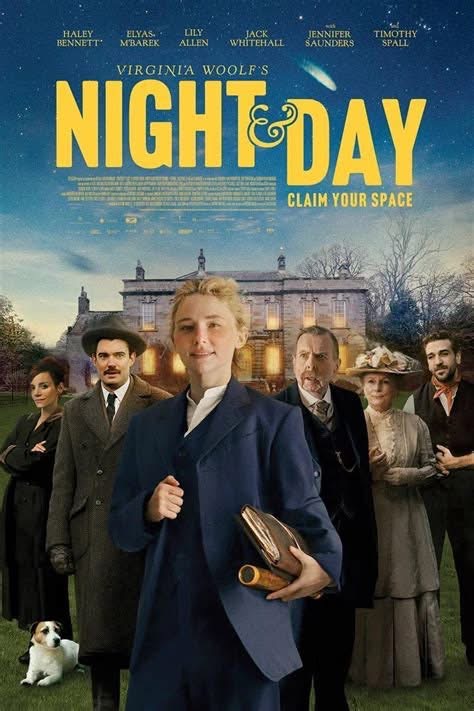
This year marks the 100th anniversary of the publication of Virginia Woolf’s second novel, Night and Day. It also marks the 100th anniversary of the passage of the 19th Amendment in the U.S.

Fittingly enough, both deal with women’s struggle to obtain the right to vote.

While Woolf’s novel has often been overlooked, it is currently receiving the recognition it deserves. Nowadays it is described as “a remarkable story of two women navigating the possibilities opened up by the struggle for women’s suffrage.”

Reading and discussing Night and Day

In September of last year, Anne Fernald, professor of English and Women’s, Gender, and Sexuality Studies at Fordham University, led a reading group on Virginia Woolf and E. M. Forster at the Center for Fiction in Brooklyn that featured novelists Julie Orringer and Michael Cunningham discussing Night and Day.

Read Lauren Groff’s Introduction to Night and Day, which is included in the 100th anniversary edition of the novel, available from Restless Books.

According to Restless Books, the new edition of Woolf’s novel is part of a “series of beautifully packaged, newly introduced and illustrated great books from the past that still speak to our time, our place, and, especially, our restlessness. In addition to their original artwork and fresh introductions, Restless Classics brings the classroom experience to the reader with linked online teaching videos.”

Night and Day in conversation

You can also sit in on last year’s discussion of the novel held at the Brooklyn Center for Fiction by watching the video below.

In addition, “Night and Day at 100” was the topic of the International Virginia Woolf Society‘s guaranteed panel at the Modern Language Association Convention 2019. It addressed the question: What is the twenty-first century legacy of Woolf’s “nineteenth-century” novel?

Read Full Post »

Five radical women writers living in a square in a London neighborhood. The square is Mecklenburgh. The neighborhood is Bloomsbury. And one of the women writers is Virginia Woolf.

The book that tells the story of the five independent women writers who lived in Mecklenburgh Square at various times between the two world wars is Francesca Wade’s Square Haunting: Five Women, Freedom and London Between the Wars, just published by Faber & Faber.

Besides Woolf, the women Wade discusses include detective novelist Dorothy Sayers, modernist poet Hilda Doolittle (known as HD), the maverick classicist Jane Ellen Harrison, and the economic historian Eileen Power.

The publisher’s website describes the book this way:

Francesca Wade’s spellbinding group biography explores how these trailblazing women pushed the boundaries of literature, scholarship, and social norms, forging careers that would have been impossible without these rooms of their own.

And one reviewer called Woolf “The presiding genius of this original and erudite book,” describing her “essay ‘A Room of One’s Own’ [as] provided the rallying cry, whether consciously or not, for five remarkable women, all drawn at some point in their careers to Bloomsbury’s Mecklenburgh Square.”

Glowing reviews

I plan to obtain a copy of Square Haunting and review it here. After all, Mecklenburgh Square has a special meaning for me, as it is one of the Woolf sites I visited in 2016 when Cecil Woolf, Virginia and Leonard’s nephew who passed away last June, led me on a six-mile walking tour of Bloomsbury. It was a most memorable day.

For now, though, here are a few quotes from the glowing reviews of Wade’s first book that have already been published online.

Wade’s book rises above the publishing cliches to tell a deeper story about women’s autonomy in the early 20th century, about their work and education, politics and activism. What emerges is an eloquent, pellucid, sometimes poignant study of five female intellectuals, each of whom disdained convention to fulfil their potential as thinkers and writers. – Review by Johanna Thomas-Corr, The Guardian

It is a pleasure to fall into step with the eloquent, elegant Wade as she stamps the streets of literary London. I would give a copy to every young woman graduating from university and wondering who and how to be … There is much to inspire. – The Times Literary Supplement

Wade is adept at evoking the gritty texture of the times, taking us seamlessly from the interior lives of her subjects into the world they inhabited and back again. – Ariane Bankes, Spectator

The site of the building in Mecklenburgh Square in which Virginia Woolf lived. Cecil and I paused here during our 2016 tour of Bloomsbury.


https://platform.twitter.com/widgets.js

Read Full Post »

Cecil Woolf pauses in front of Persephone Books, Lamb’s Conduit Street, London, in June 2016.

Tucked away on Lamb’s Conduit Street in Bloomsbury, Persephone Books has been my favorite London bookstore since I first visited it — twice — during my 2016 trip.

That’s not just because it is located on the same street where Jacob Flanders of Virginia Woolf’s Jacob’s Room had his very own room. It is also because the shop reprints neglected fiction and non-fiction by mid-20th century (mostly) women writers. It is, in short, a treasure.

A stack of gray dust covers

Every time I visit, I cannot resist purchasing as many as I can carry of Persephone’s 135 books. From Marghanita Laski’s To Bed With Grand Music to Barbara Euphan Todd’s Miss Ranskill Comes Home, each is unique. And none has disappointed.

A stack of Persephone Books, each with its gray dust cover and colorful endpaper with matching bookmark, is eternally in my TBR pile, including the three I bought this year: They Were Sisters by Dorothy Whipple; Tory Heaven or Thunder on the Right, another by Laski; and Wilfred and Eileen by Jonathan Smith.

This year, though, I decided to spare myself. Having enough to carry, I had Persephone ship my books to my home in the U.S. They arrived within a week of my return, accompanied by a gracious hand-written note of thanks.

Still urgent today

And now Persephone, founded by Nicola Beauman, has printed a new edition of Virginia Woolf’s classic feminist polemic, A Room of One’s Own (1929). It is wrapped in Persephone’s classic soft gray dust cover, with the 1930 Vanessa Bell textile design “Stripe” as its endpaper and matching bookmark.

A Room of One’s Own, with its central premise that a woman must have money and a room of her own if she is to write fiction, is a volume whose message has urgency and currency today, says Clara Jones, who wrote the preface.

The poetry and pragmatism of Woolf’s central claim about the room and the money have taken on renewed urgency today. The ubiquity of debt for a generation of young people who pay large university tuition fees, are charged prohibitive rents and paid low wages, combined with the fact that all but the luckiest (or best connected) with literary ambitions will begin their apprenticeship by working for free, make Woolf’s trinity of space, privacy and financial security as worth striving for as ever. – Clara Jones, Preface to Persephone edition of A Room of One’s Own

It is 90 years since Woolf wrote her iconic piece. You can read more about the Persephone edition (cost £13) on the Persephone website and in the Stratford-upon-Avon Herald.

About the founder and her store

Beauman herself is a legend in the world of book publishing — and in the world of Woolf. Along with Clara Farmer of the Hogarth and Chatto and Windus, she appeared on a panel at the 27th Annual International Conference on Virginia Woolf in Reading, England. Aptly enough, the conference theme was Woolf and the World of Books, with Beauman and Farmer’s panel titled “Publishers, Publishing & Bookselling.”

Beauman began Persephone 20 years ago as a mail-order publishing business with a list of 12 books. She now has 30,000 subscribers to her free magazine The Persephone Biannually. And when the shop celebrated its 20th anniversary earlier this year, a crowd of fans stopped in throughout the day and evening.

Here’s what Beauman had to say about the books she publishes in an April 14 New York Times story acknowledging her store’s 20 years in business:

The connection between them is that they were forgotten and they’re very well-written. I’m very keen on story and on page-turners. When I get to the end of a book I like to put it down and feel absolutely wrenched by what I’ve read, to be in a different world.
I can attest to the power of the books Persephone publishes. Upon finishing each of my Persephone Books, I find it difficult to make my way back into my own everyday world. I am that affected by what I have read.

Get a close look at Lamb’s Conduit Street, as well as the inside and outside of Persephone, with this YouTube video, the 2018 pilot episode of “Fran’s Book Shop.”

Inside Persephone Books with founder Nicola Beauman at work at her desk, July 2017.

A table full of “Fifty Books We Wish We Had Published” at Persephone Books in July 2017

A wall full of books in the traditional gray dust covers at Persephone Books in 2017

Persephone Books isn’t shy about making political statements. This banner hung in the shop in 2018.

A Woolf sighting at Persephone Books in June 2018

The window display at Persephone Books changes. This was the view in July.


Read Full Post »

Mrs Dalloway in slipcase. Courtesy of SP Books

The full-length draft of Virginia Woolf’s Mrs. Dalloway was waiting for me when I returned in July from the Literature Cambridge course Virginia Woolf’s Gardens. Lucky me.

As I eagerly opened the heavy package, I thought I knew what to expect from this handwritten manuscript of what would become Virginia Woolf’s famous 1925 novel. After all, its publication had been highly publicized by the mainstream press and widely shared on social media.

What I didn’t expect was its beautiful detail, its literal weightiness, and the fact that Woolf’s draft would be so very different from the final product we know, love, study, and write about today.

June 3, 2019, tweet from @BookBrunch

A lusciously weighty volume

Published by SP Books, the volume is luscious and large. Measuring 13″ x 9.5″ it is hand-bound, with linen-textured covers of dark green and a slipcase to match. The lettering on the cover and slipcase, including Woolf’s distinctive signature, is a rich metallic gold. Each volume is hand-numbered from one to 1,000. All of these beautiful features indicate the importance of this limited edition classic book, as well as the author we love.

The manuscript reproduces the three handwritten stitched notebooks, much of them written in Woolf’s trademark purple ink, in which she drafted “The Hours.” Written between June 27, 1923, and October 1924, these notebooks would eventually become her classic novel Mrs. Dalloway.

Virginia Woolf’s Signature. Courtesy of SP Books

Holding genius in one’s own hands

One usually must visit a library, a museum, or some other official place to study Woolf’s writing process in detail. When we visited the Fitzwilliam Museum in Cambridge as part of our Literature Cambridge course, we saw the first draft manuscript for Woolf’s classic feminist polemic A Room of One’s Own (1929). Each of us had a few precious minutes with the manuscript, noting Woolf’s edits and marginal notes and taking photos.

Bookmark. Courtesy of SP Books

Now, however, thanks to SP Press, any of us who can rustle up about £190 or $220, can own our very own Woolf manuscript, giving us the opportunity to study it in detail at our leisure.

The Woolf draft, along with others in the series, provide, “A return to ‘slow reading’ in a digital age” and “offer an intimate insight into the writer’s mind and thought-processes, showing their crossings-out, notes and revisions,” according to SP Press.

Female-centric and revolutionary

I admit that I haven’t had time to read the manuscript from cover to cover. Woolf herself had trouble reading her own handwriting at times, so imagine how difficult it is for the unaccustomed common reader to parse her penmanship.

First page of notebook 2 (purple ink). Courtesy of SP Books

But it’s easy to see from the opening pages that the draft Woolf produced is totally different in focus, tone, and structure from the novel she eventually created. While Mrs. Dalloway focuses on Clarissa, introducing her with the famous line, “Mrs. Dalloway said she would buy the flowers herself” (MD 1),”The Hours” initially focuses on Peter Walsh and includes this opening line:

In Westminster, where temples, meeting houses, conventicles, & steeples of all kinds are congregated together, there is at all hours & halfhours, a round of bells, correcting each other, asseverating that time has come a little earlier, or stayed a little later, here or here. – “The Hours”

So a quote from Michael Cunningham‘s introduction to the SP Books facsimile of “The Hours” certainly rings true: “Had Woolf completed a novel called “The Hours,” it would not have been the Mrs. Dalloway that has become a cornerstone of 20th-century literature.”

The back story

The facsimile edition includes an essay from Woolf scholar Helen Wussow that provides the genesis of the character of Mrs. Dalloway, as well as that of the manuscript itself.

According to Wussow, Leonard Woolf wrote to Vita Sackville-West after Virginia’s death to tell her that her friend and lover had left a manuscript to her. Leonard’s job was to choose which Vita would receive. He decided upon Mrs. Dalloway, sending Vita the entire manuscript on June 21, 1941. The British Library eventually purchased it from her.

Wussow also details the whereabouts of the typescript (not yet found) and page proofs for the novel, as well as Woolf’s working methods.

More on SP Press

Other SP Press limited edition copies of handwritten manuscripts include classics such as The Great Gatsby, Jane Eyre and The Picture of Dorian Gray. Follow them on Twitter @saintsperes.

Title – 1 – 1923. Courtesy of SP Books

1st opening, on the 1st page of notebook 1. Courtesy of SP Books

Read Full Post »

« Newer Posts - Older Posts »