Feeds:
Posts
Comments

Posts Tagged ‘books’

When I first heard that renowned Virginia Woolf scholar Maggie Humm was writing a novel featuring Lily Briscoe and based on Woolf’s semi-autobiographical novel To the Lighthouse (1927), I couldn’t wait to get my hands on a copy.
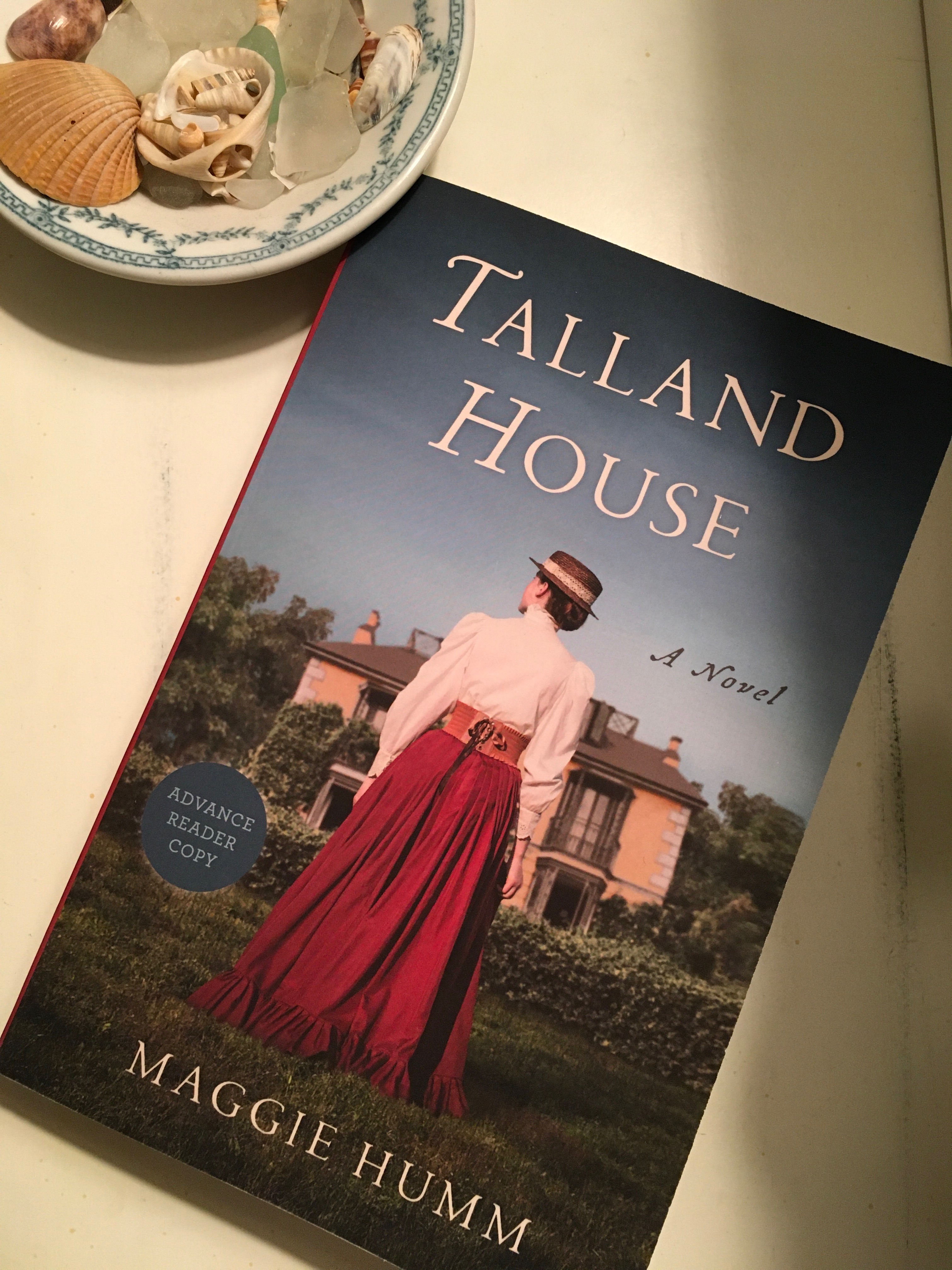
The opportunity came in March, when I saw on Facebook that Maggie had advance reader’s copies in her grasp. After meeting Maggie at many Woolf conferences, I consider her a friend. So I contacted her and asked for a copy. She immediately promised to send one.

Pandemic realities on both sides of the pond

A few hours later, pandemic reality hit her. Recalling that the coronavirus had pretty much grounded all international flights, thereby shutting down international mail delivery, Maggie realized that a copy mailed from England would be unlikely to reach me. She put me in touch with her U.S. publicist to obtain a copy stateside instead.

The book arrived quickly, and I expected to jump right in. But my pandemic reality meant I had difficulty focusing on Maggie’s book — or any book — until recently. That made me late finishing the novel and late posting about it here as well. But since it is now available on Amazon, better late than never. So here goes.

Talland House fills in and illuminates

Maggie, emeritus professor of cultural studies at the University of East London, is the author or editor of 14 books, with the last three focused on Woolf and the arts. So it is only natural that in her first novel, Talland House, Maggie focuses on artist Lily Briscoe from To the Lighthouse.

To that end, Talland House fills in Lily’s back story — the death of her mother, her art studies in Paris and St. Ives, her work as a nurse during the Great War, and her involvement in the suffrage movement. Set between 1900 and 1918 in both Cornwall and London, it also provides a prequel to Woolf’s novel and reimagines that work from Lily’s perspective.

That reimagining includes Mrs. Ramsay’s demise. Her death, mentioned briefly and parenthetically in Woolf’s novel, is “discovered” or explained in Maggie’s novel. But I will include no spoilers here.

While conducting research to write the novel, Maggie pored over old photos of St. Ives, as well as Cornish newspapers, artists’ memoirs, and art journals to get a feel for the seaside town and its art community during the years the novel covers.

St. Ives Bay, June 2004

The extent of her research shows in her luminous prose that paints a compelling and colorful picture of St. Ives and its charms, the location of all of Woolf’s novel and much of Talland House. The picture is so complete — from the view of the lighthouse from Talland House to the fishing boats in the harbor — that one is transported back in time to the cobblestone streets of the Cornish town.

References slipped into a must-read

Woolf scholars and readers will delight in catching the specific references to Woolf’s work that Maggie slips into this historical novel.

Lily makes note of Mr. Ramsay’s boots and his recitation of Tennyson’s poems. She recalls moving the salt cellar at dinner and describes the animal skull on the nursery wall and the tapping sound of the window blind’s acorn on the nursery floor. And in a fresh take-off on Woolf’s famous line in “Thoughts on Peace in an Air Raid” (1940), “Thinking is my fighting,” Lily proclaims that painting is hers.

If you are a fan of Woolf, this is a must-read. If you are not, it will make you want to become one, just so you can connect this enchanting novel to Woolf’s works.

More on the novel

Talland House was shortlisted for the Impress and Fresher Fiction prizes in 2017 (as Who Killed Mrs. Ramsay?) and the Retreat West and Eyelands prizes in 2018.

Read more about Talland House:

Maggie Humm has brilliantly filled in the edges beyond Woolf’s canvas; she has a deep, awe-inspiring understanding of the role of the visual in Woolf’s work, and here she reveals that she also has a novelist’s gift to create something new, that has its own imaginative life, from that understanding. -Lauren Elkin, author of the award-winning Flaneuse

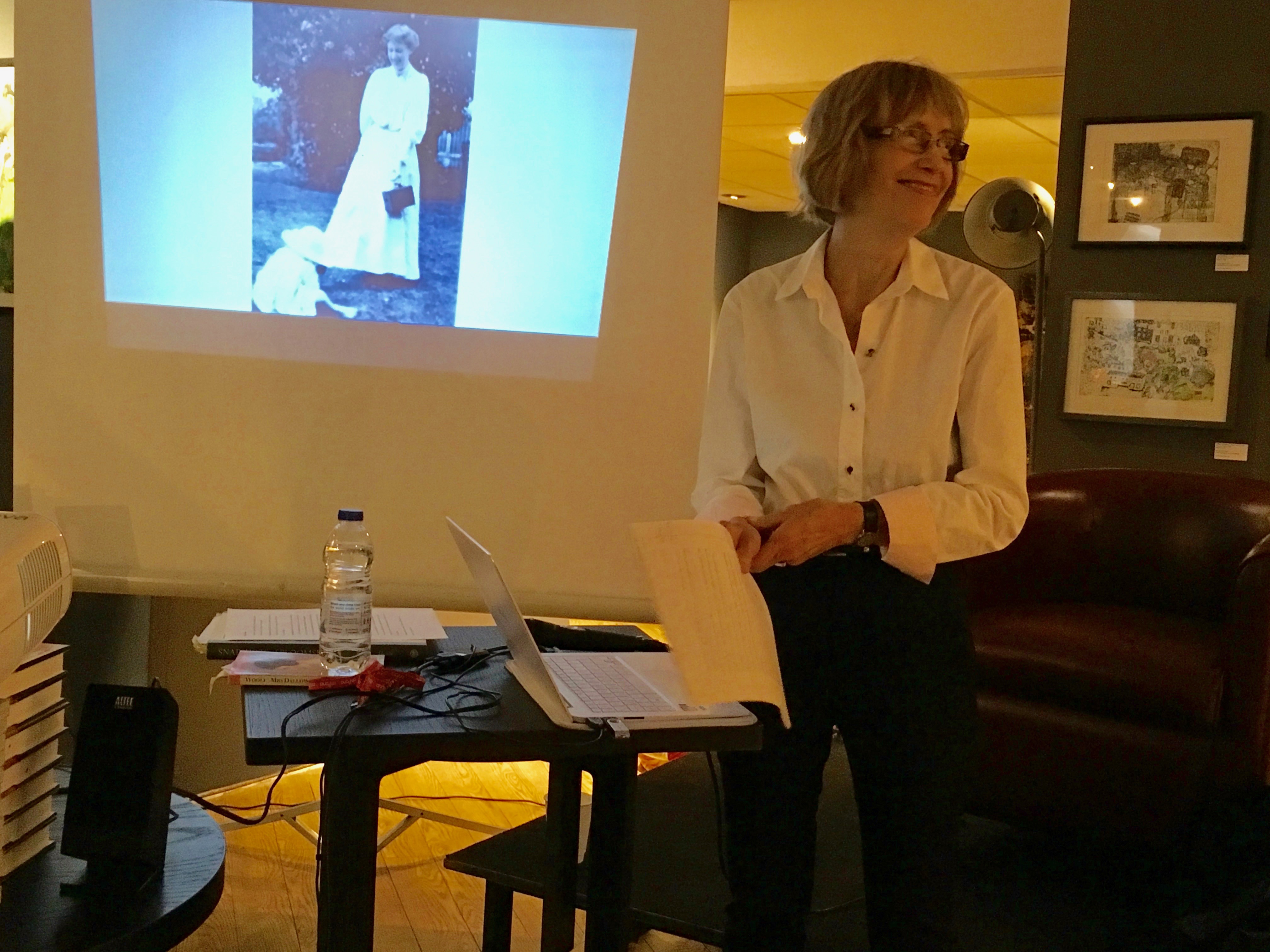
Maggie Humm talking about Virginia Woolf and her photo albums at Waterstone’s Gower Street during Dalloway Day celebrations in London in 2018.
 

Read Full Post »

One day walking round Tavistock Square I made up, as I sometimes make up my books, ‘To the Lighthouse’ – Virginia Woolf.

That quote is the inspiration for an illustrated pamphlet published last month and created by artist Louisa Amelia Albani. Titled A Moment in the Life of Virginia Woolf: A Lighthouse Shone in Tavistock Square, the booklet visually reimagines this ‘moment’ on a summer afternoon in London’s Tavistock Square in 1925.

To do so, it uses Woolf’s own words from her letters and diaries, along with excerpts from To the Lighthouse (1927).

I ordered a copy of Albani’s pamphlet last week. It hasn’t arrived from London yet, but I did get a thank you email for my order directly from Albani — an unexpected but lovely treat.

Art exhibit too

The artist also has an online art exhibition with the same title. The exhibit includes more than a dozen pieces based on Woolf. Many of them are already sold, so if you are interested in an original piece of art connected to Woolf, take a look now.

Below is a video of the project that the artist has posted on YouTube.


Read Full Post »

Mitz: The Marmoset of Bloomsbury is a book about Virginia and Leonard Woolf’s pet marmoset that they adopted in 1934 and took with them when they visited Berlin in 1935. And it is now available on Amazon, with the e-book selling for $1.99 and the paperback $11.19.

At that price, I couldn’t resist adding the Kindle version to my Woolf collection, even though I already own the hardcover version published by Harper Flamingo in 1998.

Author Sigrid Nunez drew on memoirs, letters, diaries, biographies, and her imagination to write this mock biography that is said to pay homage to Woolf’s Flush.

Accolades from reviewers

According to reviewers, it “offers a striking look at the lives of writers and artists shadowed by war, death, and mental breakdown, and at the solace and amusement inspired by its tiny subject.”

This new edition includes an afterword by Peter Cameron and a never-before-published letter about Mitz by Nigel Nicolson.

It was also named one of NPR’s best books of 2019. Here’s what NPR had to say in its review:

Mitz captures the heartrending downside of love and connection — loss. But it also reminds us, beautifully, of the “great solace and distraction” of literature.

At this time in history, as in the late 1930s, we can all use some solace, as well as some distraction.

Read Full Post »

Pace University Press announces the release of the 2020 Woolf Studies Annual.

Featuring articles, reviews of new books, and a guide to library special collections, Woolf Studies Annual is the premier academic journal on the life, work, and times of Virginia Woolf.

Here’s what you’ll find in the 26th volume:

  • Josh Phillips’s transcription of part of the holograph manuscript of The Years, which provides a new take on that novel’s relationship to Three Guineas, enabling further exploration of Woolf’s complex creative processes.
  • Catriona Livingstone’s reading of Woolf through the lens of science fiction, which provides a fresh and provocative look at some well-known texts
  • Sebastian Williams providing insightful observations into Woolf’s Bioethics in “Animals and Dependency in ‘The Widow and the Parrot.’”
  • Reviews by Elizabeth Outka, Celia Marshik, and more.

This volume is edited by Dr. Mark Hussey. For a complete Table of Contents or to place an order, visit press.pace.edu

ISBN: 978-1-935625-46-9 Price: $40

Read Full Post »

The temperature was 34 degrees and a light dusting of snow covered the ground when my copy of London in Bloom by Georgianna Lane arrived in my Ohio mailbox several weeks ago.

With its cover photo depicting pale pink roses draping a doorway, arching over a window, and filling the basket of a matching pink bicycle parked out front, the book introduced a welcome breath of spring into my life that day. We need that even more now.

Turning from fear to beauty

The coronavirus has infected our globe, and many of us are sheltering at home, attempting to stave off the ugliness of anxiety. So there is no better time to open a book full of the floral beauty of London, Virginia Woolf’s favorite city.

London in Bloom is the third and final book in Lane’s Cities in Bloom series, published by Abrams. To capture the images that fill it, she spent many early morning hours photographing the floral beauty and architectural detail of England’s capitol before residents and tourists clogged the streets, sidewalks, and parks. I daresay she would find that task easier now.

On “Tea and Tattle”

I first heard of the book on episode 27 of Francesca Wade’s “Tea and Tattle” podcast. Wade describes it as “most beautiful guide to the city’s parks, gardens, florists and hotels and should be on any London-lover’s shelf!”

Much like Woolf, a lover of gardens who incorporated them into her life and into her work, the author shares her affection for London’s gardens in her Introduction to the book:

Perhaps not surprisingly, my most memorable London experiences have been inextricably interwoven with gardens… the open spaces of London have seeped into my consciousness, awakened my imagination, and become part of me” (7).

From parks and gardens to floral displays

London in Bloom is divided into four sections:

  • parks and gardens
  • floral boutiques
  • market flowers and
  • floral displays.

Each is introduced by a page or two of text that shares Lane’s thoughts and experiences, then filled with gorgeous photos of flowers and architectural details — brickwork, tile-work, doorways — that enhance them.

Whimsical touches are also introduced in the form of light cotton floral print dresses in a shop window, teacups and cake on a tea table, and London’s trademark red phone booth and double decker buses.

Beauty and practicality

Despite some touches of red, the theme throughout is pastel — from flowers to buildings to cover pages. But the book includes the practical, as well as the beautiful.

The back section gives us instructions on creating our own London-style bouquet, a field guide to London’s spring blooming trees and shrubs, and an introductory guide to springtime blooms throughout the city.

London in Bloom provides delectable refreshment for the eye and the soul in our troubled times, whether you are a lover of flowers, a fan of London, or just in need of a bit of balm.


Read Full Post »

« Newer Posts - Older Posts »