Feeds:
Posts
Comments

Posts Tagged ‘Guardian’

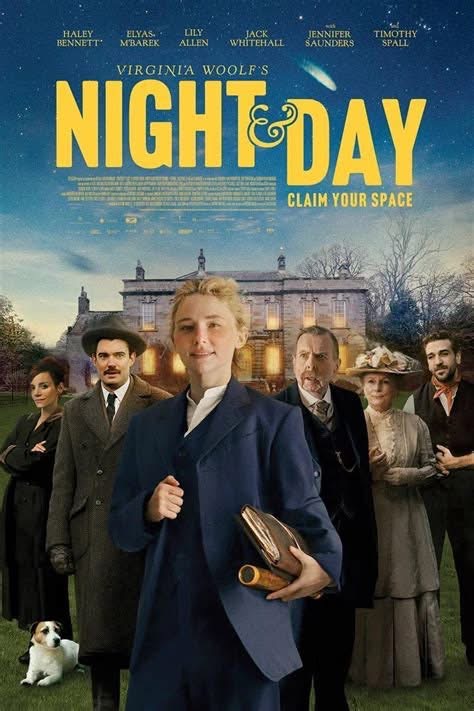
 I finally read Pat Barker’s Toby’s Room. My library’s reservation system is fantastic but does require some patience! Paula first Toby's Roommentioned it here last summer, noting the allusions—in more than the title—to Woolf’s Jacob’s Room, as did Hermione Lee, who reviewed it for The Guardian.

I read Barker’s Life Class around that time before I knew it was the prequel to Toby’s Room, and I posted on the “near sightings,” the Bloomsbury references when the protagonist, Slade art student Elinor Brooke, has tea at Ottoline Morrell’s.

Elinor’s brother Toby, like Jacob before him, dies serving in World War I, and like Jacob is revealed mostly through family and friends. Toby’s Room is still Elinor’s story, in which she seeks to unearth the mysterious details of his death. Woolf appears in entries from Elinor’s diary. She records her impressions from a weekend at Charleston Farmhouse, presumably at the invitation of Vanessa Bell:

“VB was in the drawing room when I arrived, with her sister, Mrs. Woolf. I’ve met her more than once, though I don’t think she remembered me and gave me a lukewarm welcome. Doesn’t like young women, I suspect. I thought the talk would be well above my head, but they were quite relaxed and gossipy and we chatted on easily enough. Or they did. I was too nervous to say much. It was like listening to an old married couple. They’ve got that habit of completing each other’s sentences…”

The other guests are “the conscientiously objecting young men” working at the farm, none of whom, she realizes, are going to be interested in her. There’s talk of the war at dinner, and Woolf talks about “how women are outside the political process and therefore the war’s got nothing to do with them.”

Elinor is struck by Woolf’s observation but finds it less convincing when she later tries to echo the sentiment herself. Barker has no such problem making her case. In both novels, she challenges readers to explore the role of art and artists in time of war, heightening the drama with real, fictional and hybrid characters as she did in her Regeneration trilogy.

Read Full Post »

It’s summer, and the livin’ is easy, so maybe that’s why To The Lighthouse is in the limelight in this week’s Woolf sightings.

First, several blog posts (2-4) discuss The Guardian article that includes Virginia Woolf’s To the Lighthouse among the top 10 most difficult books. Second, a New Yorker blog post (6) mistakenly includes the assertion that Woolf’s novel is among “literature’s great unmade movies,” ignoring the 1983 made-for-TV movie directed by Colin Gregg. Third, the novel inspires the theme of a theatre festival for British young people (15).

  1. Tucsonans share picks for summer readsArizona Daily Star
    A good summer getaway.” Karen Falkenstrom, director, Odaiko Sonora, Japanese drumming ensemble. • What she’s reading: “The Voyage Out” by Virginia Woolf. “Woolf is a master of well-wrought descriptive language and has an extraordinary sensitivity for 
  2. 10 hardest books should push usThe Periscope Post
    I’ve read three – Edmund Spenser’s The Faerie Queen, which I have been re-reading intermittently this year; Jonathan Swift’s A Tale of A Tub, although it was a fair while ago; and Virginia Woolf’s To The Lighthouse, the inclusion of which has caused 
  3. The world’s most difficult books: how many have you read?The Guardian (blog)
    Nightwood by Djuna Barnes; A Tale of a Tub by Jonathan Swift; The Phenomenology of Spirit by GF Hegel; To the Lighthouse by Virginia Woolf; Clarissa, or, The History of a Young Lady by Samuel Richardson; Finnegans Wake by James Joyce; Being and
  4. The Top 10 Most Difficult BooksPublishers Weekly
    To The Lighthouse by Virginia Woolf – In its intermingling of separate consciousnesses, Virginia Woolf’s fiction is both intellectually and psychically difficult. Not only is it hard to tell who’s who and who’s saying or thinking what, it is also disconcerting—even 
  5. Book News: Drinking Poetically, Programming in Verse, New Yorker (blog)
    Reviving the dwindling reputation of Thomas Browne, a Renaissance author who inspired Melville, Dickinson, and Virginia Woolf. A recipe for the “particularly insidious punch” Robert Penn Warren made to celebrate his thirty-eighth birthday.
  6. Literature’s Great Unmade Movies, New Yorker(blog)
    Jane Smiley selected Virginia Woolf’s “To the Lighthouse”—surely a challenge to any filmmaker. She saw Jeremy Irons and Glenn Close as stars. For John Updike, “La Princesse de Clèves” by Mme. De Lafayette, offered “a succession of moonlit scenes” in 

    To the Lighthouse, 1983 movie directed by Colin Gregg

  7. 3 Amazing Literary Pilgrimages (PHOTOS)Huffington Post (blog)
    Did Clarissa Dalloway kiss Sally Seton, smelling the fresh flowers and green summer grass, in the same garden where Virginia Woolf sat, writing her story? Unfortunately, to humanity’s and to my own great dismay, we may never ask Mrs. Woolf this 
  8. Walking Tour of London’s Literary PubsTravel Agent
    Neither was a famous drinker, but it was in the company of Charles Dickens andVirginia Woolf that the capital’s first literary pub crawl set out from the Writers and Artists Bar in the basement of the Fitzroy Tavern (16 Charlotte Street, W1), in 
  9. Blu-ray Review: ‘Orlando’ (rerelease), Cine-Vue
    Released on Blu-ray for the very first time courtesy of UK distributor Artificial Eye, Sally Potter’s lavish 1992 adaptation of Virginia Woolf’s century-spanning novel Orlando marked the arrival of British actress Tilda Swinton onto the international 
  10. Competition: Win Sally Potter’s re-released ‘Orlando’ on Blu-rayCine-Vue
    Potter’s dazzling adaptation of Virginia Woolf’s classic novel is the tale of the apparently immortal Orlando, who begins an epic quest for love and freedom in the court of Elizabeth I as a man and completes the search 400 years later as a woman. This journey 
  11. Motherhood Does Not Make Every Woman a Better Writer (Or a Better Person xoJane
    But to project what-ifs onto women like Jane Austen — or Virginia Woolf, or Charlotte or Emily Brontë, or any number of women authors from history who dared sacrifice motherhood for writing — and then to suggest that the experience of biological 
  12. Reviving Thomas Browne, an Expert on OblivionNew York Times
    Virginia Woolf said he paved the way for all psychological novelists, and Borges, who translated him, once described himself as just another word for Browne (and for Kafka and Chesterton). Browne was a reverent Christian who professed to care more 
  13. The Heroine in the Drawing RoomWall Street Journal
    If a woman wrote the same text, it would just be…a domestic novel.” Virginia Woolfwrote much the same in “A Room of One’s Own”: “This is an important book, the critic assumes, because it deals with war. This is an insignificant book because it deals with the 
  14. Heads Up: ‘NW’The Independent
    Insider knowledge Smith took inspiration from another great female novelist who hymned our capital:Virginia Woolf. At BookExpo America Smith said in an interview that Woolf “kept her going”, as a “good example of a forward-thinking and yet consistently 
  15. Porthleven hosts international youth theatre festivalThis is The West Country
    The theme of lighthouses was chosen because of its versatility and the fact it had been inspirational to many artists such as Virginia Woolf, whose classic novel ‘The Lighthouse’ was based on the lighthouse in Godrevy. Mrs Parish said: “’Lighthouses’ [as a 
  16. DVD Review: The Forsyte Saga CollectionBlogcritics.org (blog)
    Writing at a time when new ideas about what literature ought to do were changing and writers like Virginia Woolf and James Joyce were looking to these new horizons, Galsworthy’s work seemed to many to be looking in the wrong direction. He was behind the 

Read Full Post »