Feeds:
Posts
Comments

Posts Tagged ‘pandemic’

International Women’s Day is Monday, March 8, and the Virginia Woolf Society of Great Britain has put out a call that draws attention to the current plight of working women and connects it to Virginia Woolf’s feminist polemic A Room of One’s Own (1929).

With women’s employment taking a huge hit due to the COVID-19 pandemic, the VWSGB is asking us to share a photograph of a room of our own — if we are lucky enough to have one.

Women, work, and the pandemic

The pandemic has affected women’s work lives in drastic ways. The BBC is calling it a “shecession” and cites these facts:

  • Globally, women’s job losses due to Covid-19 are 1.8 times greater than men’s.
  • In the U.S., unemployment has intensified the most for those employed in personal care and food service jobs, where women predominate.
  • One in four women surveyed said they were thinking about reducing or leaving paid work due to the pandemic.
  • Those disproportionately affected in the U.S. include black women and Latinas.
  • Some subgroups are squeezed even more, like mothers of young children and mothers without partners or relatives.

In addition, recent projections estimate that employment for women may not recover to pre-pandemic levels until 2024—two full years after a recovery for men, according to Fortune.

The pertinence of A Room of One’s Own

So the British society has turned its attention to Virginia Woolf’s eternally pertinent feminist manifesto, A Room of One’s Own, a text the society writes, Now more than ever . . . is acutely relevant given that women’s work is being so squeezed and undervalued, and space is at a premium in family homes and elsewhere during life under lockdown, with working and schooling taking place in the home.”

Share your room of your own or your thoughts about the essay

So here’s the charge: Share photos of your own Room of One’s Own, if you are lucky enough to have one, or your reflections on Woolf’s essay A Room of One’s Own and what it means to you. The society will share contributions on its social media pages.

And on March 8, check the VWSGB social media accounts:

Facebook: www.facebook.com/VWSGB
Instagram: @virginiawoolfsociety
Twitter: @VirginiaWoolfGB


A woman must have money and a room of her own if she is to write fiction. – Virginia Woolf, A Room of One’s Own


Virginia Woolf’s desk in her writing lodge at Monk’s House, 2019

Read Full Post »

What color were Virginia Woolf’s eyes? That has turned out to be a puzzling question that has me still searching for the answer, while begging forgiveness for the pun.

“Jane Austen’s Book Club” puzzle by eeBoo, which depicts Woolf (front, far right, as a blue-eyed blonde)

The question occurred to me after completing a 1,000-piece eeBoo puzzle titled “Jane Austen’s Book Club.” Woolf, along with Austen, Mary Shelley, George Eliot, and Zora Neale Huston, are pictured sipping tea, alongside some of their famous titles.

Wasn’t she a brown-eyed brunette?

The puzzle was fun to put together and I was happy to add it to my collection of Woolf puzzles. I am even planning to frame it. But it left me wondering why artist Jennifer Orkin Lewis pictured Woolf as a blue-eyed blonde.

All of the paintings and photos I have seen of Woolf depict her with dark hair. And although her father, Leslie Stephen, is said to have had steely blue eyes, I have never seen her described that way.

In the famous color photos of Woolf by Gisele Freund, taken in her Tavistock Square home in London just before World War II broke out in 1939, Woolf’s eyes appear to be brown. It was the last portrait taken of Woolf and the only one in color. I have also seen Woolf’s eyes described as grey, although that source does not seem reliable. But never blue.

So I have emailed the artist to ask for some insight into her color choices. I’ll let you know what I hear.

Read Full Post »

Last summer I studied Virginia Woolf in person in Cambridge. This summer, I’m studying her from Cambridge, but I’m at home on my laptop via Zoom.

Trudi Tate and Karina Jacubowicz are just two of the lecturers in Literature Cambridge’s online courses on Virginia Woolf and other authors via Zoom.

Last July, I flew to England to study Virginia Woolf as part of the Literature Cambridge course on Virginia Woolf’s Gardens. This year, the program cancelled its in-person courses due to the coronavirus pandemic.

Studying Woolf online and in person

So I, along with dozens of scholars and common readers from around the world, am studying Woolf remotely as part of Literature Cambridge’s sessions on Woolf through its reasonably priced Online Study Sessions. Once held in person at the University of Cambridge, they are now held online via Zoom. And I am enjoying every minute of the delightful, informative lectures, as well as the accompanying question and answer sessions.

Dadie Ryland’s room behind the second floor window shown here inspired the first chapter of Woolf’s A Room of One’s Own.

Last July, in Lit Cambridge’s course on Woolf’s Gardens, we visited Newnham College, the site where Virginia Woolf gave her October 1928 talk on women and fiction that, along with one given at Girton College, became A Room of One’s Own (1929). We toured the gardens of King’s College, saw the window of a room that was the setting for a scene in Woolf’s classic polemic, held Woolf’s manuscript of Room at the Fitzwilliam Museum, admired the flora of Cambridge Botanic Garden, and much more.

I miss those field trips but I appreciate reuniting with the lecturers and students I met at Literature Cambridge and other Woolf encounters.

So far this year, I have attended lectures by Trudi Tate and Karina Jacubowicz on A Room of One’s Own and the Great War, Mrs. Dalloway, and A Room of Own and Space. I have several more on my calendar.

Upcoming study sessions and the Virginia Woolf Season

Online Study Sessions on Woolf and other writers continue through the summer. Here is just part of the upcoming schedule, with all times in British Summer Time:

25 July, 6 p.m. Between the Acts and Gardens
1 August, 6 p.m. Orlando 1 : Property
2 August, 10 a.m. Orlando 1: Property
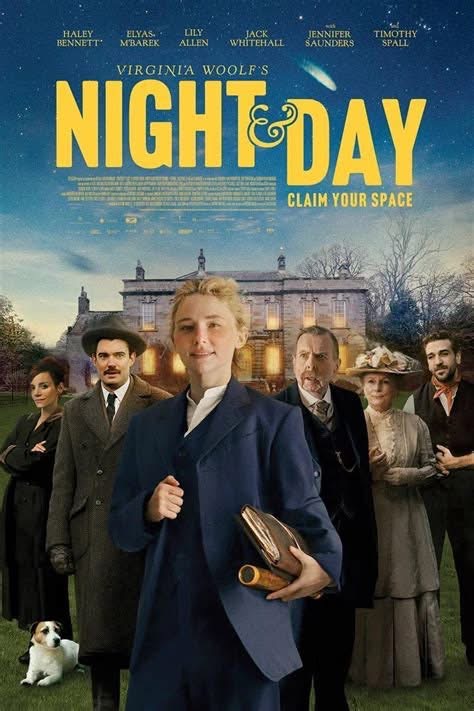
8 August, 6 p.m. Night and Day
15 August, 6 pm. The Voyage Out

Literature Cambridge will kick off its Virginia Woolf Season in October in which students will discuss 12 major Woolf books in order of publication. Follow its Facebook page for updates.

The Newnham College dining hall where Virginia Woolf gave her famous talk on women and fiction in 1928.

Read Full Post »

Two years ago, when the third Wednesday in June was officially chosen as #DallowayDay, no one would have imagined that a worldwide pandemic would force us to devise or search out virtual or individual events to celebrate the fine day in June when Clarissa Dalloway went walking through London to “buy the flowers herself.”

But that is what has happened. And here are some of the events available tomorrow, Wednesday, June 17, on #DallowayDay2020, as we celebrate Virginia Woolf’s 1925 novel, Mrs. Dalloway.

  • The Virginia Woolf Society of Great Britain wants Virginia Woolf readers to send them photos of how YOU are celebrating #DallowayDay or Virginia Woolf’s work this month. Send them to Sarah M. Hall at smhall123@yahoo.co.uk with a line or two of description. The society may put them on the VWSGB website or Facebook page, but you can let them know if they are for the society’s eyes only.
  • View “A Moment in the Life of Virginia Woolf,” a virtual art exhibition online June 17. All works are for sale. There is also an illustrated pamphlet, ‘A Moment in the Life of Virginia Woolf: A Lighthouse Shone in Tavistock Square’, which uses Virginia Woolf’s own words from letters, diaries and excerpts from the novel. And you can view a video of the project.
  • The Royal Society of Literature has a full slate of virtual events for Dalloway Day.
    • It has joined with Literary Hub, whose managing editor Emily Temple will host a Zoom-based book group on the novel tomorrow. The event is sold out, but you can sign up to be placed on a waiting list.
    • Another RSL remote event, in partnership with Charleston, is “The Common Reader in Uncommon Times” June 17 at 6:30 p.m. BST.
    • A third RSL remote event is “The Pleasure of the Everyday” June 17 at 8 p.m. BST.
  • “For it was the middle of June,” a Dalloway Day blog post from the British Library.
  • If you are near London, the VWSGB also offers its Mrs. Dalloway Walk in London, from Dean’s Yard, Westminster, to Regent’s Park. According to the society, this walk combines Mrs Dalloway’s journey, from her house to Bond Street where she buys the flowers and hears the car backfire, with Rezia’s and Septimus’s (they also hear the car at the same time) from Bond Street to Regent’s Park. (Please note: You may find that certain locations on the walk are inaccessible during lockdown.)
  • Listen to a discussion of Woolf’s novel on BBC Radio 4.
  • Listen to “Queer Bloomsbury, Stillness in art and dance” on BBC Radio 3 June 17 at 10 p.m.
  • Watch an 18-minute video provided by the British Library in which Elaine Showalter explores modernity, consciousness, gender, and time in the novel. On the British Library site, you can also view Woolf’s drafts of some pages of the novel.

And if you understand Italian, you can follow along with the DallowayDay 2020 video from the Italian Virginia Woolf Society.


Read Full Post »

Charleston

Lovers of Charleston, rejoice! If you’ve always longed to attend a Charleston Festival in May in East Sussex, you can now attend online — for free. And if you’d like to add some paper touches of Charleston to your home office, you can do so now, while helping the financially challenged Charleston at the same time.

Celebrating and helping from home

The Charleston Festival, the main fundraising event for the longtime home of Vanessa Bell and Duncan Grant and the country refuge for the Bloomsbury group, is staying home, like many of us around the globe as we weather the current coronavirus pandemic.

And now that the event is available online for free, billed as the Charleston Festival at Home, more of us from around the world will be able to attend from home — and hopefully be inspired to help Charleston while beautifying our homes as well.

Cambridge Imprint has already stepped forward to contribute one-third of all profits from online sales of its Charleston range of unique paper goods to Charleston’s Emergency Appeal for the next three months, starting May 12.

The Charleston Festival at Home

Charleston’s flint and brick garden wall with a row of casts of antique heads, many of which have been replaced over the years.

The Charleston Festival at Home is a series of 10 free events bringing artists, writers, thinkers and agents of change together online to explore art, literature and society, just as the Bloomsbury group did around the Charleston dining room table 100 years ago, according to the website.

The online program runs May 15-25 and features nearly daily events that include:

  • BRICKS & MORTAR: On May 17, Hannah Rothschild and Julian Fellowes discuss historical fiction, family, and the wonderful inspiration that buildings can provide. The talk premieres at 2 p.m. BST.
  • IN PURSUIT OF JUSTICE: On May 19, Philippe Sands discusses ‘the ratlines’ — a system of escape routes for fascists fleeing Europe in the aftermath of World War II.
  • SEX, LIES & WOOLF: On May 22, Leïla Slimani speaks about her novels, beliefs, and her new collection of essays giving voice to young Moroccan women.
  • SALMAN RUSHDIE IN CONVERSATION: On May 23, Salman Rushdie returns to Charleston Festival to discuss his life and work.
  • ORDINARY LIVES & DEVASTATING TRUTHS: On May 24, Tayari Jones will explore the art of writing tangled relationships and the perils of young womanhood.

All events will be available on Charleston’s YouTube channel. Check the schedule for details or download the program. Follow the hashtag #CharlestonFestivalatHome.

About Charleston’s need

Charleston, the treasure trove of Bloomsbury art and culture, along with its garden, galleries, shop and café, are temporarily closed due to the coronavirus pandemic. That means the charity that receives no public funding is bereft of income from visitor admissions, as well as its main fundraising event. The Charleston Festival, one of the oldest and most prestigious interdisciplinary festivals in the world, was cancelled in April due to the coronavirus.

As a result, Charleston has issued an emergency appeal for donations from those who appreciate this unique venue, no matter what side of the pond they live on.

You can find out more, including how to make a donation — whether you are a UK citizen or not — here.


Read Full Post »

« Newer Posts - Older Posts »